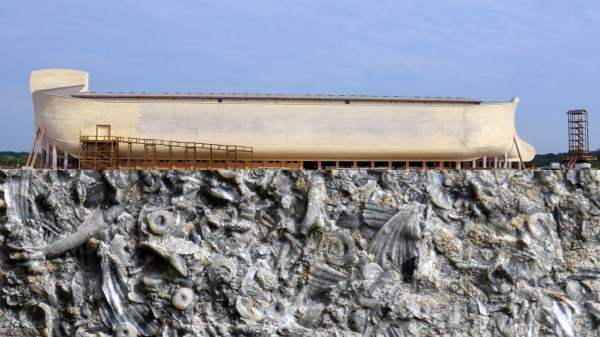
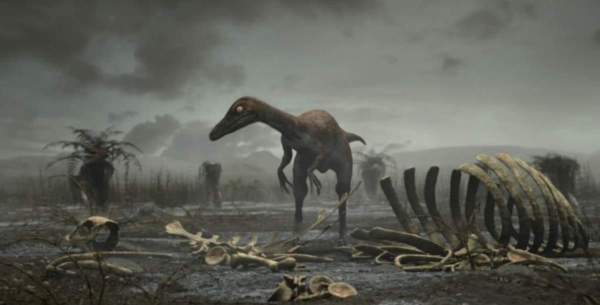
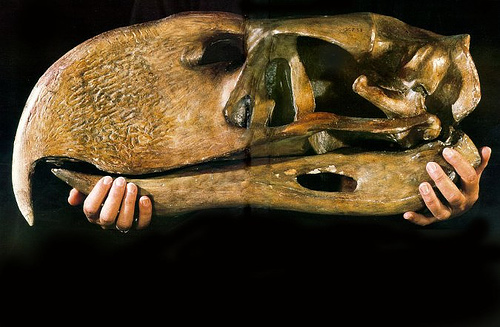
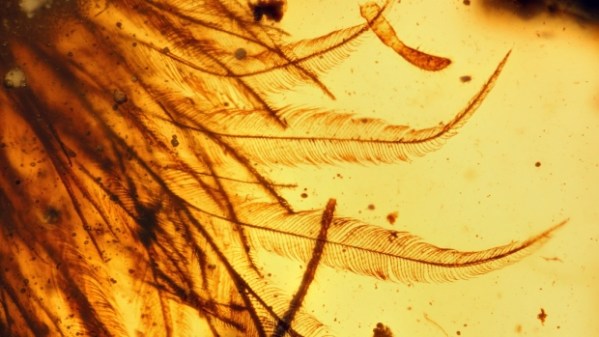
If a global Flood destroyed all humans except Noah and his family just 4350 years ago, where are all the human fossils? This is a question that any young-earth apologist must be prepared to answer. It’s a perfectly natural and appropriate question. After all, according to young-earth creationists (YECs), nearly all fossil remains of dinosaurs,... Continue Reading →
Human Remains in a Drowned Ice Age Cave Contradict Young-Earth Chronology
During the last Ice Age when the oceans were up to 300 feet lower than they are today an extensive cave system on the Yucatan Peninsula of Mexico was exposed above sea level allowing it to be inhabited by land animals. When the great ice sheets melted from the Earth's surface causing the oceans to... Continue Reading →
A Mediterranean Island Petrified Forest: Another Monument to an Ancient Earth
On the Greek Island of Lesvos there is a World Heritage Site which includes hundreds of petrified trees and countless other fossils. Many of these petrified trees are found standing upright with root systems intact. A variety of tree species have been identified including a species similar to the giant sequoia trees found today in California.... Continue Reading →
Natural Selection Semantics: A Student Reacts to a Young-Earth Definition of Evolution
One method of examining a student’s grasp of a complex topic is to confront that student with an alternative point of view and ask them to critique it. If that student has a good working knowledge of the subject, they should be able to recognize the broad philosophical underpinnings of that alternative viewpoint and be able... Continue Reading →
Estimating Ark Encounter Attendance from Data Provided by Ken Ham
Ken Ham continues to beat the drum over record-breaking attendance at the Ark Encounter and Creation Museum. On a nearly weekly basis he claims record-breaking crowds. He shows videos and pictures of people pouring into his attractions. He continually posts rave reviews of the Ark and Creation Museum. As visionary of both of these tourist... Continue Reading →
Xenarthrans (Armadillos, Anteaters and Sloths): Another Biogeographic Puzzle for Young Earth Creationists
The Xenarthrans include the armadillos, anteaters and sloths. What makes these animals different from other mammals? They all have a unique projections on their vertebral (back) bones; the ischium and sacrum bones of the hip are fused, unlike all other mammals; the males have internal testicles (no external scrotum) located near the bladder and they experience... Continue Reading →
Cactus Biogeography: A Prickly (Pear) Problem for Young Life Creationism
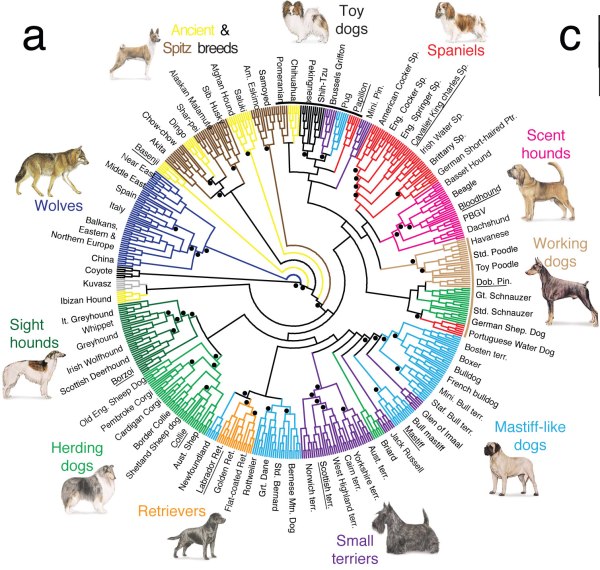
Young-earth creationists (YECs) routinely appeal to post-flood hyper-evolution to explain the diversification of pairs of ancestral animals into dozens and even hundreds of descendant species in the space a few hundred years following a global flood 4500 years before present. For example, a pair of ancestral canines are said to have evolved in less than 1000... Continue Reading →
A Million and Counting: Assessing the First Year of the Ark Encounter
The young-earth inspired attraction, the Ark Encounter, opened one year ago near a small town in Kentucky. When it opened there were many questions about how this themed religious attraction would fair. Would the Ark Encounter become a sort of Christian Mecca? A place that fundamentalist Christians would feel they have to see once in... Continue Reading →
Reconstructing the Past from Observations in the Present: A Practical Example from the Outer Banks
We use present day observations to infer past events every day. I look out and see the patio is wet and a large dark cloud has just passed overhead. From this I derive a very reasonable hypothesis despite not being an eyewitness to the history: my wet patio was caused by a rain shower. I... Continue Reading →
Tricksy Hominin Fossils: Hobbitses are Human but Homo naledi is not
Young-earth creationists (YECs) are at odds with each other about whether a large collection of fossils found deep in a South African cave should be categorized as humans (Homo naledi) or apes. But what about other hominin fossils that the scientific community have generally considered the remains of distant relatives of humans? What about... Continue Reading →
Bones of Contention VI: Young-Earth Creationists’ Continued Confusion over Homo naledi Fossils
Thousands of bone fragments have now been reported from chambers deep in the same cave system in South Africa. They belong to what has been described as a new hominid species; Homo naledi. When the first set of bones and the context in which they were recovered were revealed, young-earth creationists (YECs) scrambled to set the... Continue Reading →
Reflections on “Is Genesis History?” Part II: Where do the Lines of Evidence Lead?
The question posed in the title of the documentary-style film “Is Genesis History?” sounds provocative, but the answer was never in doubt in the mind of the filmmakers—or the primary audience. The producers surely hoped that non-Christians and Christians alike with questions about origins/natural history/science would be drawn in by the title query and subtitle... Continue Reading →
A Landmark Film for the Young-Earth Community: Reflections on “Is Genesis History?”
The documentary-style film, Is Genesis History, (IGH) lays out clearly and concisely the implications of a literal-six-day and global flood interpretation of the early chapters of Genesis. While providing only a bare-bones defense of the biblical case for a literal-day interpretation, the film uses most of the screen time to explore how young earth and global... Continue Reading →
Was The Young-Earth Perfect Prelapsarian Paradise a Maladapted World?
A central tenet of young earth creationism is the belief that the entire world before Adam’s transgression experienced no animal death. What would such a world have looked like? Examining YEC depictions of Eden you would think that the animals looked like those alive today except that all extinct things, eg. dinosaurs, were also alive... Continue Reading →
Where’s the DNA? Young Earth Creationism and the Search for Ancient DNA
So how long can DNA or even cells survive in the environment once an organism dies? This has been a topic of considerable debate in the scientific literature since the advent of high-throughput DNA sequencing techniques. This growing field of scientific inquiry is fascinating to me and promises to shed new light on old questions. I have... Continue Reading →