A Creationist Rejects Intelligent Design, Appeals to “Natural Processes” to Explain Stone Artifacts

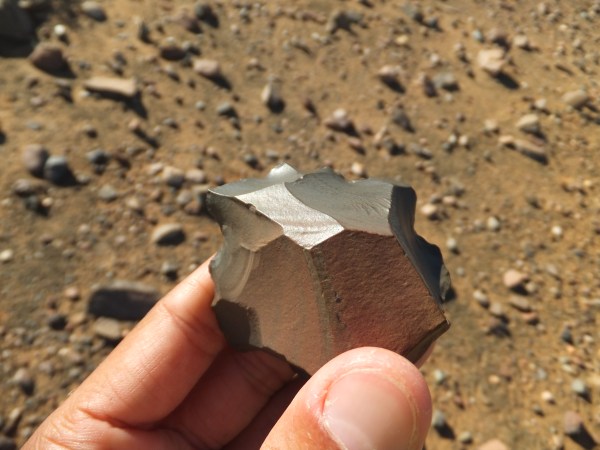
Are billions and billions of pieces of stone found strewn across the African continent the product of intelligent design (purposeful actions) or random processes? Last year I presented a Stone-Age artifact challenge to the young-earth creationist' chronology.   Dr. Mortenson, from Answers in Genesis, responded to the evidence that I presented of vast stone-tool production in... Continue Reading →

Are Ruminants Derived from a Common Ancestor? Ruminating on the Meaning of Noahic “Kinds”

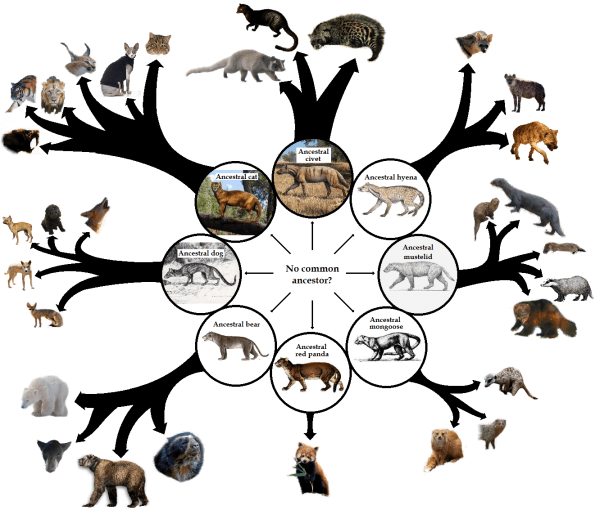
What do giraffes, cows, sheep, antelope, pronghorn and deer have in common?  Foremost, they all share a specialized digestive system that includes a four-chambered stomach that allows them to obtain nutrients and energy from vegetation that is inaccessible to most mammals.  This ability and other shared morphological traits are used by scientists to classify all... Continue Reading →

Dodging Darwin: How Ken Ham’s Ark Encounter is Slowly Embracing Evolution

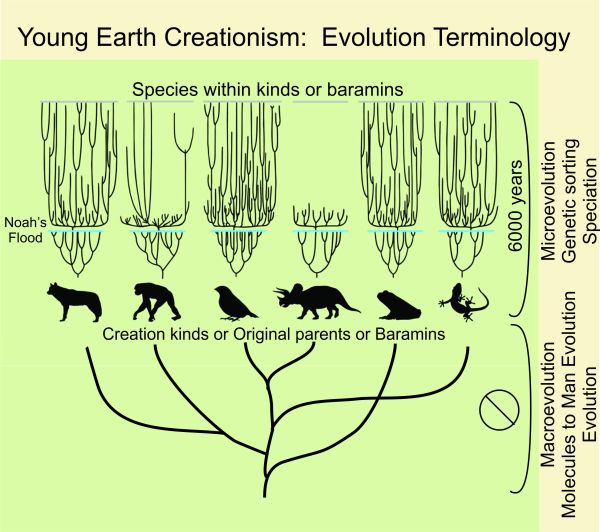
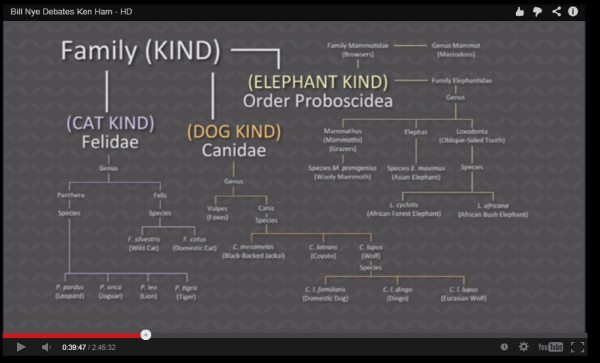
As the strict young-earth creationists at Answers in Genesis work to complete their Ark Encounter "theme park," they have expended an impressive amount of energy organizing the millions of species of land animals alive today into a handful of small groups they call "baramins." Creationists insist that while adaptation or speciation within a particular "baramin" is observable (and, indeed, necessary in order to account for the present observed diversity of life), there is never any overlap between separate kinds. Unfortunately for the young-earth model, the push to minimize the number of animals riding on the Ark has exposed a major problem with this view.

Ken Ham’s Darwinism: On The Origin of Species by Means of Hyper-Evolution Following Noah’s Flood

Young life creationists, or baraminologists as they prefer to be called, have experienced a paradigm shift over the past three decades. Initially,  young-life creationists (YLCs) made a point of identifying every possible unique characteristic of a species as the result of direct special creation and intelligent design.  However, they are now increasingly embracing a model... Continue Reading →

Fossil Wasp Cocoons in Dinosaur Eggs: Complex Ecology Contradicts YEC Flood Geology Hypothesis

What happened to dinosaur eggs that were either abandoned or broke prematurely?  You might think that this is a question that is impossible to answer, but dinosaur eggs have been discovered with intriguing evidence of scavenging of many forms.   By studying the remains of organisms that are preserved in preserved dinosaur eggs paleontologists have discovered compelling evidence that a complex ecology... Continue Reading →

Up ↑