A few days ago I shared some thoughts about the significance of genetic differences that are observed between humans and primates (How Similar is Similar, Part I). I said that it was important that genetic similarity numbers that are frequently used to make a case for genetic uniqueness need to be assessed in the context of... Continue Reading →
How Similar is Similar? Baramins, Species, and the Identification of Common Ancestors
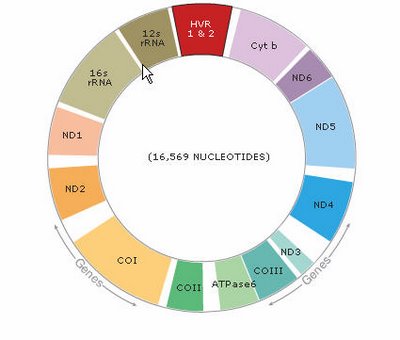
A recent paper published by the Answers Research Journal, the research publication of Answers in Genesis, reported a comparison of human and chimpanzee genomes and found that they have, on average, a DNA similarity of only 70%. This is a very striking number since the usual numbers you hear thrown about as representing the similarity... Continue Reading →
Consider the Ostrich: Job 39 and Creation – Part II
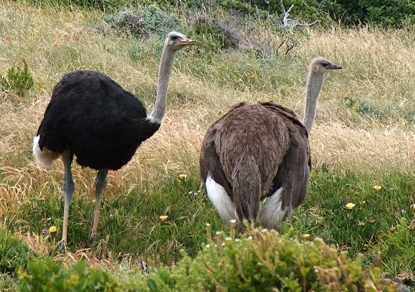
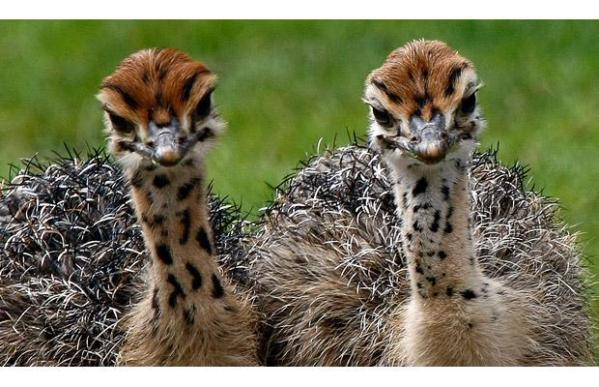
Some passages of scripture contain fascinating natural history information about animals. The book of Job, in particular, records many physical and behavioral traits of animals. One such animal described in Job is the ostrich. The ostrich we know today is a strange bird. It is very large, its wings are not able to provide flight... Continue Reading →
NH Notes: Fossilized Animal Burrows in Argentina
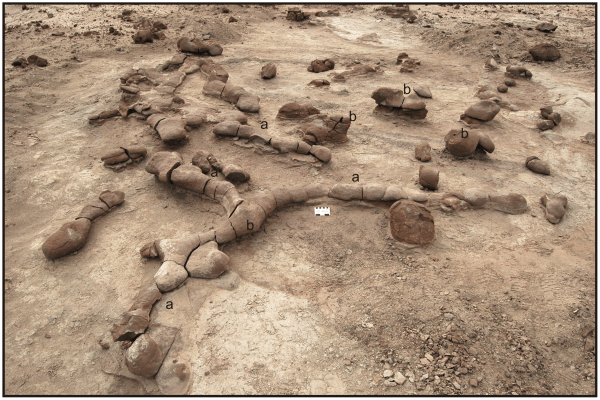
Fossilized bones of dinosaurs, whales and mammoths get all of the attention but trace fossils provide important evidence for interpreting when and how organisms lived on Earth in the past. Trace fossils are not the fossilized remains of organisms themselves but rather are evidence of the past presence of organisms. The most recognizable trace fossils... Continue Reading →
Consider the Ostrich: Job 39 and God’s Commentary on His Creation – Part I
The book of Job contains some of the most descriptive language about the natural world in all of Scripture. In Job 39 alone, we find God describing the natural history of animals including the mountain goat, deer, donkey, ostrich, horse, hawk and eagle in order to illustrate His omniscience and wisdom in creation. Although... Continue Reading →
NH Notes: A Follow-up About Heat Sharing Huddling Penguins
I'm posting a short follow-up to a story about huddling penguins that I wrote about a few weeks ago (Heat-sharing Huddling Penguins - A Benefit to Selfish Behavior?). I was pointed to a really fascinating set of videos that show emperor penguins in the process of forming huddles. You can see these videos embedded in... Continue Reading →
Did T. Rex Really Have Tiny Arms? – Historical Science and Creationism
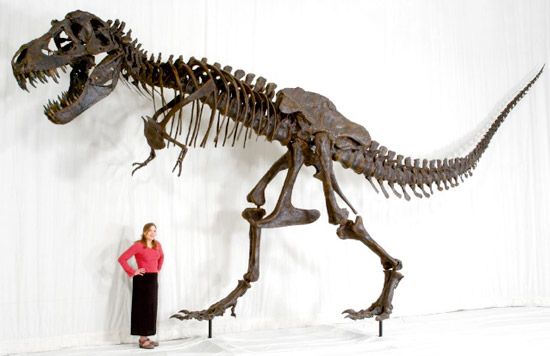
Everyone has encountered a T. rex in books, movies or museums. Besides its size and menacing jaws one of the most striking features of a T. rex is its diminutive arms. So why were the arms of T. rex so short? There have been many hypotheses including: 1) they had no use and... Continue Reading →
Curiouser and Curiouser: A Mars Curiosity Update
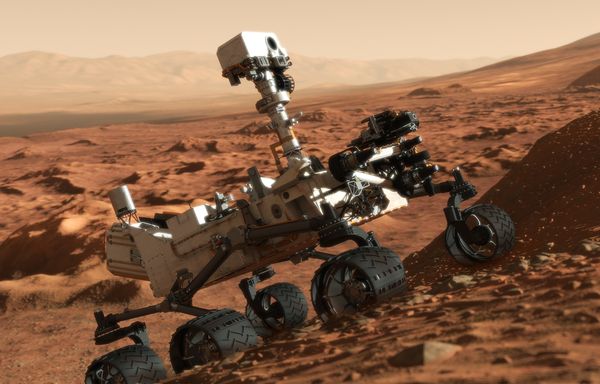
After the Mars Science Laboratory, otherwise known as the Curiosity rover, dropped down the rabbit hole and safely landed on the surface of Mars there was much ado about the first images and hints at a watery past. Since then the rover has left the public eye but the rover has been no slouch,... Continue Reading →
More Planets Than Stars – Exoplanets and Our Little Blue Ball
To say that the Universe is a big place would be a huge understatement. It is difficult to fathom just how big it is. When we hear that there are an estimated 10 sextillion to 1 septillion stars in the Universe we have few reference points to compare to those numbers. A number followed by... Continue Reading →
NH Notes: Heat Sharing Huddling Penguins – A Benefit of Selfish Behavior?
In a paper entitled, "Modeling Huddling Penguins" in PLosOne (an Open Access journal) a few months ago mathematicians take on a difficult question in biology: Do individuals organisms make decisions to share a resource for the greater good (altruism) or do they generally act only as selfish individuals. It is very difficult to test the cause... Continue Reading →
NH Notes: Snapshot of a Chaotic Tumbler – Asteroid Toutatis
A Chinese spacecraft has been only the fourth to fly past an asteroid and capture close-up images. Here are a series of images of the 4 km long asteroid Toutatis which is considered a NEA (Near Earth Asteroid) though it won't make another pass near the earth for another 50 years. This is... Continue Reading →
Weekend Potpourri: Salt Chronometer Update, Ken Ham Blog, and Gen X Creationists
It has been a while since I've been able write. There has been quite a bit of news the last two weeks and I thought I would briefly comment on a few items that are relevant to my most recent posts: The Salt Chronometer Since I published my series on the salty seas (Part I,... Continue Reading →
A Simple Experiment Misinterpreted: Properties of Liquid vs Frozen Water
I'm taking a bit of a tangent from my usual subject material to have a bit of fun with some material that I recently found as part of this thing called the blogosphere. Ok, maybe not all fun since I'm not sure if this post will make you laugh or cry or maybe both. My... Continue Reading →
Lake Suigetsu and the 60,000 Year Varve Chronology
Do places on Earth exist where annual records have been stored for tens of thousands of years and can be accessed today? Ice-cores and tree rings can preserve long records of yearly events but some of the best records come from layers of sediment underlying some lakes which, if formed under the right conditions, can be read like the annual rings of... Continue Reading →
The State of Creation Science as Measured by Scholarly Publishing
In two prior posts (Creation Science Organizations: Past, Present and Future and The Next Generation of Creation Scientists) I have raised questions about the viability of the creation science movement as measured by the conversion of new scientists to the movement. Of course there have been many converts to belief in a young earth or at... Continue Reading →