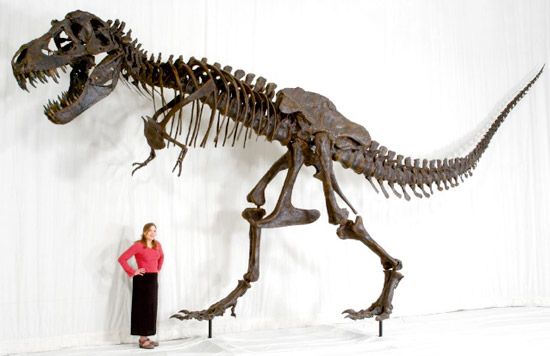
Everyone has encountered a T. rex in books, movies or museums. Besides its size and menacing jaws one of the most striking features of a T. rex is its diminutive arms. So why were the arms of T. rex so short? There have been many hypotheses including: 1) they had no use and... Continue Reading →
Curiouser and Curiouser: A Mars Curiosity Update
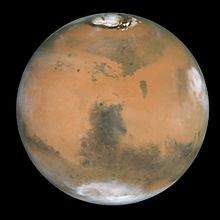
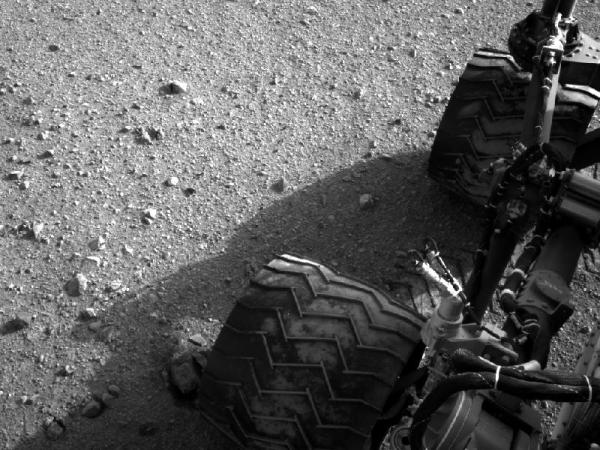
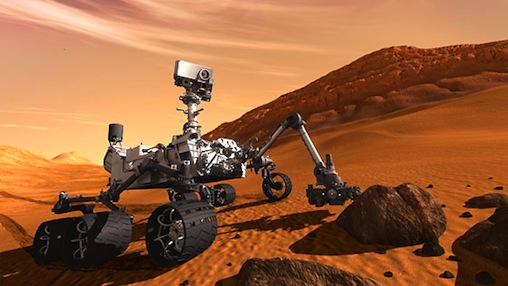
After the Mars Science Laboratory, otherwise known as the Curiosity rover, dropped down the rabbit hole and safely landed on the surface of Mars there was much ado about the first images and hints at a watery past. Since then the rover has left the public eye but the rover has been no slouch,... Continue Reading →
More Planets Than Stars – Exoplanets and Our Little Blue Ball
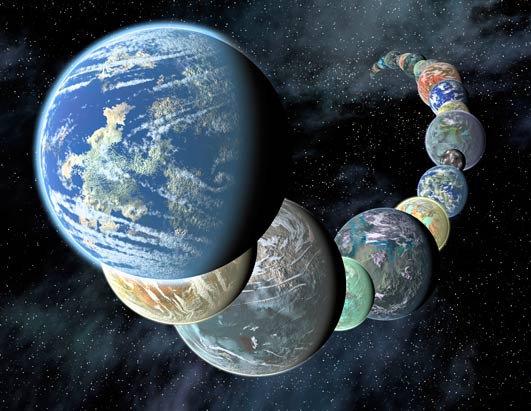
To say that the Universe is a big place would be a huge understatement. It is difficult to fathom just how big it is. When we hear that there are an estimated 10 sextillion to 1 septillion stars in the Universe we have few reference points to compare to those numbers. A number followed by... Continue Reading →
NH Notes: Snapshot of a Chaotic Tumbler – Asteroid Toutatis
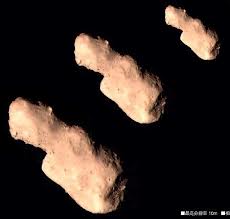
A Chinese spacecraft has been only the fourth to fly past an asteroid and capture close-up images. Here are a series of images of the 4 km long asteroid Toutatis which is considered a NEA (Near Earth Asteroid) though it won't make another pass near the earth for another 50 years. This is... Continue Reading →
Weekend Potpourri: Salt Chronometer Update, Ken Ham Blog, and Gen X Creationists
It has been a while since I've been able write. There has been quite a bit of news the last two weeks and I thought I would briefly comment on a few items that are relevant to my most recent posts: The Salt Chronometer Since I published my series on the salty seas (Part I,... Continue Reading →
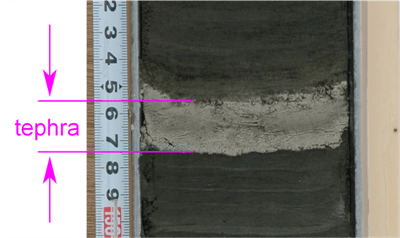
Lake Suigetsu and the 60,000 Year Varve Chronology
Do places on Earth exist where annual records have been stored for tens of thousands of years and can be accessed today? Ice-cores and tree rings can preserve long records of yearly events but some of the best records come from layers of sediment underlying some lakes which, if formed under the right conditions, can be read like the annual rings of... Continue Reading →
The Next Generation of Creation Scientists?
I have to believe that when Henry Morris formed ICR he envisioned hundreds of scientists today actively applying the creation model to the historical sciences not just mouthing support for it. That former obviously hasn't happened despite the proliferation of creation science organizations with their significant financial resources and publishing capacity Creationists list hundreds of PhD scientists who are creation scientists but this is not the same as saying there are hundreds of creation scientists doing creation science.
Creation Debate in the Adventist Church
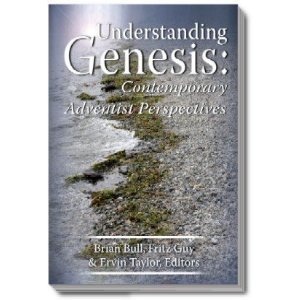
A reader recently brought the articles linked below from a Seventh Day Adventist (SDA) website to my attention. I found them interesting not just because they present a good overview of the challenges that the Greenland ice cores present to young earth creationism but because it raised my own awareness about current discussions in the... Continue Reading →
The Salty Sea Part IV: Dr. Wile’s Use of the Salt Chronometer
This is part of series of posts on the Sea Salt Chronometer. Other posts in this series are: The Salty Sea and the Age of the Earth: Confirmation Bias The Salty Sea Part II: A Young Earth Salt Chronometer? The Salty Sea Part III: Are the Oceans Getting Saltier Over Time? The Salty sea Part... Continue Reading →
The Salty Sea Part III: Are the Oceans Getting Saltier Over Time?
This is part of series of posts on the Sea Salt Chronometer. Other posts in this series are: The Salty Sea and the Age of the Earth: Confirmation Bias The Salty Sea Part II: A Young Earth Salt Chronometer? The Salty Sea Part III: Are the Oceans Getting Saltier Over Time? The Salty sea Part... Continue Reading →
The Salty Sea Part II: A Young Earth Salt Chronometer?
In Part I of this series I looked briefly at some recent encounters in which the salty sea is being discussed as a chronometer of sorts for determining the age of the earth. But how is this salt chronometer actually claimed to work? An article from ICR entitled, The Ocean’s Salt Clock Shows a Young World and includes the following:
Diverse Geological Landscapes Found on Mars
Curiosity has beamed back some really remarkable images from Mars in the past couple of days. The site for its landing was chosen because it appeared from satellite images that there was layered rock and some diversity of chemical signatures at different elevations but the pictures taken from ground level reveal a more spectacular and... Continue Reading →
The Salty Sea and the Age of the Earth, Part I – Confirmation Bias
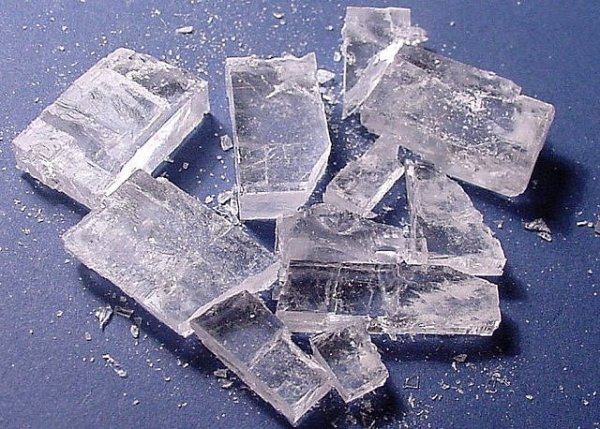
According to young earth creationists, there isn't enough salt in the oceans if the earth is old. Recent references to this argument have spurred me to look a little closer at how it is being used today. What I find is that it appears to have only a purely rhetorical use as the actual data about the ocean'salinity suggests that the amount of salt in the sea is a useless tool for indicating the earth is old or young.
The Mars Curiosity Rover: A Geological History Detective
How could anyone not be curious about Mars Curiosity rover? NASA gambled by playing up the "7 minutes of terror" landing, using social media very adeptly to get a huge audience right in the middle of the Olympics. Failure of the rover to safely land surely would have been a crushing blow to the... Continue Reading →
Geological Context II: Neanderthals and the Italian Supervolcano
There are thousands of sites with either human remains or artifacts (stone tools usually) that are known across southern Europe and many are found in locations where they are found in layers stacked on top of each other like in caves or flood plain locations along rivers. But, the exact pattern of Neanderthal and modern human population migrations and changes is not my main interest.