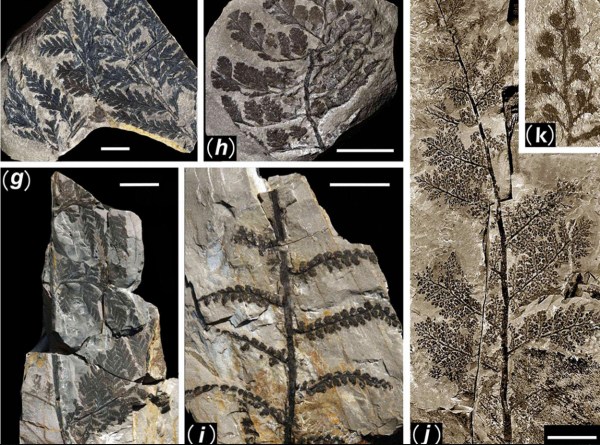
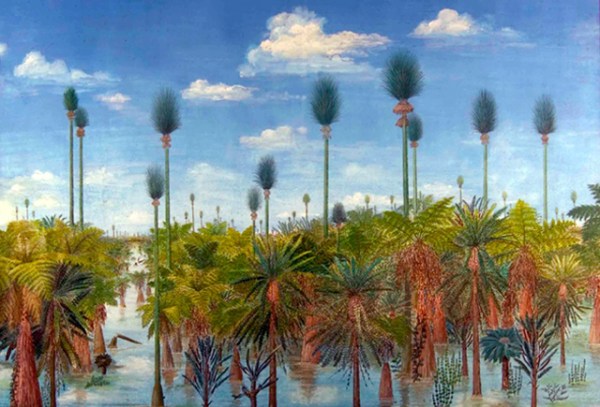
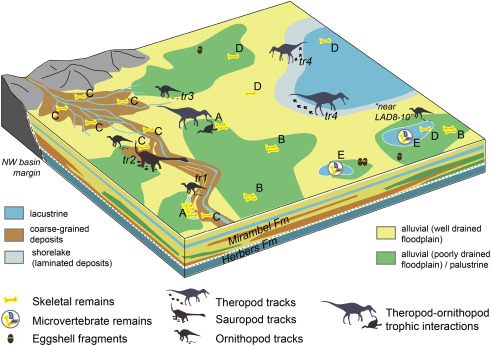
Fossils often provide us with only a fragmentary view of the distant past but sometimes collections of fossils record ancient and seemingly alien worlds in stunning clarity. In the past decade several notable fossil discoveries have permitted the reconstruction of entire forest ecosystems that existed at various points in time and space in earth history. Today,... Continue Reading →
Ancient Mars: Cosmogenic Dating Methods Allow Estimates of Erosion Rates on Mars
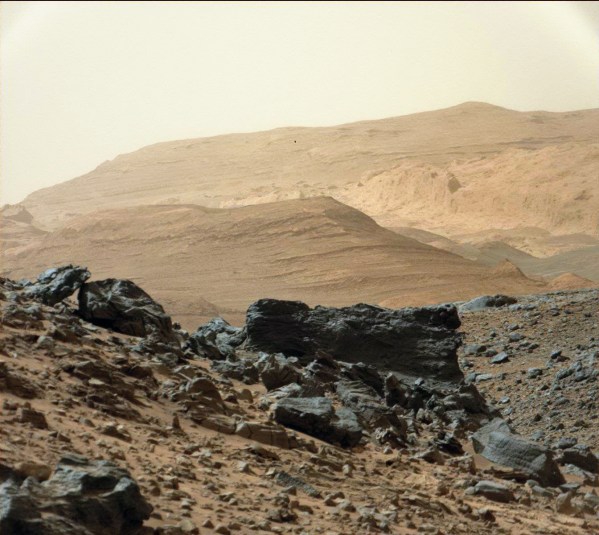
The NASA rover Curiosity has been making its way across the floor of Gale crater on Mars since 2012. It has closely examined a wide range of rock types which reveal that this location on Mars has experienced a long history of variable climates. From water-infused bedrock, water-deposited conglomerates, wind-formed fossilized dunes to active sand... Continue Reading →
Fossil Footprints on Crete – First Evidence of Humans Killed by Noah’s Flood or Another Young-Earth Mystery?
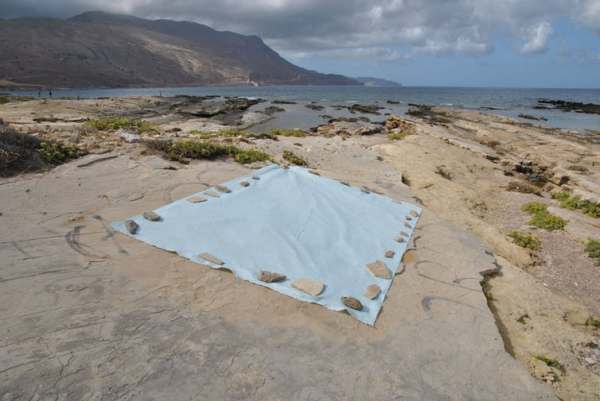
If a global Flood destroyed all humans except Noah and his family just 4350 years ago, where are all the human fossils? This is a question that any young-earth apologist must be prepared to answer. It’s a perfectly natural and appropriate question. After all, according to young-earth creationists (YECs), nearly all fossil remains of dinosaurs,... Continue Reading →
Human Remains in a Drowned Ice Age Cave Contradict Young-Earth Chronology
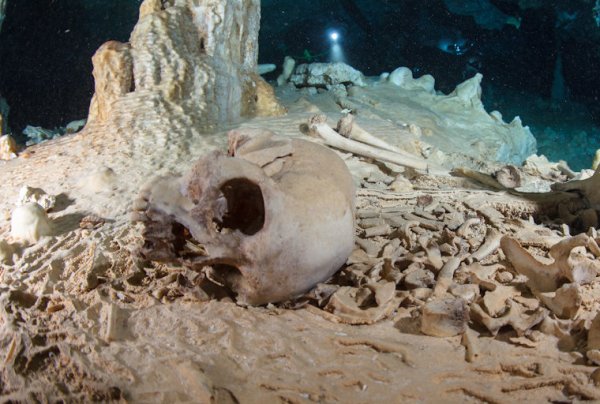
During the last Ice Age when the oceans were up to 300 feet lower than they are today an extensive cave system on the Yucatan Peninsula of Mexico was exposed above sea level allowing it to be inhabited by land animals. When the great ice sheets melted from the Earth's surface causing the oceans to... Continue Reading →
A Mediterranean Island Petrified Forest: Another Monument to an Ancient Earth
On the Greek Island of Lesvos there is a World Heritage Site which includes hundreds of petrified trees and countless other fossils. Many of these petrified trees are found standing upright with root systems intact. A variety of tree species have been identified including a species similar to the giant sequoia trees found today in California.... Continue Reading →
Reconstructing the Past from Observations in the Present: A Practical Example from the Outer Banks
We use present day observations to infer past events every day. I look out and see the patio is wet and a large dark cloud has just passed overhead. From this I derive a very reasonable hypothesis despite not being an eyewitness to the history: my wet patio was caused by a rain shower. I... Continue Reading →
Reflections on “Is Genesis History?” Part II: Where do the Lines of Evidence Lead?
The question posed in the title of the documentary-style film “Is Genesis History?” sounds provocative, but the answer was never in doubt in the mind of the filmmakers—or the primary audience. The producers surely hoped that non-Christians and Christians alike with questions about origins/natural history/science would be drawn in by the title query and subtitle... Continue Reading →
A Landmark Film for the Young-Earth Community: Reflections on “Is Genesis History?”
The documentary-style film, Is Genesis History, (IGH) lays out clearly and concisely the implications of a literal-six-day and global flood interpretation of the early chapters of Genesis. While providing only a bare-bones defense of the biblical case for a literal-day interpretation, the film uses most of the screen time to explore how young earth and global... Continue Reading →
Where’s the DNA? Young Earth Creationism and the Search for Ancient DNA
So how long can DNA or even cells survive in the environment once an organism dies? This has been a topic of considerable debate in the scientific literature since the advent of high-throughput DNA sequencing techniques. This growing field of scientific inquiry is fascinating to me and promises to shed new light on old questions. I have... Continue Reading →
An Ammonite Fossil Leaves A Trail of Evidence of a Tranquil Jurassic Seafloor
A remarkable trace fossil has given us a glimpse into the environmental conditions of a Jurassic seafloor. Ammonite fossils are common in Jurassic rocks but one particular ammonite is more unusual than most. In the horizontal layer of rock where it was found a 28 foot-long line of shallow grooves was found leading right up to the... Continue Reading →
A Fossil Paradox? Footprints are Rarely Preserved in Stone and yet are very Common
Billions of footprints are preserved in the rock record. While bones get all the attention, fossil footprints likely outnumber bones. How can we make sense of this observation? Surely, preserving a bone must be far more likely than preserving a footprint? I have written about how paleontologists use information from footprints and bones to reconstruct... Continue Reading →
Dinosaur Footprints, Eggs and Bones – Are Paleontologists Creating Fake History?
Dinosaur tracks and eggshells are abundant findings within the geological column, capturing the attention of numerous dedicated paleontologists. Their relentless pursuit involves uncovering, studying, and interpreting these remnants of long-extinct creatures. However, is all this painstaking effort merely an illusion when considering the young-earth perspective? Could the majority of paleontological work be seen as fabricating... Continue Reading →
More Planets Than Stars! Exoplanets and Our Little Blue Ball
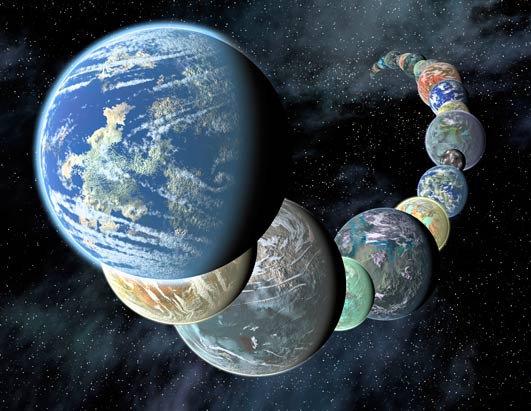
Our solar system comes with planets of all sorts of sizes and compositions. Not long ago, it was possible to debate if there were any other planets in the Universe other than those of our solar system. Now, there doesn’t seem to be any question that other planets, called exoplanets, do exist. The... Continue Reading →
A Strange Testament to an Ancient Earth: Bat Breath Causes Caves to Grow Larger
Can the act of breathing in a cave cause it to grow larger? Limestone caves are usually formed by dissolution of limestone as the result of the interaction of carbon dioxide dissolved in water seeping through cracks in bedrock. Typically this begins deep underground and as voids expand and reach the surface animals may enter... Continue Reading →
The Naica Cave of Crystals is a Giant Problem for a Young Earth
Nine hundred feet below a Mexican desert hundreds of giant white crystals, some more than 90 feet long and 13 feet wide, fill a hot (137 F) and humid cavern. Pictures of people exploring this crystal palace look as if Rick Moranis had shrunk them down to the size of an ant and then put them into... Continue Reading →