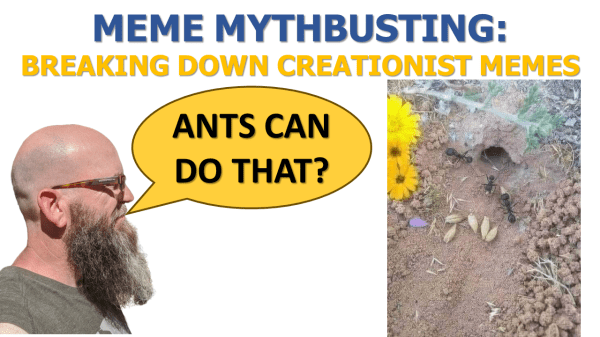
Misinformation masquerading as divine evidence has become pervasive within some Christian circles. A viral post claiming ants intentionally cut seeds to prevent germination is a fabrication. This false narrative not only damages scientific integrity but also taints the credibility of faith. Truth should be the foundation of belief; don’t share lies.
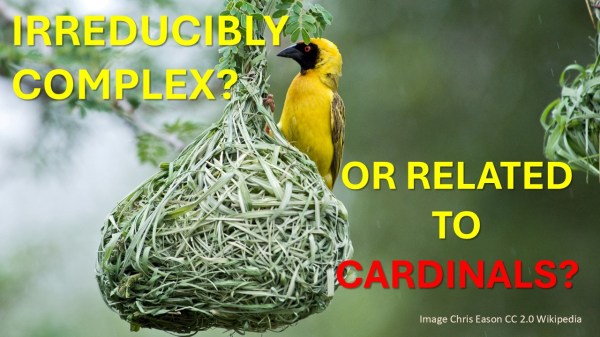
The Weaver Bird Dilemma: Creationism’s Struggle with Diversity
Young-earth creationist claims about nature's design fall flat when examined closely. The intricacies of the Southern Masked Weaver and countless species challenge the notion of a simple divine creation. The required "hyper-evolution" to account for bird diversity post-Noah is a contradiction that shatters their credibility and exposes their flawed logic.
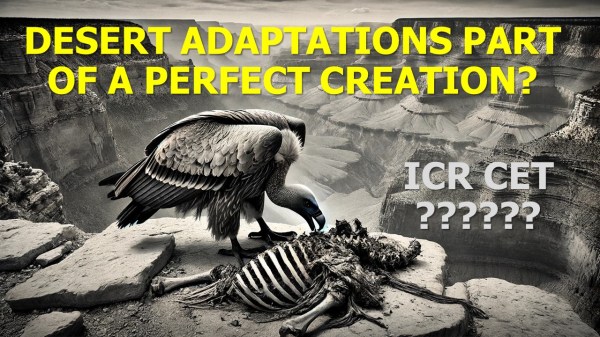
The Marvels of Desert Adaptations: A Critique of ICR’s Continuous Environmental Tracking
How did vultures, roadrunners and horny lizards obtain their uniquely deserted-adapted traits? In my most recent video I review one answer provided by the Institute for Creation Research (ICR) titled “Christ's Creativity in Canyon Critters.” Johnson, who holds a law degree and a theology degree, frequently writes about biology for ICR. https://youtu.be/c-ts_KAJy4U?si=2pMvQDpihSTG3rqv The article begins... Continue Reading →
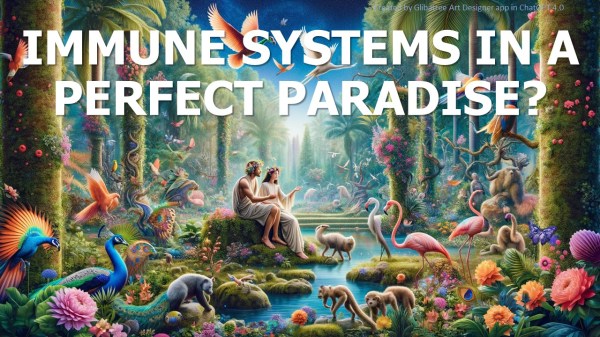
Immune in Eden: Exploring Pre-Fall Physiology
Did Adam and Eve require an immune system in the Garden of Eden? Todd Wood’s insights prompt examination of the pre-Fall world and its theological, scientific implications. He explores whether the immune system was part of the original design or arose after the Fall. The discussion challenges traditional views, emphasizing the profound changes after the Fall.
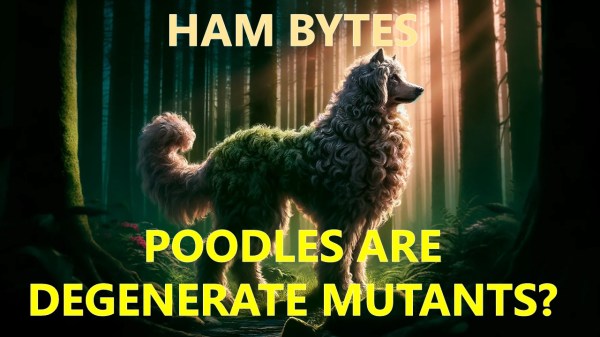
Ken Ham: Poodles and all Species Including Humans are Degenerate Mutants
Ken Ham, CEO of Answers in Genesis, often uses poodles to illustrate his "speciation kinds" concept, rooted in his biblical creationist worldview. He recently referred to domestic dogs as "degenerate mutants," attributing their diversity to post-creation mutations. Ham ties these discussions to theological implications, emphasizing the loss of original genetic information.
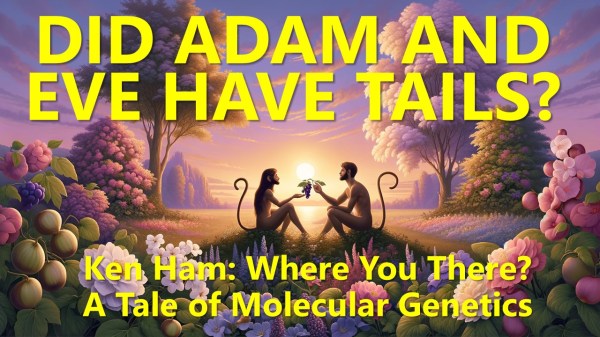
Did Adam and Eve Have Tails? A Molecular Genetic Tale
The video explores the possibility of Adam and Eve having tails, challenging the views of creationists like Ken Ham. It delves into the genetic and morphological aspects of tail development, highlighting a study in the journal 'Nature" that suggests a genetic mutation responsible for the absence of tails in humans and great apes. The content encourages a dialogue on the interpretation of creation narratives and the integration of scientific understanding with theological beliefs.
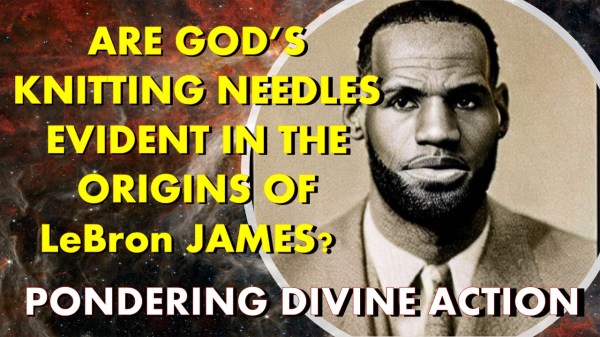
Are God’s Knitting Needles Revealed in the Creation of LeBron James?
We all recognize that LeBron James has a unique set of skills. He, you and I are all unique in some way if you think about the millions of variants in our genomes. But how was LeBron James made? How did he come to be the way he is? We find several biblical authors attributing... Continue Reading →
Are Species Created with Hidden Information Pre-adapted for Future Environments?
How did the incredible species diversity today manifest itself from just a few individual animals preserved on Noah's Ark? How much speciation has happened? What are the mechanisms for young-earth speciation? Is there evidence that rapid speciation has occurred in just the past few thousand years? These are enduring questions that young-earth creationists have been... Continue Reading →
Did Adam have a Tail? Ken Ham, Adam and Eve and a Tale of Tails
Ken Ham recently tweeted about a baby born with a "tail." I agree with his assessment that these are not cases of bony tails, homologous to tails in almost all vertebrate species, but then I wondered, can young-earth creationists be sure that Adam and Eve did not have true bony tails as adults? After all,... Continue Reading →
Ham and Thomas get their Platypus Egg-Genes Scrambled
Reading and understanding original research publications can be difficult when the content is outside your field of expertise. Sometimes reading that original research is just avoided and popular summaries are used to inform us of the importance of new research. The latter appears to be the case when Ken Ham writes about his love of... Continue Reading →
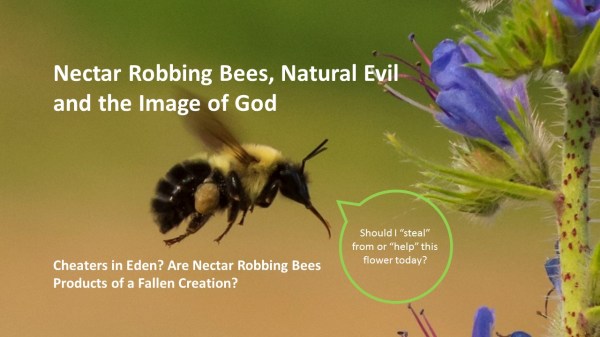
Nectar Robbing Bees, Natural Evil and the Image of God
Cheaters prosper! Yes, they really do. Hundreds of thousands of species are singularly devoted to some form of parasitic life strategy. It's a strategy that involves one organism deriving all or much of its resources from a host organism to the detriment of that host. Many of these strategies make us cringe. For example the... Continue Reading →
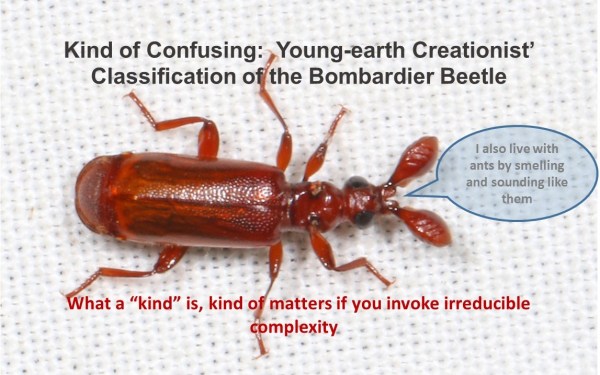
Kind of Confusing – Young-earth Creationist’ Classification of the Bombardier Beetle
Young-earth creationists in the twenty-first century take a broadly inclusive view of the relationship of existing and extinct species as they relate to the kinds of organisms that God created one days four, five, and six of the creation week. For example, the image below is from a new display of the origin of the... Continue Reading →
Institute for Creation Research Goes all-in on Denying the Reality of Natural Selection
A difference of opinion among creationist’ organizations about the origin of species and natural selection has been festering for a number of years and yesterday that dispute broke out into full view. The Institute for Creation Research (ICR) published a short article on their website extolling the virtues of Dr. Guliuzza’s Continuous Environmental Tracking (CET)... Continue Reading →
God’s Knitting Needles Revealed in the Creation of Mike Trout?
The satire site, The Babylon Bee, published a fiction piece earlier this year in which Ken Ham claimed that Mike Trout's amazing baseball abilities are the best evidence we have of intelligent design. The Bee’s clever satire got me thinking about the nature of God’s contingent actions in the world which have traditionally been identified... Continue Reading →
What is a Perfect Trait? The Prelapsarian Paradise in Our Own Eyes
Creationist' literature can be baffling to read at times. It doesn't just contain common misunderstandings of science and theology but often it leaves you with the impression that they haven’t thought through the implications of what they have written. As a result, one article frequently contradicts the thesis, or even the facts, of another. Today’s... Continue Reading →