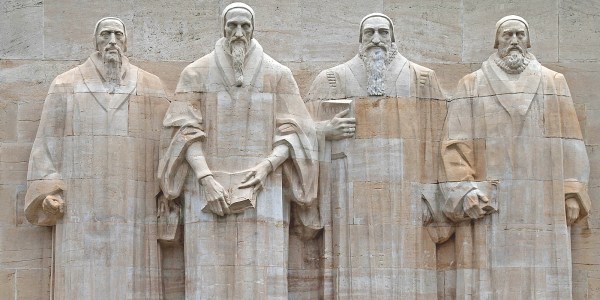
John Ray, one of England's greatest 17th century natural theologians, spent much time pondering the meaning of fossils or "formed stones" as they were called then. I have shared some of his thoughts about fossils and Earth's history before (See: John Ray on Flood Geology: Words that Still Apply Today). In a correspondence with... Continue Reading →
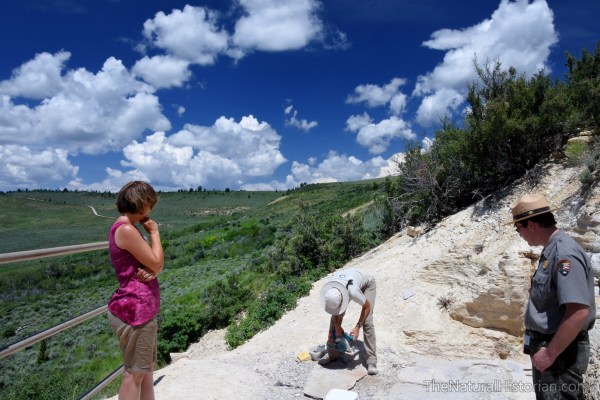
A Visit to Fossil Butte National Monument in Wyoming
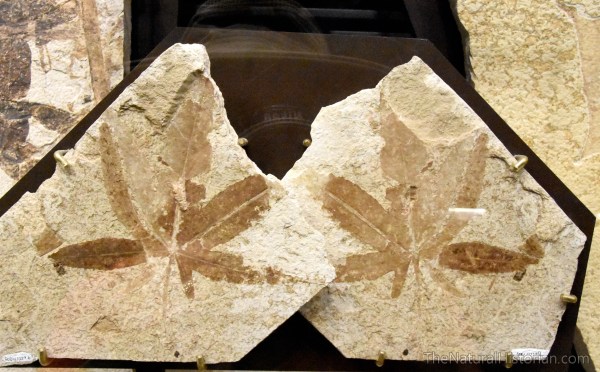
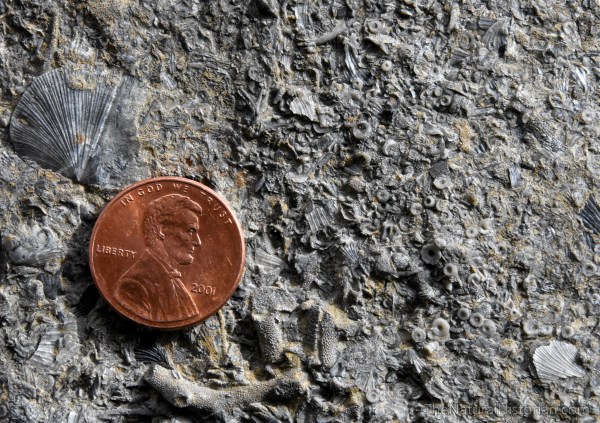
At the bottom of an ancient lake in southwest Wyoming thousands of fish, plant leaves, and other animals were preserved with amazing detail. These fossils represent very different organisms than those found in other parts of Wyoming such as the fossil sites that we found this summer north-central Wyoming (Hiking through the Jurassic Period in Wyoming... Continue Reading →
The Ark Encounter Fossil Sluice: A Missed Educational Opportunity
The Ark Encounter in Kentucky is built on a foundation of trillions of fossils but when they built a new activity to allow visitors to find their own fossils they opted to give them assorted fossils from other places in the world. This was a missed educational opportunity. When I wrote about my visit to the... Continue Reading →
Quadrillions, Quintillions and Beyond: The Vast Fossil Record Refutes the Flood Geology Hypothesis
Young earth creationists greatly underestimate the fossil record when they tell their audiences that there are "billions of dead things buried in rock layers." The point, that there are huge numbers of fossils, is correct but billions is such an underwhelming number compared to the reality of the fossil record. The vastness of the fossil record was driven... Continue Reading →
The Ark Encounter: A Presentation at the Geological Society of America Annual Meeting
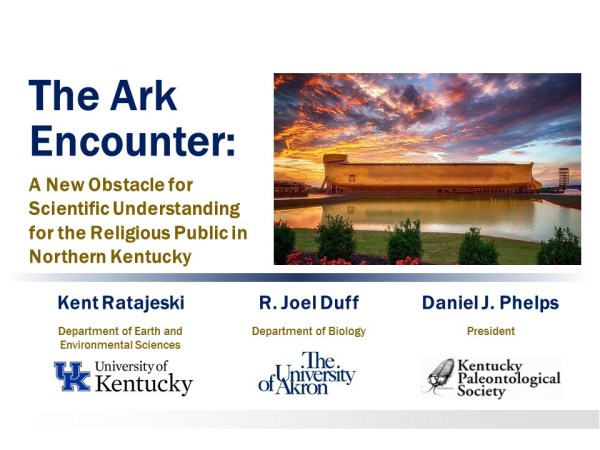
Take a tour of the Ark Encounter with a geologist, paleontologist and myself in this YouTube presentation. In July I visited the Ark Encounter with geologist Dr. Kent Ratajeski from The University of Kentucky. After that trip Kent, myself and Dan Phelps (President of the Kentucky Paleontological Society) worked together - my contribution was rather... Continue Reading →
Hiking through the Jurassic Period in Wyoming: A Sheep Mountain Fossil Hunt
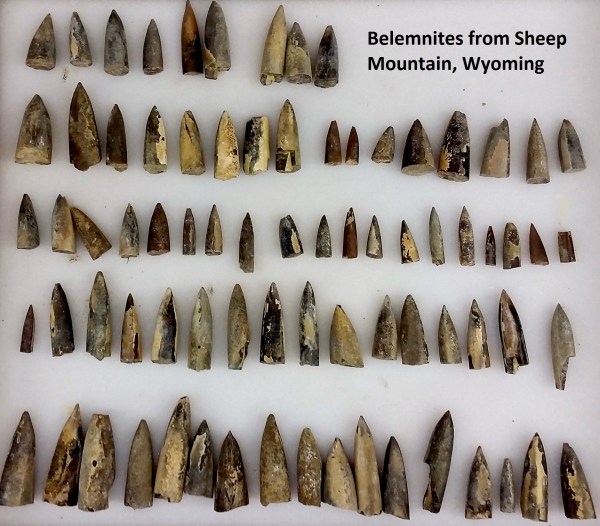
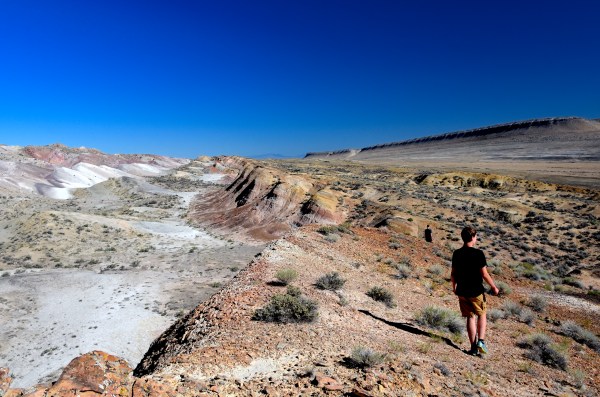
This summer two of my sons and I took a hike through the Jurassic time period. Near Greybull, Wyoming is a long ridge called Sheep Mountain. Geologically speaking, Sheep Mountain is an anticline which is a type of folded bedrock that has an arch-like shape with its oldest rocks at its core. Because what are typically horizontal rock layers are here found tipped... Continue Reading →
Perceiving Age: Student’s Interpretations of the History of Craters on Mars
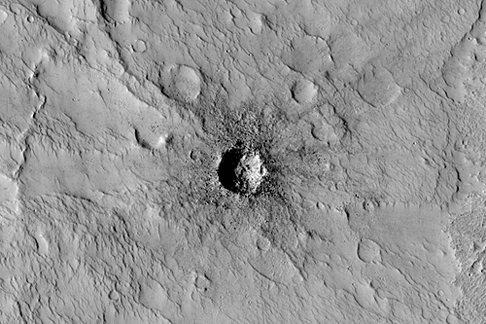
Our perceptions of the age of a subject are frequently based on our common experience with similar subjects. Most people have some ability to guess the age of children with seemingly very little prior information. We might call this ability to guess age our intuition but this "intuition" is the scientific method working automatically in our minds. Our... Continue Reading →
Walking in the Footprints of Giants: The Red Gulch Dinosaur Tracksite in Wyoming
Scattered across the upper surface of a hard layer of limestone in the badlands of the Bighorn Basin in Wyoming are the tell-tale signs of dinosaur activity: footprints. Over one thousand footprints have been identified here, most of them on one exposure of rock in a small gully in the Red Gulch region. On our family vacation this... Continue Reading →
NH Notes: Todd Wood on Creationism and the Origin of Species
If you have followed my blog for the past six months you know that I have been discussing the feasibility of the young-earth creationist’ (YEC) rapid-speciation model which proposes that hundreds of thousands of species of plants and animals have been formed by natural selection in just the past couple thousand years (YEC Hyper-evolution article archive). More... Continue Reading →
Remnants of a Shallow Sea: A Visit to Monument Rocks in Kansas
In remote western Kansas, groups of rock pillars stand like a natural Stonehenge over the grassy plains. One such group of these pillars south of Oakley is named Monument Rocks. Returning from our Wyoming and Colorado adventure, we stopped overnight in Scott City, Kansas just south of this interesting rock formation. The following morning we made our way along many... Continue Reading →
The Origin of the YEC Hyper-Speciation Model of Biological Diversity
Young earth creationists (YECs) are the most vocal skeptics of evolutionary theory, however, they recognize organisms do change over time. But how much? Everyone agrees that organisms have the capacity to adapt to their environments. This adaptive ability can lead to the formation of isolated genetic lineages we identify as species. Evolutionary theory posits that continued... Continue Reading →
A Vivid Demonstration of Bacteria Adapting to Antibiotics via Mutations and Selection
The fact that bacteria are able to develop resistance to antibiotics has been a textbook example of evolutionary processes in action. Mutations and natural selection—two primary agents of change—work together to sculpt new genetic combinations allowing individuals to exploit resources unavailable to bacteria previously unable to resist antibiotic chemicals in their environment. Now you can watch a powerful... Continue Reading →
My Trip to the Ark Encounter: Some Pictures and Reflections
Just 10 days after the grand opening of the Ark Encounter on July 7th, I traveled down to Kentucky to pay a visit to Ken Ham's latest evangelistic outreach endeavor. It was a Friday and I arrived less than one hour after opening and spent the better part of six hours on the Ark Encounter premises. ... Continue Reading →
Ark Encounter Common Ancestors: The Increasing Inclusiveness of Biblical Kinds
Just how many animals where on Noah's Ark according to 6-day creationists? That answer has varied considerably over the past century. With the completion of the Ark Encounter, the most visible attempt to show the feasibility of preserving all land animal diversity from a global flood, more people are being exposed to a modern answer to... Continue Reading →
A 60,000 Year Varve Record from Japan Refutes the Young-Earth Interpretation of Earth’s History
Do places on Earth exist where annual records have been stored for tens of thousands of years and can be accessed today? Ice-cores and tree rings can preserve long records of yearly events but some of the best records come from layers of sediment underlying some lakes which, if formed under the right conditions, can be read like the annual rings of... Continue Reading →