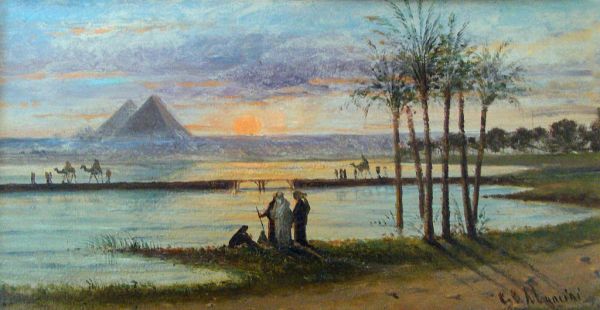
In Egypt the Nile River Valley conceals a massive canyon that once was as deep and wide as the Grand Canyon in Arizona. We have explored the origins of this lost canyon in the previous posts. We found that geologists attribute the origins of this massive canyon to the great drying up of the Mediterranean... Continue Reading →
The Lost Grand Canyon of Egypt, Part III: A Brief Chronology of Events
A massive canyon lays hidden below the Nile Valley in Egypt. In Part II we looked as how this massive canyon was formed. Before we go on to look a bit deeper into this canyon and how it fits into Biblical chronology lets look at the chronological sequence of historical events—according to the consensus of geological experts—that must... Continue Reading →
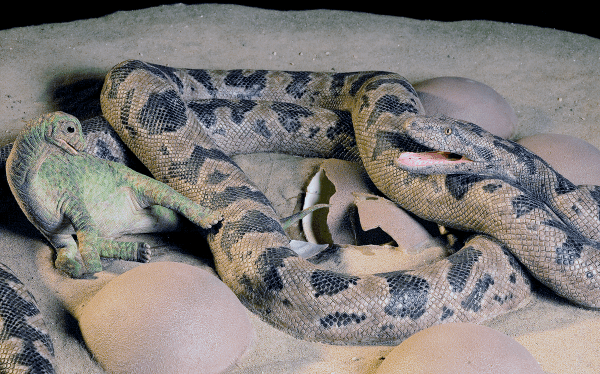
Snakes Preserved in Dinosaur Nests – Another Problem for Creationist’ Flood Geology
An eleven-foot snake slithers among a cache of eggs and a sauropod dinosaur hatchling. Before it can grab the hatchling a landslide or windstorm buries the eggs, hatchling and snake. This is the scene preserved in Late Cretaceous deposits in India (Wilson et al. 2010). These same rocks have yielded thousands of sauropod eggs, hatchlings,... Continue Reading →
Lab-Grown Diamonds are not Ken Ham’s Best Friend
They say diamonds are forever, but for geologists this saying doesn’t make much sense. They would agree that diamonds are for a long time—hundreds of millions if not billions of years—but not forever. Many lines of evidence reveal that one must go deep (more than 150 km) into the mantle of the Earth to find... Continue Reading →
Pando, the World’s Heaviest Organism, is an Ever-Growing Witness of an Ancient Earth
Evidence of the antiquity of the Earth is everywhere we look if we have our eyes open and are pondering what we see. One such place is central Utah on a typical rocky mountainside above 8000 feet just southwest of Fish Lake. This is where you will find Pando. Pando is the name given to a... Continue Reading →
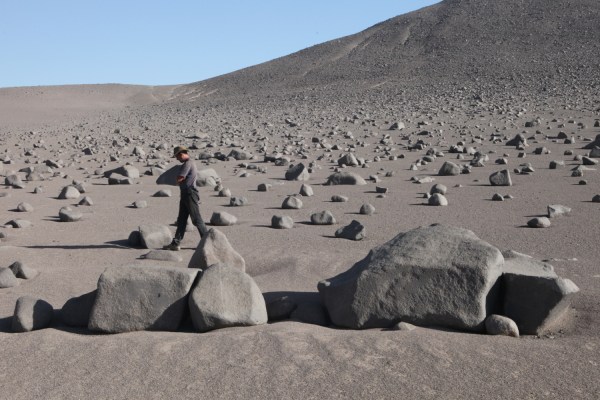
The World’s Largest Rock Tumbler is an Unusual Testimony to an Ancient Earth
Evidence that some features of earth's landscape are the product of processes acting over longer periods of time can be found everywhere we look. Some of this evidence, such as that from the Grand Canyon, may be familiar to us but other evidence is far less familiar but tells the same story. For example, high... Continue Reading →
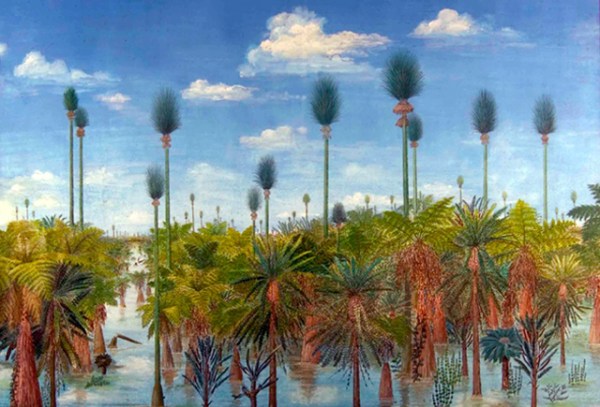
An Ancient and Alien Forest Reconstructed: A Fossil Challenge for Young-earth Creationists
Fossils often provide us with only a fragmentary view of the distant past but sometimes collections of fossils record ancient and seemingly alien worlds in stunning clarity. In the past decade several notable fossil discoveries have permitted the reconstruction of entire forest ecosystems that existed at various points in time and space in earth history. Today,... Continue Reading →
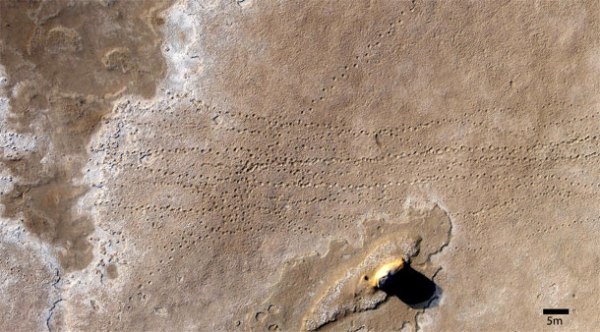
Thousands of Fossilized Elephant Footprints Preserved in the Arabian Desert
Thousands of footprints preserved in a windswept eroded rock surface deep in an isolated desert region of the Arabian peninsula tell the story of an ancient herd of elephants walking across an ancient muddy landscape. These are possibly the longest continuous set of footprints in the world and have been described in an article in the journal,... Continue Reading →
Millions of Fossilized Footprints – A Global Flood Dinosaur Dilemma
Animal tracks preserved in stone are found in great abundance in many parts of the geological column. You might be asking yourself, aren't the chances incredibly small that any individual track made in mud would be preserved over long periods of time? You would be right. The vast majority of footprints won’t survive the ravages of... Continue Reading →
Quadrillions, Quintillions and Beyond: The Vast Fossil Record Refutes the Flood Geology Hypothesis
Young earth creationists greatly underestimate the fossil record when they tell their audiences that there are "billions of dead things buried in rock layers." The point, that there are huge numbers of fossils, is correct but billions is such an underwhelming number compared to the reality of the fossil record. The vastness of the fossil record was driven... Continue Reading →
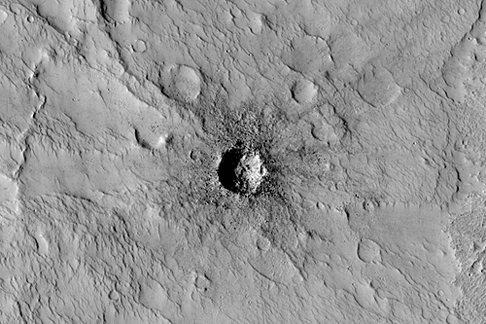
Perceiving Age: Student’s Interpretations of the History of Craters on Mars
Our perceptions of the age of a subject are frequently based on our common experience with similar subjects. Most people have some ability to guess the age of children with seemingly very little prior information. We might call this ability to guess age our intuition but this "intuition" is the scientific method working automatically in our minds. Our... Continue Reading →
A 60,000 Year Varve Record from Japan Refutes the Young-Earth Interpretation of Earth’s History
Do places on Earth exist where annual records have been stored for tens of thousands of years and can be accessed today? Ice-cores and tree rings can preserve long records of yearly events but some of the best records come from layers of sediment underlying some lakes which, if formed under the right conditions, can be read like the annual rings of... Continue Reading →
2500 Year Old Human Footprints Discovered: Insight into the Formation of Fossil Footprints
Countless numbers of footprints made by hundreds of kinds of organisms are preserved in hundreds of individual layers of the geological column. Millions of these tracks have been identified from just the tiny fraction of the rocks that are exposed at the surface of the Earth. But how were so many footprints preserved? In conversations with... Continue Reading →
John Ray on Flood Geology in 1695: Words that Still Apply Today
Modern young-earth creationism has deep roots. The essential elements of flood geology were established in the 17th century though much of what passed as flood geology at that time might be difficult to recognize today. One thing that hasn't changed is the style of rhetoric frequently used to promote flood geology to the general public.... Continue Reading →
Origins of a Tropical Island II: The Long Road from Lava to Colonization
Imagine a tropic island paradise with beautiful beaches and thousands of plants and birds. Chances are you are imagining an island that formed as the result of volcanic activity. Examples would include the Caribbean islands, the Polynesian islands, and the Hawaiian Islands. But imagine what those islands looked like when they first formed. Rather than... Continue Reading →