Creation Together: Building Bridges Across the Origins Divide

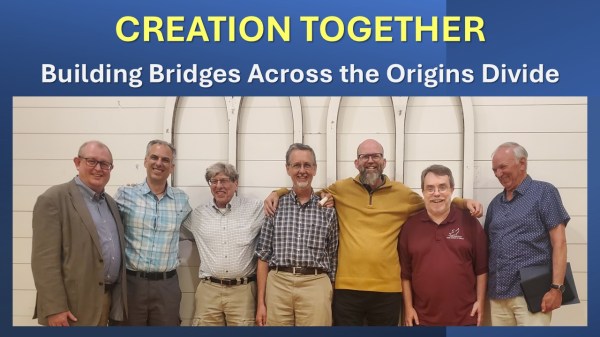
In a gathering this past summer Christians from young-earth and old-earth camps, engaged in genuine dialogue instead of dogma. This transformative event proved that radical disagreements on origins need not hinder authentic Christian fellowship. It's high time we prioritize unity in Christ over polarized disputes—can we truly afford to do otherwise?

Flood Geology Can’t Explain Dino Droppings 

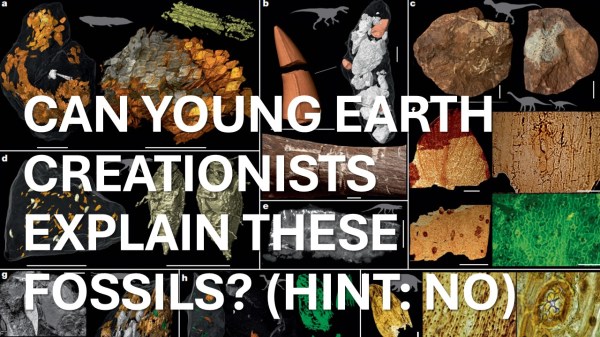
A recent Nature paper reveals insights from fossilized dinosaur droppings, or coprolites, showing dinosaurs evolved from small omnivores to larger specialized eaters. Advanced imaging techniques allow detailed analysis of their diets, challenging young-earth creationist models by showcasing geological progression, preservation, and ecological diversity over millions of years, supporting an old Earth perspective.

Critiquing Ken Ham and Günter Bechly’s Articles on Bird Origins

Ken Ham's insistence that feathered dinosaurs are merely birds continues to be an obsession of his. His claims rely on selective evidence and misunderstanding of scientific theories. The robust connections between dinosaurs and birds, supported by extensive fossil records like Eosinopteryx, continue to undermine his arguments, revealing a clear ideological bias rather than intellectual rigor.

The Weaver Bird Dilemma: Creationism’s Struggle with Diversity

Young-earth creationist claims about nature's design fall flat when examined closely. The intricacies of the Southern Masked Weaver and countless species challenge the notion of a simple divine creation. The required "hyper-evolution" to account for bird diversity post-Noah is a contradiction that shatters their credibility and exposes their flawed logic.

Genome Size Extremes: When More Isn’t Necessarily Better

The incredible variation in genome sizes across different species challenges traditional beliefs. Lungfish and ferns have genomes far larger than humans, yet similar complexity. Diatoms' genome size is linked to habitat. Large portions of the enormous genomes consist of repetitive sequences, raising questions about the role of so-called "junk DNA" and evolutionary pressures.

The Persistent Myth of Modern Mammals Living with Dinosaurs

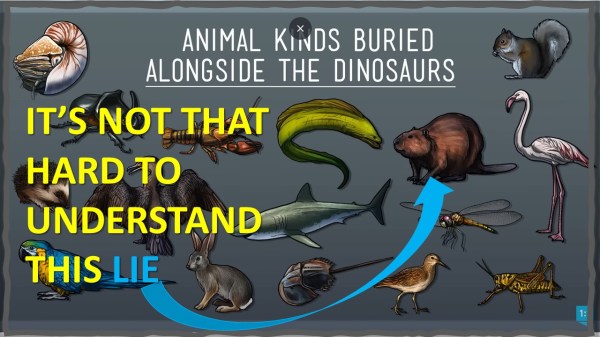
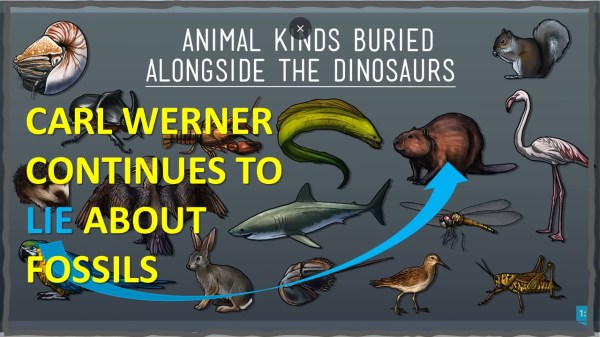
The recent claims of modern mammals coexisting with dinosaurs made by Dr. Carl Werner have sparked controversy. However, a closer look at the fossil evidence reveals a more complex reality. While hundreds of mammal species did live alongside dinosaurs, they were largely different from modern mammals. Accurate interpretation of this evidence is crucial for understanding the true history of life on Earth.

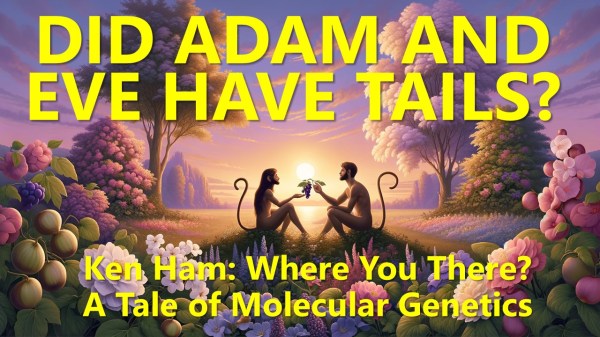
Did Adam and Eve Have Tails? A Molecular Genetic Tale

The video explores the possibility of Adam and Eve having tails, challenging the views of creationists like Ken Ham. It delves into the genetic and morphological aspects of tail development, highlighting a study in the journal 'Nature" that suggests a genetic mutation responsible for the absence of tails in humans and great apes. The content encourages a dialogue on the interpretation of creation narratives and the integration of scientific understanding with theological beliefs.

Institute for Creation Research Goes all-in on Denying the Reality of Natural Selection

A difference of opinion among creationist’ organizations about the origin of species and natural selection has been festering for a number of years and yesterday that dispute broke out into full view. The Institute for Creation Research (ICR) published a short article on their website extolling the virtues of Dr. Guliuzza’s Continuous Environmental Tracking (CET)... Continue Reading →

A Primer on Young-Earth Views of Speciation, Mutations and Natural Selection

How did the earth become populated by billions of species of living things? Conventional evolutionary biology provides an explanatory framework to answer that question. Intelligent Design advocates provide another as do Progressive Creationists (Old Earth Creationists).  But a large segment of the population looks to creation scientists (Young-earth creationists—YECs) to answer the question. How do... Continue Reading →

Up ↑