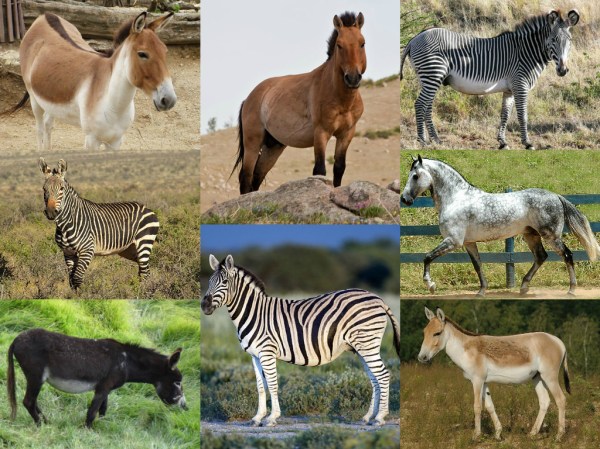
In our last installment of this series, When is a Horse a Horse? we recognized that the living species of equines (horses, zebras, donkeys etc..) represent groups of genetically divergent individuals that naturally do not interbreed on a regular basis. Each of these lineages of equines is behaving as a species as defined by the biological species concept.  This raises the... Continue Reading →
When is a Horse a Horse? The Species Definition Problem
In my introduction to the origin of horses I suggested that a horse is a horse of course, unless of course it isn’t a horse. But that begs the question, how do we know what the boundaries are of what constitutes a horse? Although I suggested that young-earth creationists (YECs) have diverse views of what... Continue Reading →
What is a Horse? A Horse is a Horse, Unless of Course it isn’t a Horse
"A horse is a horse, of course, of course, and no one can talk to a horse, of course, unless, of course, the horse, of course, is the famous Mr. Ed!" Â From the introduction to the 1960s TV show "Mr Ed" No one disputes that Mr. Ed was a horse but what about the plains... Continue Reading →
Are Differences more than Skin Deep? Ken Ham’s Confusing Message about Biological Variation Â
It is said that beauty is only skin deep and that you can’t judge a book by its cover.  These sayings seek to communicate our understanding that the exterior of an object often presents a false picture of the true nature of what is inside. If we were to ask how might we measure the... Continue Reading →
Ken Ham’s Darwinism: On The Origin of Species by Means of Hyper-Evolution Following Noah’s Flood
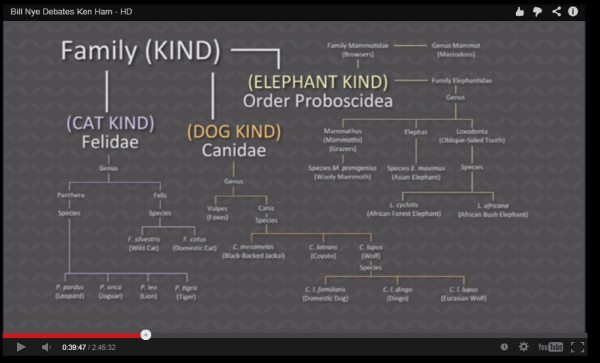
Young life creationists, or baraminologists as they prefer to be called, have experienced a paradigm shift over the past three decades. During that time they have increasingly embracing a model of common ancestry and accelerated evolution as they seek to explain the origins of the vast diversity of life on Earth. This accelerated or hyper-evolution... Continue Reading →
Canine Transmissible Tumors: Seeking Immortality By Becoming a Parasite
Cancers are composed of cells that have forgotten who they are supposed to be. They become independent brats in the body, hogging resources and dividing uncontrollably. From the cancers perspective the problem is that being a spoiled brat may bring short-term rewards, like lots of offspring and freedom from having to do the job they... Continue Reading →
Consider the Ostrich: Literal-Day Creationists Unsure about the Ostrich’s Created Condition
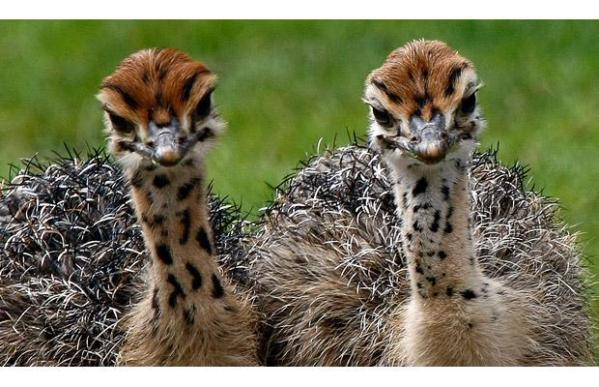
Ostriches are curious creatures. They are very large birds that, although they have large wings, are incapable of flight. They make themselves at home in some of the most inhospitable places.  They lay their eggs in simple dirt nests and behave in ways that have perplexed our ancestors since they first laid eyes on them. ... Continue Reading →
Pulling Teeth and Plucking Feathers – Ancient Birds and Young-Earth Creationists
A few weeks ago I criticized Ken Ham and several of his Answers in Genesis' colleagues for stating that some living birds have teeth like those of fossil birds. I pointed out that none of the 10,000 living bird species produce true teeth. However, there were some birds that lived alongside dinosaurs during the Cretaceous... Continue Reading →
Consider the Ostrich—Comparing Theistic Models of Biological Origins
Some passages of scripture contain detailed natural history information about animals. The book of Job, in particular, records many physical and behavioral traits of animals. One such animal described in Job is the ostrich. The ostrich we know today is a strange bird. It is very large, its wings are not able to provide flight... Continue Reading →
The Universal Design Intuition—Undeniable or Unreliable? Reviewing ‘Undeniable’ by Douglas AxeÂ
Last year I was invited to write an essay reflection on Douglas Axe’s book Undeniable: How Biology Confirms Our Intuition that Life is Designed for the periodical Sapientia (Carl F. H. Henry Center for Theological Understanding an outreach of TEDS --Trinity Evangelical Divinity School). That essay, Undeniably Limited: Designing a Box in Which to Find the... Continue Reading →
Young-Life Creationists—Who are the People that Believe they can Replace Darwin?
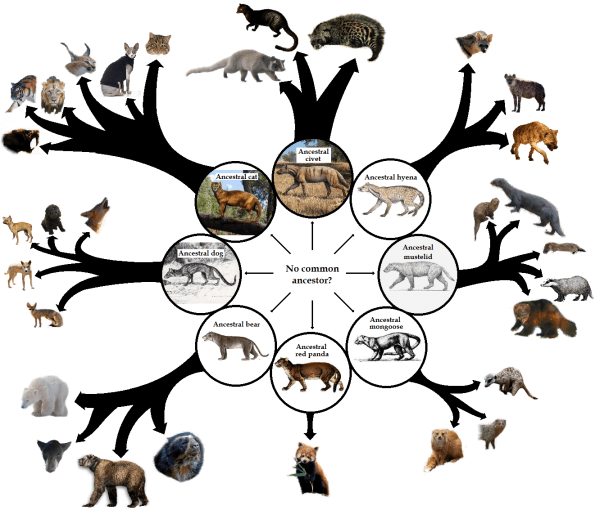
Young-earth creationists (YECs) are actively promoting a radical new model of the origin of the diversity of life on Earth. (1) This speculative view borrows a number of elements found in any typical evolutionary biology textbook. For example, modern YECs claim that most and possibly all species alive today—except humans—are related to numerous other species... Continue Reading →
A Flock of Genomes Reveals the Toothy Ancestry of Birds
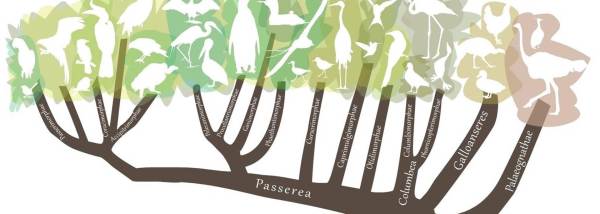
A tidal wave of genomic information seems to wash up on shore each year.  In 2014, an especially large wave - in those days long ago! - came ashore in the form of 45 entire genome sequences of birds.  The relevance of these genomes and their hundreds of billions of letters of code representing all... Continue Reading →
Cactus Biogeography: A Prickly (Pear) Problem for Young Life Creationism
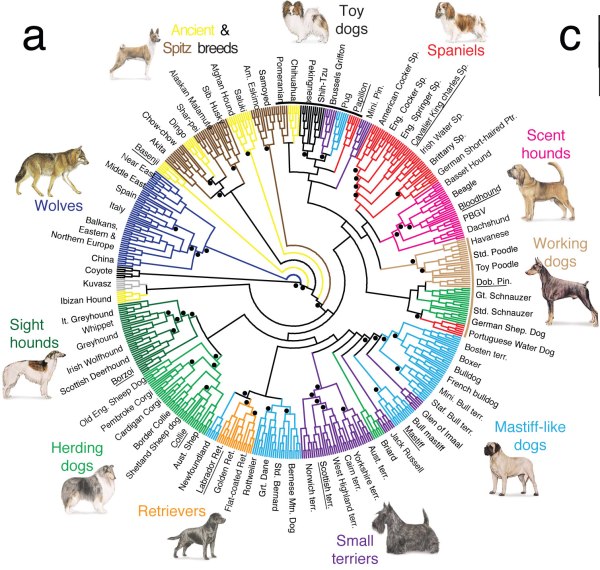
Young-earth creationists (YECs) routinely appeal to post-flood hyper-evolution to explain the diversification of pairs of ancestral animals into dozens and even hundreds of descendant species in the space a few hundred years following a global flood 4500 years before present.  For example, a pair of ancestral canines are said to have evolved in less than 1000... Continue Reading →
Ken Ham’s Biblical Evolution? I Have a Book That Says Otherwise
Three years ago Ken Ham very publicly promoted what he believes is a biblical model of biological evolution to explain the diversity of life on Earth.  However, I have a book before me that provides compelling evidence that his model of evolution is wrong. That book is the Bible. For those that follow young earth creation literature nothing... Continue Reading →
The Dangers of Poor Scholarship: A Creationist’s Take on Feathered Dinosaurs
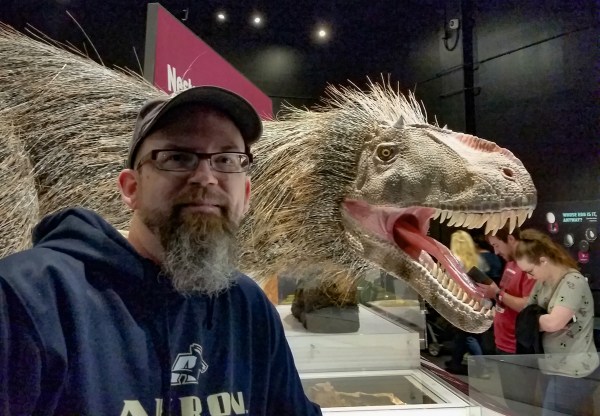
Every month seems to bring a report of a new fossil from the Jurassic or Cretaceous period rocks that show evidence of feathers. This deluge of new fossil finds will not end because there are as many fossils under preparation for publication as have already been published.  Just considering the fossils already revealed to the public... Continue Reading →