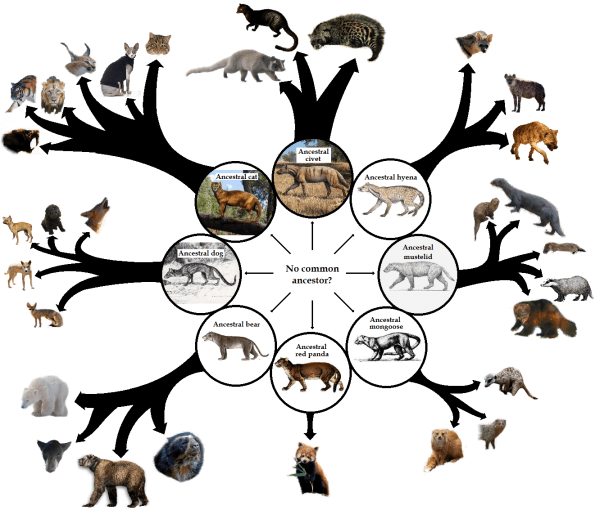
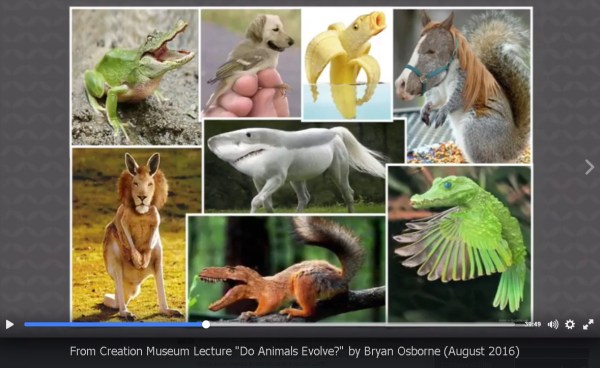
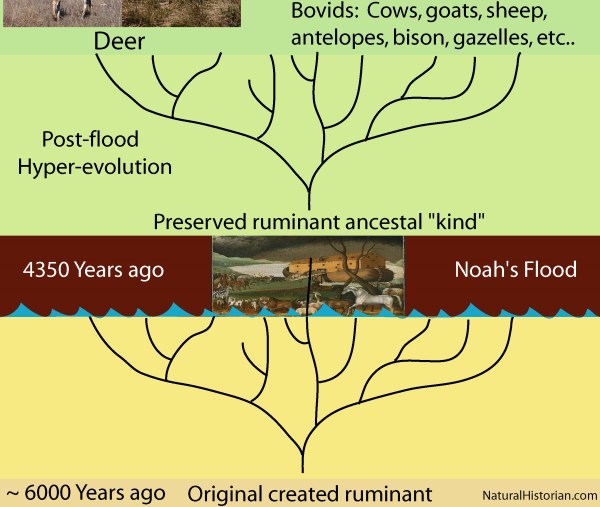
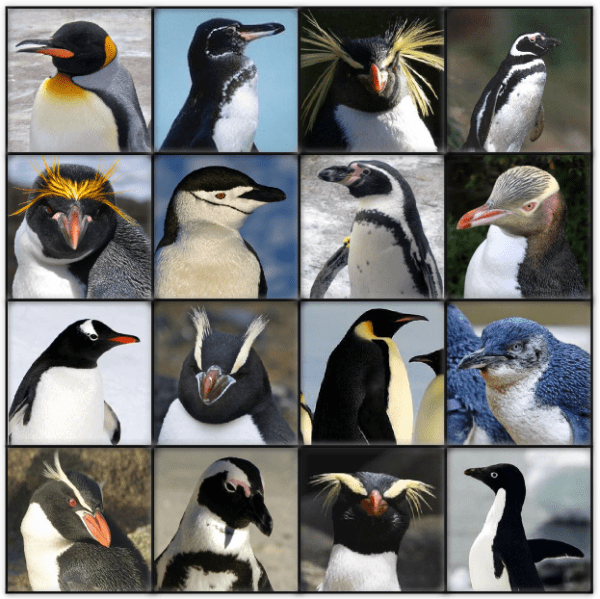
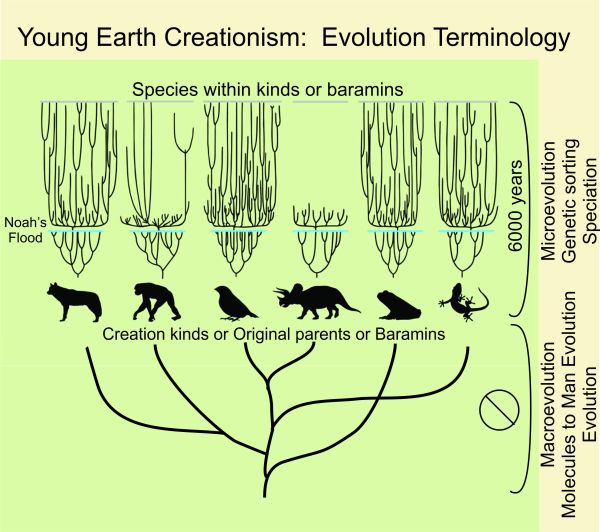
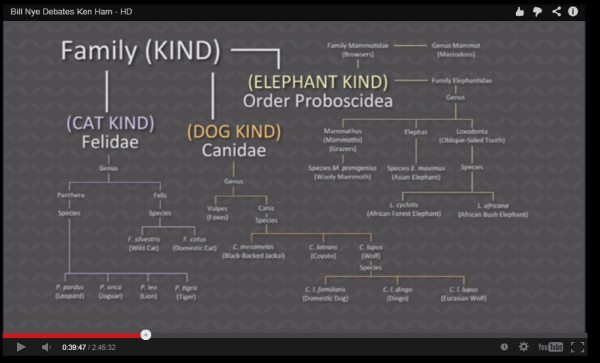
Ken Ham’s Ark Encounter presents it visitors with exhibits with odd-looking creatures and explains that just 4350 years ago these were the common ancestors of animal species we know today. How and when did this transformation of "kinds" into thousands of species happen? At present, the consensus among young-earth creationists is that Noah's Ark contained far... Continue Reading →
Invoking Super-Speed Evolution: The YEC Post-Flood Big Bang of Bird Speciation
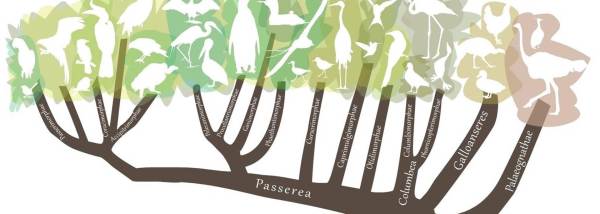
The diversity of birds on earth is remarkable. There are more than twice as many bird species alive today as there are mammal species. A challenge for literal-day creationists is explaining how such diversity was either preserved during a global catastrophe not more than 4500 years ago or was formed after that event. Did Noah’s Ark hold... Continue Reading →
Is Natural Selection the Same Thing as Evolution? Assessing Dr. Purdom’s Confusing Answer
The ministry of Ken Ham’s Answers in Genesis exists, in part, to provide Christians with responses to what they believe are anti-biblical beliefs about the age of the earth and the origin of biological diversity. To provide these answers, AiG has assembled a small group of geologists and biologists. These employees provide answers to questions that... Continue Reading →
Ken Ham’s Biblical Evolution? I Have a Book That Says Otherwise
Two years ago Ken Ham very publicly promoted what he believes is a biblical model of evolution to explain the diversity of life on Earth. I have a book before me that provides compelling evidence that his model of evolution is wrong. That book is the Bible. For those that follow young earth creation literature nothing that Ken... Continue Reading →
Are Ruminants Derived from a Common Ancestor? Ruminating on the Meaning of Noahic “Kinds”
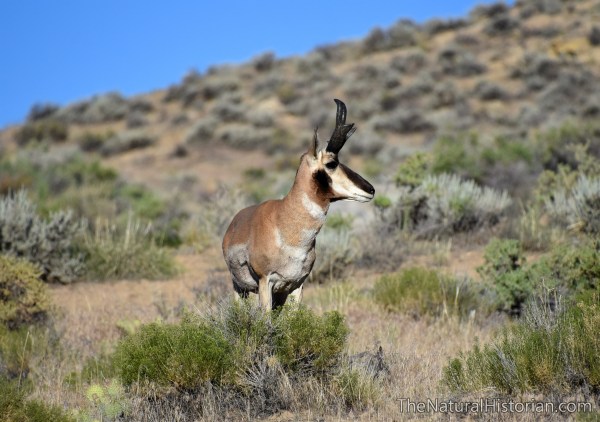
What do giraffes, cows, sheep, antelope, pronghorn and deer have in common? Foremost, they all share a specialized digestive system that includes a four-chambered stomach that allows them to obtain nutrients and energy from vegetation that is inaccessible to most mammals. This ability and other shared morphological traits are used by scientists to classify all... Continue Reading →
Dodging Darwin: How Ken Ham’s Ark Encounter is Slowly Embracing Evolution
As the strict young-earth creationists at Answers in Genesis work to complete their Ark Encounter "theme park," they have expended an impressive amount of energy organizing the millions of species of land animals alive today into a handful of small groups they call "baramins." Creationists insist that while adaptation or speciation within a particular "baramin" is observable (and, indeed, necessary in order to account for the present observed diversity of life), there is never any overlap between separate kinds. Unfortunately for the young-earth model, the push to minimize the number of animals riding on the Ark has exposed a major problem with this view.
The Pacific Leaping Blenny: A Fish that Prefers to be on Land
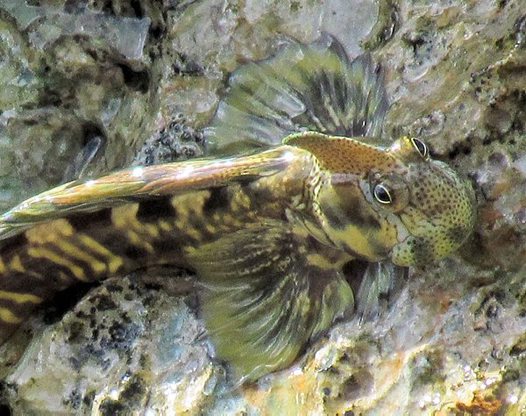
This fish prefers to be out of water! The Pacific leaping blenny is back in the news again with new research on how they avoid being eaten by birds and lizards. Whoa, back up a bit you say. A fish living out of water! Yep, and this isn't just a fish that can drag itself... Continue Reading →
Is Ken Ham’s Rapid Post-Flood Diversification Really Evolution?
I ended my previous article, Ken Ham's Darwinism, with the following observation: Ken Ham has fully embraced Post-Flood Rapid Evolution as a mechanism of creating the amazing variation we see today. As he slides further down the slippery slope into the rabbit hole of radical accelerated evolution he has now become, ironically, more accepting of naturalistic... Continue Reading →
Ken Ham’s Darwinism: On The Origin of Species by Means of Hyper-Evolution Following Noah’s Flood
Young life creationists, or baraminologists as they prefer to be called, have experienced a paradigm shift over the past three decades. Initially, young-life creationists (YLCs) made a point of identifying every possible unique characteristic of a species as the result of direct special creation and intelligent design. However, they are now increasingly embracing a model... Continue Reading →
The Diversity of Life: An Introductory Lecture
Have you even wondered what students at a public university are taught in a general education biology class about the diversity of life? I can't promise that what I am going to share is typical but it is what over 100 students heard yesterday in my class. Below I share a link to a recording (voice/PPT... Continue Reading →
A Flock of Genomes Reveals the Toothy Ancestry of Birds
A tidal wave of genomic information seems to wash up on shore each year. In 2014, an especially large wave - in those days long ago! - came ashore in the form of 45 entire genome sequences of birds. The relevance of these genomes and their hundreds of billions of letters of code representing all... Continue Reading →
We’re Going on a Fossil Hunt to Find a Herpes Virus
There is a very recent form of fossil hunting that I have gotten to partake in to some small extent, and I can do it while sitting in front of a computer screen! With some computer skills and some knowledge of animal genomes it isn't difficult to join this hunt for fossils inside the genome of living organisms.
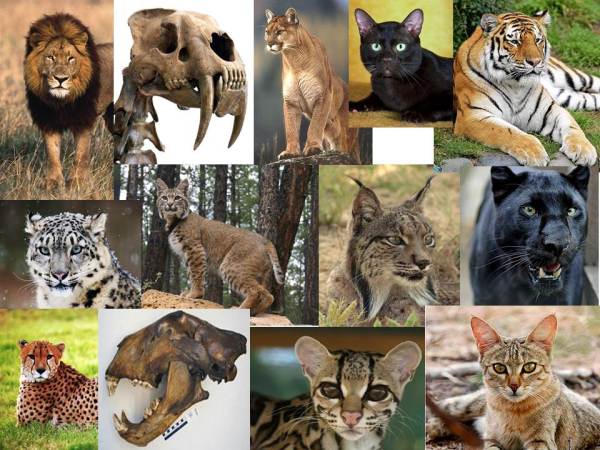
Testing The Creationist’s Hyper-evolution Orchard: Canines, Felines and Elephants
Last week I pointed out that the Bible provides no support for Ken Ham's contention that massive numbers of species have formed following their departure from Noah's ark 4500 years ago (YEC Biblical Evolution: I Have A Book That Says Otherwise). Now I'm following up with "observational" evidence from DNA sequences to test whether the... Continue Reading →
Invoking Super-Speed Evolution: How to Squeeze 10,000+ Bird Species onto Noah’s Ark
There are about 10,000 species of birds alive today. Almost 200 additional species have gone extinct since the year 1500 and there are innumerable fossil species of birds in the geological column. One of the persistent challenges for modern young earth creationists is how to fit the diversity of life on the Noah’s ark. Answers... Continue Reading →
They Have the Gene but Blood is Not Sweet Nectar to the Vampire Bat
In my class yesterday I reviewed a paper selected by my students that explored the sweet tasting abilities of bats. We learned that most, but not all, bats can taste sugar like other mammals. I did not know much about mammalian taste receptors (that is one problems with letting students pick the topics!) and I... Continue Reading →