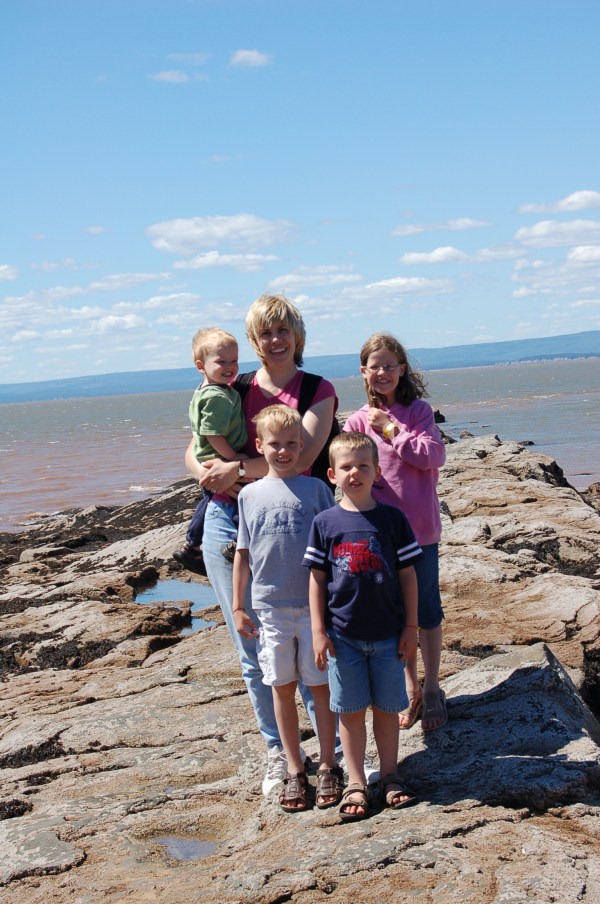
Family vacation with the Duffs always includes some geological sights. In 2007 we visited Prince Edward Island and had a wonderful time but the there just wasn't enough geology there to satisfy my curiosity so I took us on a 2 hour detour in Nova Scotia. After a lot of "are we there yets" and... Continue Reading →
Implications of Artifacts and Bones on Ancient Human Butchery Practices
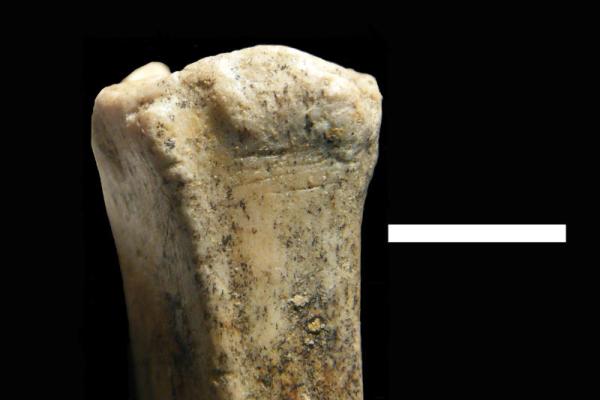
A recently published study is making news the last couple of days. It regards evidence obtained from remains of preserved bones of human scavenging and/or hunting practices. The site of the dig is a hillside in southern Kenya where, in less than an acre, more than 3700 fossils and more than 2000 artifacts have been recovered... Continue Reading →
Human Fossil Footprints: Exploring the Fringes of Creationism
A friend of mine recently gave me a book that he had found at a local library book sale knowing that I have an interest in creationist' writings. The book, Evolution and Human Fossil Footprints, was written by an Aaron Judkins. I assumed the focus of the book would be on the Paluxy “man” tracks in... Continue Reading →
NH Notes: A Trunk and Tusk-Challenged Fossil Elephant
I have been thinking about Elephants the last couple of days and may write more about elephant following in the vein of my recent posts on horses. For now I just want to introduce you to one really weird extinct elephant. I call it an elephant because of its obvious similarities but just like with... Continue Reading →
DNA from a Fossil Canine Skull: Confirmation of an Ancient Domesticated Dog
Where did domesticated dogs come from? That dogs are wolves has been known for some time but which wolves and when did domestication occur has been a more difficult question to answer. Thousands of dog breeds and wolves have been genotyped to explore this question and that evidence suggests four and possibly more, separate wolf... Continue Reading →
NH Notes: Fossilized Animal Burrows in Argentina
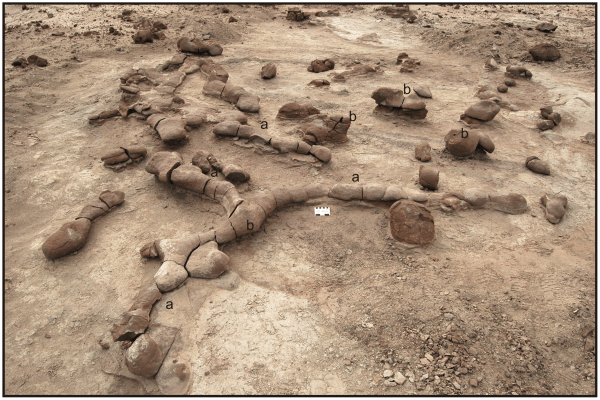
Fossilized bones of dinosaurs, whales and mammoths get all of the attention but trace fossils provide important evidence for interpreting when and how organisms lived on Earth in the past. Trace fossils are not the fossilized remains of organisms themselves but rather are evidence of the past presence of organisms. The most recognizable trace fossils... Continue Reading →
Did T. Rex Really Have Tiny Arms? – Historical Science and Creationism
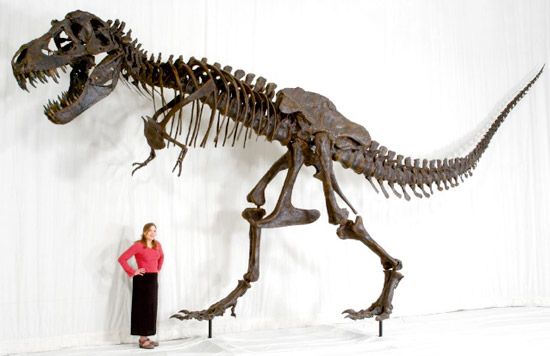
Everyone has encountered a T. rex in books, movies or museums. Besides its size and menacing jaws one of the most striking features of a T. rex is its diminutive arms. So why were the arms of T. rex so short? There have been many hypotheses including: 1) they had no use and... Continue Reading →
Geological Context II: Neanderthals and the Italian Supervolcano
There are thousands of sites with either human remains or artifacts (stone tools usually) that are known across southern Europe and many are found in locations where they are found in layers stacked on top of each other like in caves or flood plain locations along rivers. But, the exact pattern of Neanderthal and modern human population migrations and changes is not my main interest.
Fossil Field Trip: Fossil Reefs Under the Feet of the PCA GA
On my trip to Kentucky this week to attend the PCA GA I took some time to do some geological sightseeing. I hope I can convince you that it was a lot more exciting that it might sound:-) Below are some pictures I took at two locations. The first are from the Falls of... Continue Reading →
Adam and The Fall: A Thorny Young Earth Assumption
My WordPress tag reader led me to this video posted on Eric Hovind's "Creation Today" website. This site is what Dr Dino's website presence morphed into after the arrest and conviction of fringe creation scientists Kent Hovind. What caught my eye was that today's video highlighted evidence of creation from thorns. I have been thinking... Continue Reading →
Giant Dino Eggs Found? Bad Reporting on Bad Science
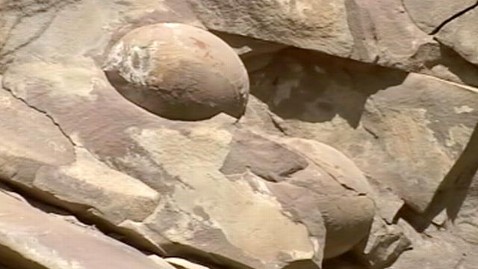
Dinosaur eggs are surprisingly (to the non-biologist) similar in size. Even the very largest dinosaurs laid eggs that were hardly any bigger than the largest eggs found today. These are observations from the fossil record and these observation make sense biologically even though all we see are fossilized eggs. Eggs are limited in the size they attain for several reasons but one of the most important is that the embryos in the eggs must have oxygen to grow.
Permian Pompeii Challenge Taken Up? ICR’s Brian Thomas Comments on Fossil Forests
Recently I shared evidence of an ancient forest preserved in amazing detail in a thick layer of volcanic ash (An Ancient and Alien Forest Reconstructed: A challenge for young earth creationism). I raised a number of challenging questions that this spectacular fossil discovery raises for those that hold to a young-earth creationists (YEC) understanding of... Continue Reading →
An Ancient and Alien Forest Reconstructed: A challenge for young earth creationism
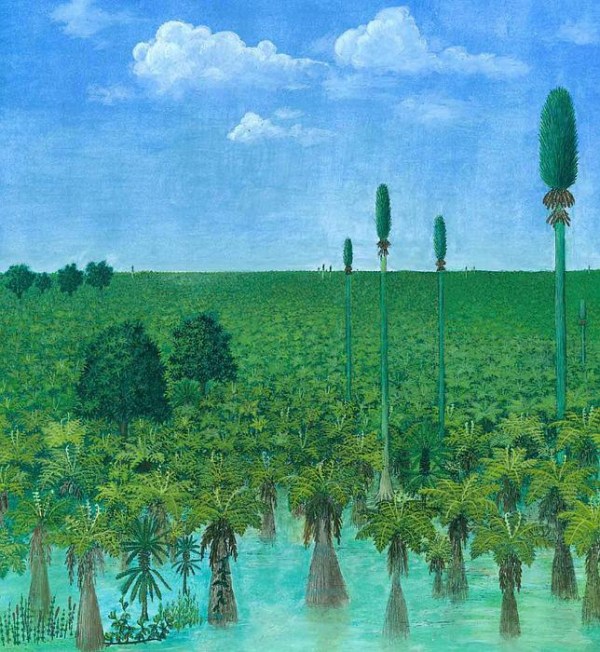
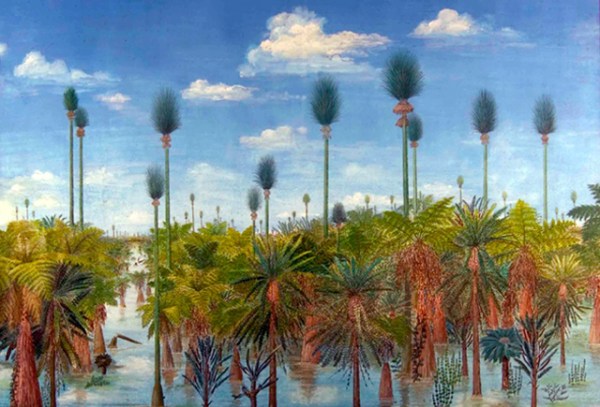
Recent studies of multiple intact fossilized forests provide a very detailed account of the presence of an seemingly alien forest that was found multiple locations across the entire globe at some point in the past. A forest completely devoid of the presence of any flowering plants such as oaks, maples and beech trees or even... Continue Reading →
Forests During the Age of the Dinosaurs – A Cretaceous Reconstruction
Continuing on with the theme of the last several posts which examined reconstructions of fossil forests here are the results of another research paper released this past week (reference below). In this study the authors examined records of more than 2200 fossilized wood collections just from Cretaceous aged rocks at locations all around the world. ... Continue Reading →
The Lost World Of New York: Another Ancient Forest Reconstruction
A quick note about another report of a fossilized forest that has been described. Last week it was PNAS that had the big story of a the "Permian Pompeii," a fossil forest reconstructed in China which I discussed in "An Ancient and Alien Forest Reconstructed." Not more than a week later the magazine "Nature" is highlighting the description of a another reconstructed forest.