Today, young-earth creationists are actively promoting a new model of the origin of the diversity of life on Earth. This speculative view borrows a number of elements found in any typical evolutionary biology textbook. For example, modern YECs claim that most and possibly all species alive today—except humans—are related to numerous other, though not all,... Continue Reading →
Glyptodonts, Armadillos and Ken Ham’s Hyper-Speciation Model
Armadillos are curious little animals but were all of them as small as they are today? DNA extracted from a 12,000 year old bone of an extinct glyptodont the size of a small car revealed a genetic code that clearly places this huge animal inside the group (clade) of diverse animals we collectively call armadillos. These DNA results (see... Continue Reading →
Faith in Flood Geology? Dogmatic Assertions of Expertise
Everyone is an expert in something but they can’t be an expert in everything. At some point we all have to rely on the expertise of others to guide us through our lives. I am a biologist, however, the vastness of the field of biology leaves me in the position of deferring to the knowledge... Continue Reading →
Where is the Next Generation of Creation Scientists?
Where is the next generation of creation scientists? I don’t mean the next generation of believers in creation science but the next generation of young-earth experts who will continue the legacy of Morris, Austin, Humphreys, Woodmorappe, Wood, Bergman, Oard, Baumgardner, etc… I have to believe that this has to be a question that many of the... Continue Reading →
The Ark Encounter’s Hyper-evolutionary Model Underestimates Speciation Rates
How many animals did Noah preserve on the Ark? I often see critics of young-earth creationists (YECs) challenge Noah’s Ark with the question, how could Noah have fit all two million species on the ark? When I see this challenge posed on Facebook or Twitter it is invariably coming from an individual that knows very... Continue Reading →
Natural Pitfall Traps: Preserving a History of Unfortunate Events
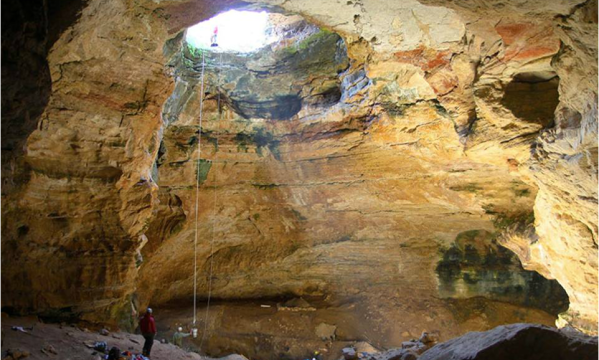
You can learn a lot from a series of unfortunate events. Collapsed caves can leave entry holes on the surface that become hazards to local fauna. The image below is from inside a famous natural pitfall trap in Wyoming. The surface above is rather flat and prey running from a predator sometimes fall into this hole... Continue Reading →
Ancient Genomes Reveal Horses have been Horses for a Long Time
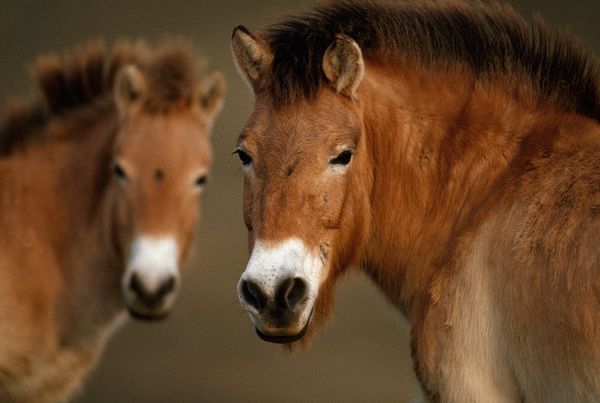
In 2013 a remarkable DNA sequence was reported by geneticists studying ancient DNA. It was a nearly complete genome extracted and decoded from the remains of a tooth of a horse preserved in permafrost sediments in Alaska. This partially-fossilized horse was dated to more than 500,000 years old and is the most complete sequence of... Continue Reading →
Lab-Grown Diamonds are not Ken Ham’s Best Friend
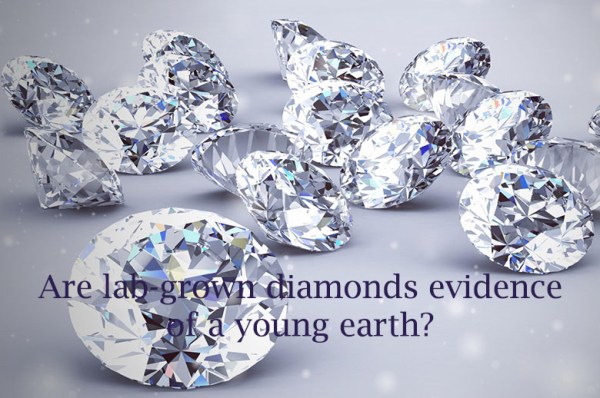
They say diamonds are forever, but for geologists this saying doesn’t make much sense. They would agree that diamonds are for a long time—hundreds of millions if not billions of years—but not forever. Many lines of evidence reveal that one must go deep (more than 150 km) into the mantle of the Earth to find... Continue Reading →
What is a “Kind”? Fox News Article Quoted by AiG Speakers Contradicts their own Definition
I have said before that reading young-earth literature or attending one of their seminars can be a confusing experience. Many times they present internally inconsistent arguments seemingly unaware of how one thing they say contradicts something another creationist has said or even what they have said themselves. For example, on the November 29th edition of... Continue Reading →
Are Differences more than Skin Deep? Ken Ham’s Confusing Message about Biological Variation
It is said that beauty is only skin deep and that you can’t judge a book by its cover. These sayings seek to communicate our understanding that the exterior of an object often presents a false picture of the true nature of what is inside. If we were to ask how might we measure the... Continue Reading →
A Young-Earth Mystery: If Dinosaurs and Humans Lived Together Before the Flood, Where are the Fossils?
If a global Flood destroyed all humans except Noah and his family just 4350 years ago, why don’t we find human fossils in the same layers of rock believed to be set down by Noah’s Flood? This is a perfectly natural and appropriate question for a young-earth creationist (YEC) to ask. After all, according to... Continue Reading →
Dragon Tales, Dinosaurs, UFOs and the Creation Museum
Since its inception, one of the Creation Museum’s most provocative exhibits has been one that places dinosaurs and man side by side. Likewise, the Noah's Ark attraction, The Ark Encounter, depicts a scene from the pre-Flood world in which dinosaurs are fighting men and women in an roman-like arena. While these scenes are anachronistic to... Continue Reading →
Ken Ham’s Darwinism: On The Origin of Species by Means of Hyper-Evolution Following Noah’s Flood
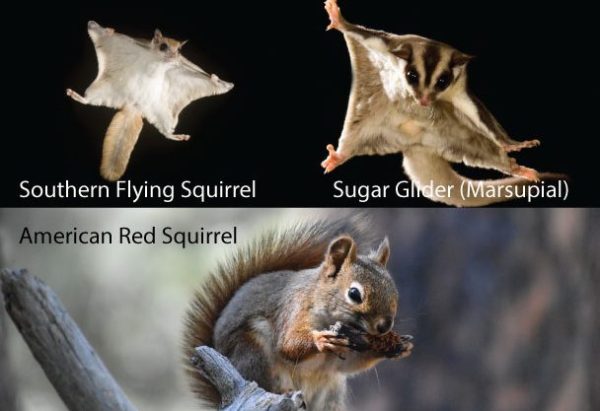
Young life creationists, or baraminologists as they prefer to be called, have experienced a paradigm shift over the past three decades. During that time they have increasingly embracing a model of common ancestry and accelerated evolution as they seek to explain the origins of the vast diversity of life on Earth. This accelerated or hyper-evolution... Continue Reading →
Ken Ham on Dinosaur Extinction, De-extinction, DNA, and Dino-Bird Distinctions
Can scientists bring back an extinct dinosaur? Way back in 1990, a novel by Michael Crichton and subsequent movie by the same name, Jurassic Park, in 1993 used futuristic genomic biology to suggest how we might de-extinct the dinosaurs. Could we really retrieve dinosaur DNA from preserved dinosaur blood sucked up by an ancient mosquito and... Continue Reading →
Origins and Extinctions: A Lesson from the Penguins of the Northern Hemisphere
Question: What kind of bird is flightless, waddles standing upright on the ground, is an excellent swimmer, breeds in colonies on rocky shores, lives on a diet of fish and has a white belly and black back, and most importantly is not a penguin? The answer: The extinct great auk. You can think of the... Continue Reading →