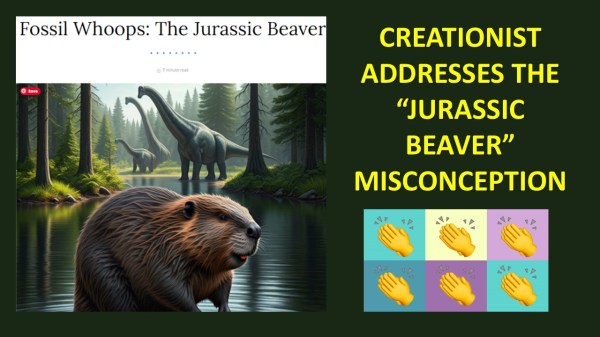
In a striking critique of young-earth creationist claims, the discussion surrounding the "Jurassic beaver" fossil reveals a need for intellectual honesty. The article underscores the flawed interpretations within YEC circles, advocating for rigorous examination of evidence and a recognition of the fossil record's complexity. Self-scrutiny in any belief system is essential.
The Hemoglobin Challenge: Debunking Bryan Osborn’s Dinosaur Blood Cell Claims
Meet Bryan Osborn, the latest contestant in the Hemoglobin Challenge. His recent claims about dinosaur soft tissue have ignited a clash with scientific evidence. I'm calling out the misrepresentations and urging a more accurate language. The reality of degraded biomolecules in dinosaur fossils paints a story of much greater age, challenging the young earth narrative.
Divine Intervention in Geology: How the “Heat Problem” is Reshaping Creationist Theory
The YouTube channel Guttsick Gibbon presents a compelling case against Young Earth Creationism, focusing on the "Heat Problem" and the inadequacy of proposed solutions. Notably, prominent figures within the movement acknowledge the need for divine intervention to explain geological and radioactive phenomena, challenging the claim of scientific credibility. This marks a pivotal shift in creationist approaches, potentially signaling the decline of scientific creationism.
When ‘Knowing You’re Right’ Goes Wrong: A Christian Biologist’s Perspective on AiG’s Latest Article
I critique a recent Answers in Genesis article, challenging its approach to faith, knowledge, and humility. I call for a more nuanced and humble approach to interpreting non-essential doctrines, emphasizing unity in Christ over theological disagreements.
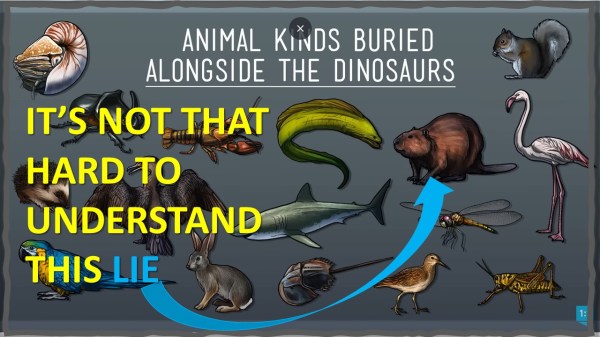
Scientific Integrity in the Creation-Evolution Debate: The Case of the ‘Jurassic Beaver
Here I revisit a contentious claim made by creationists about the coexistence of modern mammals and dinosaurs. By dissecting primary scientific literature, I debunk the portrayal of a "Jurassic beaver" and advocate for honest communication in presenting fossil evidence.
Ancient DNA: Too Good to Be True?
The search for ancient DNA has captivated scientists and the public alike for decades. The possibility of uncovering genetic information from long-extinct species promises to revolutionize our understanding of evolution and prehistoric life and makes one wonder if Jurassic Park might be possible However, the field of ancient DNA research has been fraught with controversies,... Continue Reading →
Challenges to Conventional Scientific Views on DNA and Soft-Tissue Preservation in Fossils
A response to a viewer's challenges to the conventional scientific view on preservation of soft tissues in dinosaur fossils. The writer discusses various scientific studies and explanations to address the challenges, emphasizing that the presence of preserved soft tissues does not negate the evidence supporting an ancient Earth.
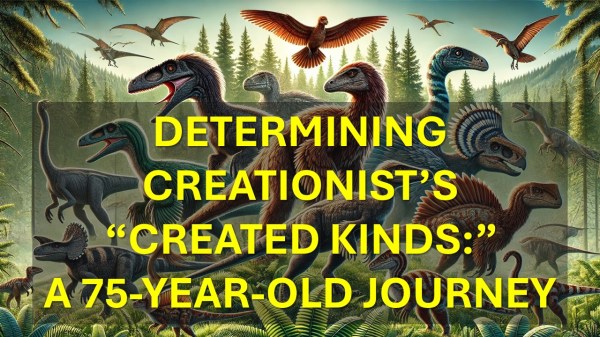
Biblical ‘Kinds’: A 1946 Perspective on Young Earth Creationism
Creationist ideas about "kinds" from 1946 are still shaping modern debates on origins. In "The New Deluge," Harold Clark discusses the concept's complexity, likening it to broader categories diversifying into today's species. He acknowledges change within kinds, challenging misconceptions about creationist beliefs. The struggle to define "kind" continues, impacting today's creationist discussions.
Behind the Scenes: The Path to Earning a PhD in Science
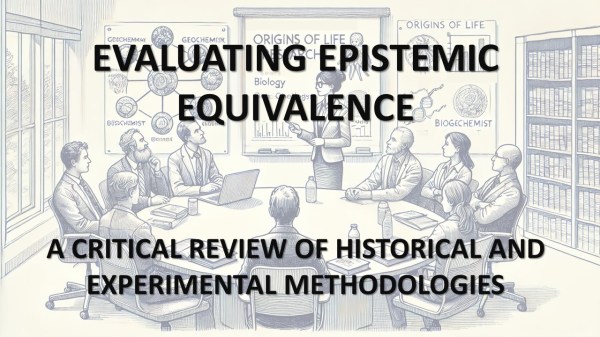
I take you behind the scenes to show you what a prospective PhD student must go through to demonstrate they are ready to be an official PhD candidate. Here I am challenging a student who is doing scientific inquiry in historical and experimental sciences. The student analyzes and synthesizes scientific material, exploring theories about historical vs experimental science and the origin of life. These thorough examinations prepare students for rigorous scientific exploration.
The Marvels of Desert Adaptations: A Critique of ICR’s Continuous Environmental Tracking
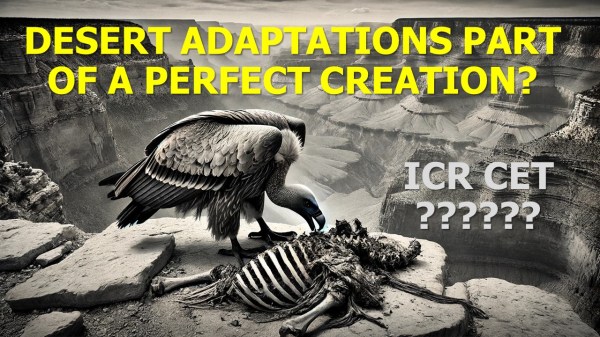
How did vultures, roadrunners and horny lizards obtain their uniquely deserted-adapted traits? In my most recent video I review one answer provided by the Institute for Creation Research (ICR) titled “Christ's Creativity in Canyon Critters.” Johnson, who holds a law degree and a theology degree, frequently writes about biology for ICR. https://youtu.be/c-ts_KAJy4U?si=2pMvQDpihSTG3rqv The article begins... Continue Reading →
Are God’s Knitting Needles Revealed in the Creation of LeBron James?
We all recognize that LeBron James has a unique set of skills. He, you and I are all unique in some way if you think about the millions of variants in our genomes. But how was LeBron James made? How did he come to be the way he is? We find several biblical authors attributing... Continue Reading →
Are Species Created with Hidden Information Pre-adapted for Future Environments?
How did the incredible species diversity today manifest itself from just a few individual animals preserved on Noah's Ark? How much speciation has happened? What are the mechanisms for young-earth speciation? Is there evidence that rapid speciation has occurred in just the past few thousand years? These are enduring questions that young-earth creationists have been... Continue Reading →
The Manifold Beauty of Genesis One: Reviews and Interviews
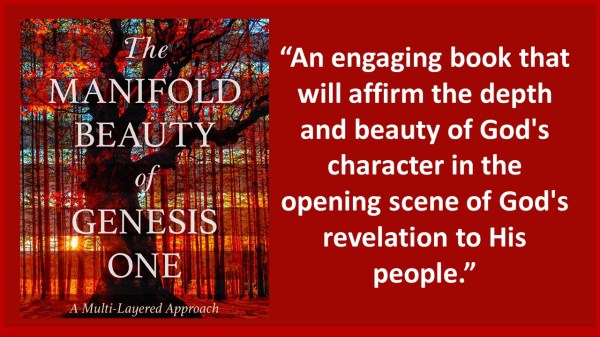
"The Manifold Beauty of Genesis One" By Drs. Gregg Davidson and Kenneth Turner is an important new book published late last year. I recommended the book on this blog and given away copies to numerous friends. Additional reviews have been published that have been similarly enthusiastic about the approach and importance of this contribution to... Continue Reading →
Did Adam have a Tail? Ken Ham, Adam and Eve and a Tale of Tails
Ken Ham recently tweeted about a baby born with a "tail." I agree with his assessment that these are not cases of bony tails, homologous to tails in almost all vertebrate species, but then I wondered, can young-earth creationists be sure that Adam and Eve did not have true bony tails as adults? After all,... Continue Reading →
Multituberculates and the YEC Flood/post-Flood Boundary Problem
Yes, multituberculates have something to say about the ongoing division among YECs about where to locate the Flood/post-Flood boundary in the geological column. Is that boundary to be found in the Quaternary, at the Cretaceous/Paleogene boundary or way down in the Pennsylvanian Period? These are the three primary models that YECs have proposed. The problem... Continue Reading →