Flood Geology Canโ€™t Explain Dino Droppingsย 

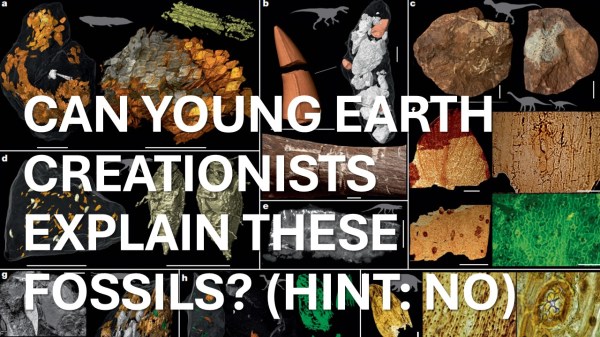
A recent Nature paper reveals insights from fossilized dinosaur droppings, or coprolites, showing dinosaurs evolved from small omnivores to larger specialized eaters. Advanced imaging techniques allow detailed analysis of their diets, challenging young-earth creationist models by showcasing geological progression, preservation, and ecological diversity over millions of years, supporting an old Earth perspective.

Critiquing Ken Ham and Gรผnter Bechly’s Articles on Bird Origins

Ken Ham's insistence that feathered dinosaurs are merely birds continues to be an obsession of his. His claims rely on selective evidence and misunderstanding of scientific theories. The robust connections between dinosaurs and birds, supported by extensive fossil records like Eosinopteryx, continue to undermine his arguments, revealing a clear ideological bias rather than intellectual rigor.

Historical and Scientific Inaccuracies in Calvin Smith’s (AiG) Critique of Charles Lyell

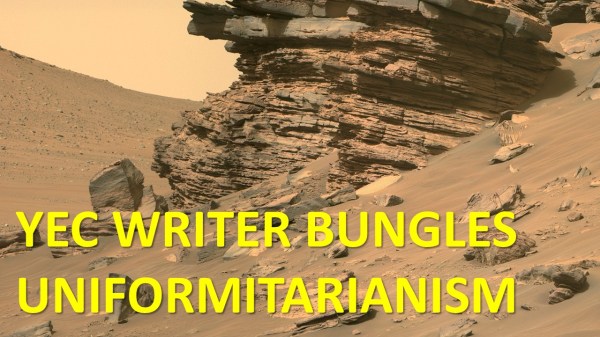
Calvin Smith's article explores the historical impact of Charles Lyell's uniformitarianism on societal beliefs, asserting that it contributed to cultural instability by undermining biblical narratives. While seeking to challenge Lyell's motivations, Smith overlooks the complexities of his contributions and the integration of both gradual and catastrophic processes in modern geology, leading to several logical fallacies in his argument.

The Weaver Bird Dilemma: Creationism’s Struggle with Diversity

Young-earth creationist claims about nature's design fall flat when examined closely. The intricacies of the Southern Masked Weaver and countless species challenge the notion of a simple divine creation. The required "hyper-evolution" to account for bird diversity post-Noah is a contradiction that shatters their credibility and exposes their flawed logic.

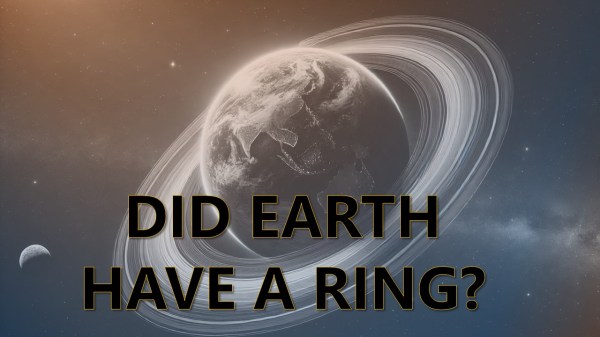
Did Earth Have a Ring in the Past?

Forget what you think you know about Earthโ€”millions of years ago, it might have sported its own ring! Recent research reveals an astonishing concentration of impact craters positioned along the equator, suggesting a temporary ring of rocky debris from a celestial encounter. Here I present the evidence and consider the challenge this is for the young-earth model of earth's history.

Divine Intervention in Geology: How the “Heat Problem” is Reshaping Creationist Theory

The YouTube channel Guttsick Gibbon presents a compelling case against Young Earth Creationism, focusing on the "Heat Problem" and the inadequacy of proposed solutions. Notably, prominent figures within the movement acknowledge the need for divine intervention to explain geological and radioactive phenomena, challenging the claim of scientific credibility. This marks a pivotal shift in creationist approaches, potentially signaling the decline of scientific creationism.

Ancient DNA: Too Good to Be True?

The search for ancient DNA has captivated scientists and the public alike for decades. The possibility of uncovering genetic information from long-extinct species promises to revolutionize our understanding of evolution and prehistoric life and makes one wonder if Jurassic Park might be possible However, the field of ancient DNA research has been fraught with controversies,... Continue Reading →

Genome Size Extremes: When More Isn’t Necessarily Better

The incredible variation in genome sizes across different species challenges traditional beliefs. Lungfish and ferns have genomes far larger than humans, yet similar complexity. Diatoms' genome size is linked to habitat. Large portions of the enormous genomes consist of repetitive sequences, raising questions about the role of so-called "junk DNA" and evolutionary pressures.

Biblical ‘Kinds’: A 1946 Perspective on Young Earth Creationism

Creationist ideas about "kinds" from 1946 are still shaping modern debates on origins. In "The New Deluge," Harold Clark discusses the concept's complexity, likening it to broader categories diversifying into today's species. He acknowledges change within kinds, challenging misconceptions about creationist beliefs. The struggle to define "kind" continues, impacting today's creationist discussions.

Up ↑