Young-earth creationism’s most recognizable spokesperson, Ken Ham of Answers in Genesis, continues to insist that all animals with feathers no matter how many dinosaur-like features they may possess were nonetheless just birds. He continues to force a square peg into a round hole through a series of misrepresentations of scientific facts, misconceptions and selective reporting of data in his recent blog post on the Answers in Genesis website: “Out-of-Place Fossil Suggests ‘Feathered Dinos’ Were Just Birds.” In that article he relies, as he often does, on interpretations of another creationist, this time intelligent design advocate, Günter Bechly who wrote a piece for Evolution News: “Fossil Friday: More Evidence That ‘Feathered Dinosaurs’ Were Secondarily Flightless Birds.” Both articles challenge the connections between dinosaurs and birds, presenting arguments that reflect fundamental misunderstandings of evolutionary theory and the fossil evidence supporting avian origins.
Ken Ham argues that so-called “feathered dinosaurs” were merely birds mislabeled as dinosaurs, and he questions the evolutionary timeline by citing “out-of-order” fossils. Similarly, Günter Bechly supports the notion that feathered dinosaurs are secondarily flightless birds, using the fossil Eosinopteryx brevipenna as purported evidence against the traditional dinosaur-to-bird evolution narrative. These positions not only misinterpret the scientific data but also misuse the work of reputable, though arguably out-of-date scientist – Dr. Alan Feduccia, whose research is often selectively cited to undermine evolutionary theory despite his acceptance of evolution.
I’m going to use these two short articles to once again critically examine the common misconceptions of these authors, focusing on the misrepresentation of evolutionary theory and the origins of birds.
Misconceptions about Evolutionary Theory
Misunderstanding Scientific Theories: Let’s begin with a big misconception that is pervasive in creationist’ literature. One of the primary issues in the articles is a fundamental misunderstanding of what constitutes a scientific theory. A scientific theory is not a mere guess or hypothesis; it is a well-substantiated explanation of some aspect of the natural world, grounded in a body of evidence that has been repeatedly confirmed through observation and experimentation.
Both Ken Ham and Günter Bechly portray the adjustment of scientific theories in light of new evidence as a weakness or failure of evolution. Ham states that evolutionists “modify the story… again” when faced with conflicting data, implying instability in the theory. However, the ability of a scientific theory to adapt and refine itself with new information is, in fact, a strength. It demonstrates the self-correcting nature of science, which continually seeks to improve understanding based on the best available evidence.
Adjusting theories is not equivalent to refuting them. In evolutionary biology, new fossil discoveries often provide additional details that enhance our comprehension of evolutionary pathways. These adjustments do not dismantle the foundational principles of evolution but rather enrich the scientific narrative by filling gaps and clarifying relationships among species.
Misrepresentation of Fossil Evidence: The claim of “out-of-place” fossils is another misconception presented in the articles. Ken Ham suggests that such fossils are routinely found and that they contradict the evolutionary timeline. However, these assertions often stem from misinterpretations or a lack of context regarding the fossil record. Ken Ham has no training in this area and has not demonstrated the ability to assess the scientific literature in this area. He relies on popular articles and other creationist treatments of the scientific literature making him, and anyone who lack such training, especially vulnerable to misrepresenting scientific concepts.
The fossil record, while not complete, offers a consistent and robust framework supporting evolutionary timelines. Fossils, like Archaeopteryx, provide some early evidence of evolutionary links between major groups, in this case, between non-avian dinosaurs and birds. These fossils exhibit a combination of characteristics from both ancestral and derived species, underscoring the gradual nature of evolutionary change. But a single fossil doesn’t tell the wholes story and fortunately there has been a wealth of new fossils since the discovery of Archaeopteryx to help inform us about ancient reptilian relationships.
Claims that “out-of-order” fossils disprove evolution ignore the complexities of geological processes and the challenges inherent in dating and contextualizing fossil finds. When anomalies arise, scientists rigorously investigate them, often finding that initial interpretations were flawed or that the anomalies can be explained within the existing framework of evolutionary theory.
Misconceptions about Bird Origins
A scientific consensus about bird origins has developed over the past 30 years: birds evolved from theropod dinosaurs. This conclusion is supported by extensive morphological and molecular evidence gathered over decades of research. Birds share numerous characteristics with theropod dinosaurs, including feathers, hollow bones, and specific skeletal structures like the furcula (wishbone) and three-fingered hands just to name a few.
Ken Ham’s assertion that “dinosaurs were not birds” contradicts this well-established understanding. The transition from non-avian dinosaurs to birds is one of the most thoroughly documented evolutionary pathways, with a wealth of intermediate fossils illustrating the gradual acquisition of avian features (see Norell & Xu, 2005 for a nice summary which has only been further supported by additional discoveries over the past 19 years).
The Ham and Bechly articles challenge the existence of feathered dinosaurs by arguing that filaments found on some dinosaur fossils are not true feathers or that these creatures were actually birds. However, scientific evidence demonstrates that various types of feathers existed among theropod dinosaurs, ranging from simple filaments to complex flight feathers identical to those of modern birds.
The diversity of feather types among dinosaurs reflects different evolutionary stages and functions, such as insulation, display, or, eventually, flight. Dismissing these filaments as “not feathers” ignores the homologous nature of these structures and their significance in understanding feather evolution.
The notion that all feathered dinosaurs were secondarily flightless birds lacks empirical support. Phylogenetic analyses consistently place these species within the dinosaur clade, not as birds that lost the ability to fly. While it is true that some bird lineages became flightless through evolution (e.g., ostriches, penguins), extending this concept to all feathered theropods is unwarranted and contradicts the available data.
Misuse of Alan Feduccia’s Work
Another critical issue in both articles is the misuse of Dr. Alan Feduccia’s research to support arguments against the evolutionary link between dinosaurs and birds. A prolific paleo-ornithologist, Feduccia proposed alternative hypotheses regarding the origin of birds 25 years ago, suggesting that they may have evolved from early archosaurs rather than theropod dinosaurs. However, it’s important to note that Feduccia accepts the fundamental principles of evolution and common descent.
Ken Ham and Günter Bechly selectively cite Feduccia’s critiques of the theropod-bird linkage to bolster their arguments, while ignoring the broader context of his work. This selective citation is misleading and misrepresents Feduccia’s scientific stance. He does not support the notion that birds did not evolve or that they were created separately from other life forms. Instead, he advocates for a different evolutionary pathway for avian origins within the framework of evolutionary theory.
By omitting Feduccia’s acceptance of evolution, the articles create a false impression that his work undermines evolutionary biology as a whole. This tactic not only distorts the scientific discussion about bird origins but also disrespects the integrity of Feduccia’s research. Misrepresenting a scientist’s work to support a preconceived ideological position is antithetical to the principles of honest and rigorous scientific inquiry.
Furthermore, the majority of the scientific community does not support Feduccia’s hypothesis about bird origins. While his contributions have stimulated valuable discussions and research, extensive evidence continues to support the theropod hypothesis for the origin of birds. Misusing his minority viewpoint to challenge the entire field of evolutionary biology is unwarranted and misleading. His hypothesis was not persuasive 25 years ago when he first proposed this hypothesis. Furthermore, 25 years of additional data collection has done more to weaken that hypothesis rather than support or sustain it. Bechly presents Feduccia’s hypotheses as if it is a modern and formidable idea giving it far more weight that it deserves.
This is further seen in Bechly’s selective quote from a paper which examines many different hypotheses about how bird-like dinosaurs may be related and how many characteristics of birds may have evolved multiple times which confound phylogenetic analyses based on morphological characteristics alone. He uses a sole quote as if to show that there is a great support for Feduccia’s proposal when my reading of that paper does not lead me to believe that this was the authors intent.
The Eosinopteryx Fossil Explained
The fossil of Eosinopteryx brevipenna is central to the arguments presented in the articles, so it’s important to examine this specimen in detail and understand its implications within evolutionary biology.
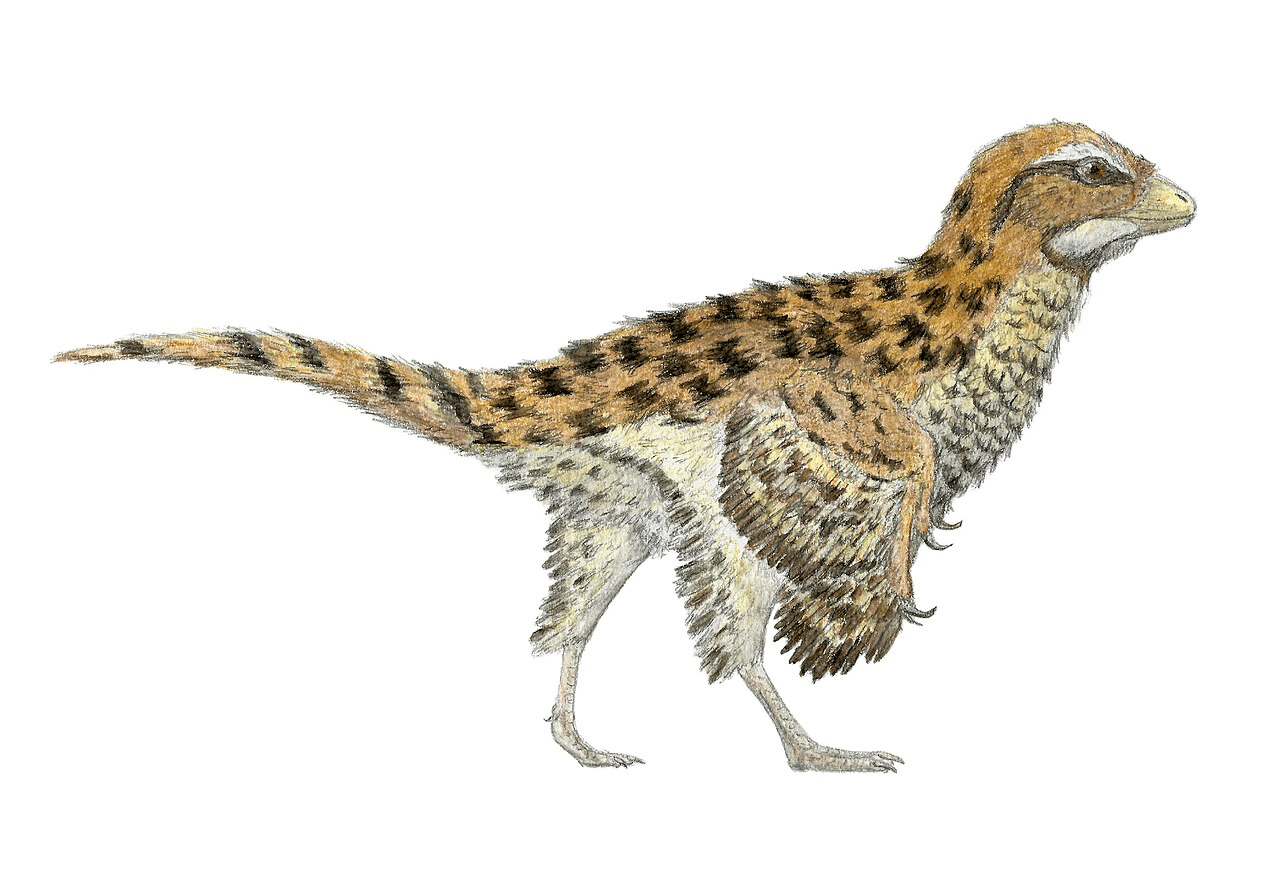
Eosinopteryx is a small, feathered dinosaur from the Middle-Late Jurassic period, approximately 160 million years old. Its discovery provides valuable insights into the diversity of feathered dinosaurs and the evolutionary processes leading to the emergence of flight.
Contrary to the claims made by Ken Ham and Günter Bechly, the features of Eosinopteryx do not challenge the evolutionary link between dinosaurs and birds. Instead, they highlight the complexity of feather evolution and the experimentation with flight-related adaptations among different dinosaur lineages.
Phylogenetic analyses place Eosinopteryx among the troodontid dinosaurs, a group closely related to birds but not within the Avialae clade that includes modern birds. The variations in its plumage and skeletal structure are consistent with the diversity expected in evolutionary lineages exploring different ecological niches and locomotive strategies.
The reduced plumage and lack of flight adaptations in Eosinopteryx do not contradict the evolution of flight in birds. Evolution is not a straightforward, linear progression, as Ken Ham often portrays it and seems to believe, but a branching process with numerous experiments and pathways. Some lineages may develop features that are later reduced or lost due to changes in environmental pressures or lifestyle—a concept known as mosaic evolution.
The presence of feathered dinosaurs with varying degrees of flight capability illustrates the gradual evolution of flight and the multiple functions of feathers beyond flight, such as insulation and display. The complexity of these evolutionary pathways enriches our understanding of how modern birds emerged from their dinosaur ancestors.
Claims that Eosinopteryx invalidates the dinosaur-to-bird evolution misinterpret the fossil evidence and ignore the broader context provided by numerous other discoveries. The scientific community views such fossils as pieces of a larger puzzle that, when assembled, provide a coherent and compelling picture of avian evolution.
The Nature of Scientific Inquiry
One of the strengths of science is its ability to embrace complexity and refine understanding over time. Evolutionary biology, in particular, deals with intricate relationships and processes that span millions of years. New discoveries like Eosinopteryx are not threats to evolutionary theory but opportunities to deepen our knowledge.
Science is an iterative process. Hypotheses are tested, data are collected, and theories are adjusted accordingly. This self-correcting mechanism is fundamental to scientific progress. Mischaracterizing this process as a weakness, as the articles do, demonstrates a misunderstanding of how science operates.
It’s essential to distinguish between evidence-based scientific conclusions and ideologically driven interpretations. The articles in question prioritize a particular worldview over empirical data, leading to biased and inaccurate representations of scientific findings.
As scientists, we must rely on rigorous methodologies, peer-reviewed research, and a willingness to adjust our views in light of new evidence. This commitment ensures that our conclusions are grounded in reality and not influenced by personal beliefs or agendas. Misrepresenting scientific research to fit an ideological narrative not only hinders public understanding but also undermines the integrity of science itself.
My frustration…
In reviewing the articles by Ken Ham and Günter Bechly, it becomes evident that they contain significant misconceptions about evolutionary theory and the origins of birds. These misunderstandings stem from a misrepresentation of scientific processes, selective citation of research, and a disregard for the extensive body of evidence supporting the evolutionary link between dinosaurs and birds.
The evidence for the evolution of birds from theropod dinosaurs is robust and draws from multiple lines encompassing fossil records, morphological analyses, and genetic data. New discoveries like Eosinopteryx add complexity to the narrative which is not unexpected but ultimately reinforce the fundamental principles of evolutionary theory.
It’s imperative that we approach such topics with intellectual honesty, respect for the scientific process, and a commitment to accurate communication.
As many other young earth creationists have pointed out to Ken Ham, he appears to ignore the similarities between birds and dinosaurs and wants to label young-earth creationists who acknowledge these similarities as young-earth evolutionists. At the same time, he and other young-earth creationists have no problem classifying bats as a type of mammal, despite the belief that they do not share a common ancestry and were not created on the same day as mammals.
Why should creationists be concerned that the relationship of birds with dinosaurs is no different than bats and mammals in God’s economy? YECs either need to change their rules of classification to be consistent with scriptures or recognize the hypocrisy of calling out YECs who are just acknowledging that birds share enough similarity with dinosaurs such that they can be called a type of dinosaurs just as you can recognize there are similarities between bats and mammals despite their separate origins but be okay calling them mammals.
 Naturalis Historia