I have been thinking about Elephants the last couple of days and may write more about elephant following in the vein of my recent posts on horses. For now I just want to introduce you to one really weird extinct elephant. I call it an elephant because of its obvious similarities but just like with... Continue Reading →
NH Notes: Fossil Wasp Cocoons in Dinosaur Eggs – Evidence of a Complex Ecology
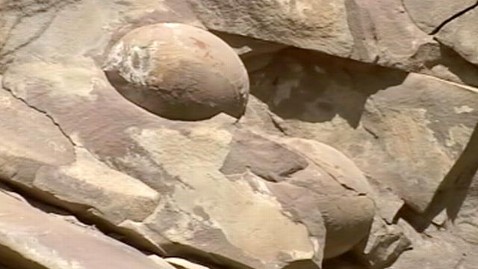
What happened to huge dinosaur eggs that were either abandoned or broke prematurely? Â You might think that this is a question that is impossible to answer, but dinosaur eggs have been discovered with intriguing evidence of scavenging of various forms. Â I recently came across a report from 2011 that I thought was especially interesting... Continue Reading →
DNA from a Fossil Canine Skull: Confirmation of an Ancient Domesticated Dog
Where did domesticated dogs come from?  That dogs are wolves has been known for some time but which wolves and when did domestication occur has been a more difficult question to answer.  Thousands of dog breeds and wolves have been genotyped to explore this question and that evidence suggests four and possibly more, separate wolf... Continue Reading →
NH Notes: Fossilized Animal Burrows in Argentina
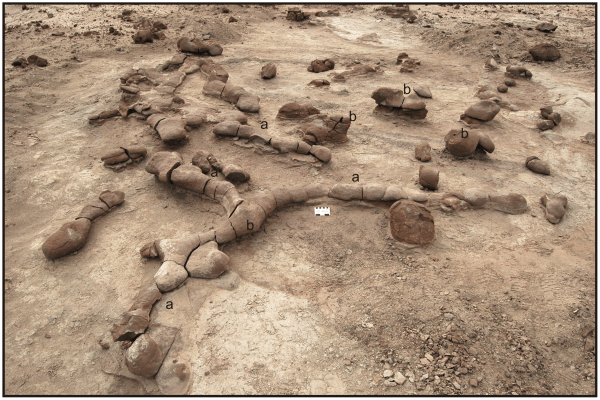
Fossilized bones of dinosaurs, whales and mammoths get all of the attention but trace fossils provide important evidence for interpreting when and how organisms lived on Earth in the past. Trace fossils are not the fossilized remains of organisms themselves but rather are evidence of the past presence of organisms. Â The most recognizable trace fossils... Continue Reading →
Did T. Rex Really Have Tiny Arms? – Historical Science and Creationism
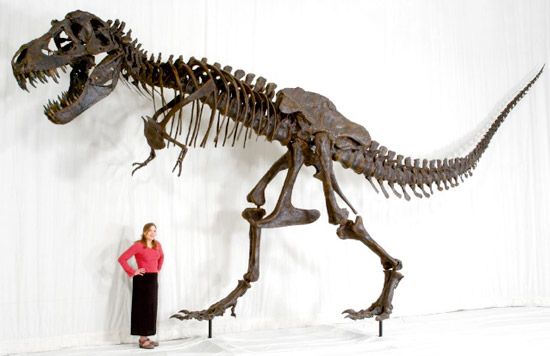
Everyone has encountered a T. rex in books, movies or museums.  Besides its size and menacing jaws one of the most striking features of a T. rex is its diminutive arms.  So why were the arms of T. rex so short?  There have been many hypotheses including: 1) they had no use and... Continue Reading →
Geological Context II: Neanderthals and the Italian Supervolcano
There are thousands of sites with either human remains or artifacts (stone tools usually) that are known across southern Europe and many are found in locations where they are found in layers stacked on top of each other like in caves or flood plain locations along rivers. But, the exact pattern of Neanderthal and modern human population migrations and changes is not my main interest.
Doggerland: The Ice Age, Sea Level Rise, and Human Migration
Update Feb 2014: Â I have rewritten this article with updated information here: Â Fishing For Fossils in the North Sea: The Lost World of Doggerland You may have seen reports of the discovery of the "British Atlantis" circulating the web. Â Those stories seem to have been sparked by a new display of recent research at... Continue Reading →
Fossil Field Trip: Fossil Reefs Under the Feet of the PCA GA
On my trip to Kentucky this week to attend the PCA GA I took some time to do some geological sightseeing. Â I hope I can convince you that it was a lot more exciting that it might sound:-) Â Below are some pictures I took at two locations. Â The first are from the Falls of... Continue Reading →
Adam and The Fall: A Thorny Young Earth Assumption
My WordPress tag reader led me to this video posted on Eric Hovind's "Creation Today" website. This site is what Dr Dino's website presence morphed into after the arrest and conviction of fringe creation scientists Kent Hovind.   What caught my eye was that today's video highlighted evidence of creation from thorns.  I have been thinking... Continue Reading →
Long Distance Dispersal via Catastrophic Events
When I give my lecture in class about animal distributions, questions often are raised about how did animals get to some remote islands or even islands that are not that far off from the mainland.  Sometimes the answer is that during ice ages the oceans was up to hundreds of meters lower than it is... Continue Reading →
The Toba Super Eruption: A Non-Flood Catastrophe – The Artifacts Say Yes!
The Toba volcano is found near the center of Sumatra, Indonesia. It has been estimated that at least 2800 cubic kilometers of material was thrown into the air during the explosion or series of explosions. To put that in perspective the Krakatoa volcano threw just over 2 cubic kilometers of material into the air some of which circled the globe causing dazzling sunsets in Europe.
Giant Dino Eggs Found? Bad Reporting on Bad Science
Dinosaur eggs are surprisingly (to the non-biologist) similar in size. Even the very largest dinosaurs laid eggs that were hardly any bigger than the largest eggs found today. These are observations from the fossil record and these observation make sense biologically even though all we see are fossilized eggs. Eggs are limited in the size they attain for several reasons but one of the most important is that the embryos in the eggs must have oxygen to grow.
Progressive Creationism: A Whale of an Inference
I think it is safe to say that the average person has little appreciation for the diversity (eg. number of species) and the total numbers of whales in the world. What most people hear about whales is that there are some that are hunted to near extinction. This tends to create the impression that whales are rare animals. Yes, there are many rare and endangered species of whales but there there are many that are very abundant.
Permian Pompeii Challenge Taken Up? ICR’s Brian Thomas Comments on Fossil Forests
Recently I shared evidence of an ancient forest preserved in amazing detail in a thick layer of volcanic ash (An Ancient and Alien Forest Reconstructed: A challenge for young earth creationism). I raised a number of challenging questions that this spectacular fossil discovery raises for those that hold to a young-earth creationists (YEC) understanding of... Continue Reading →
An Ancient and Alien Forest Reconstructed: A challenge for young earth creationism
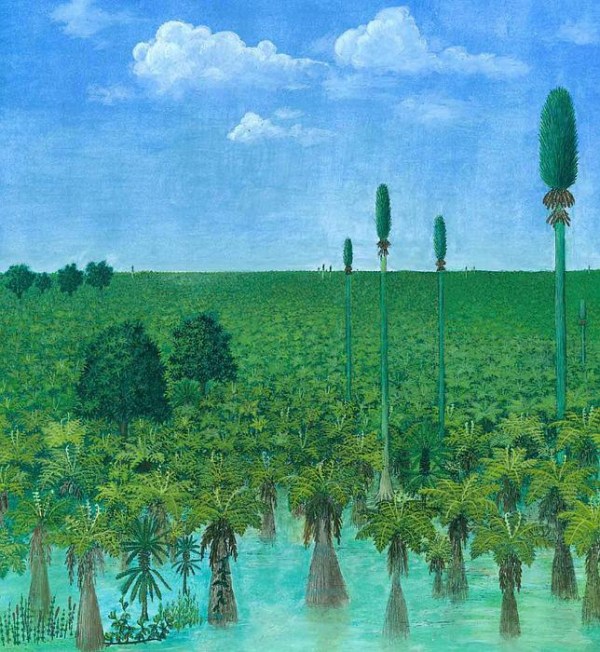
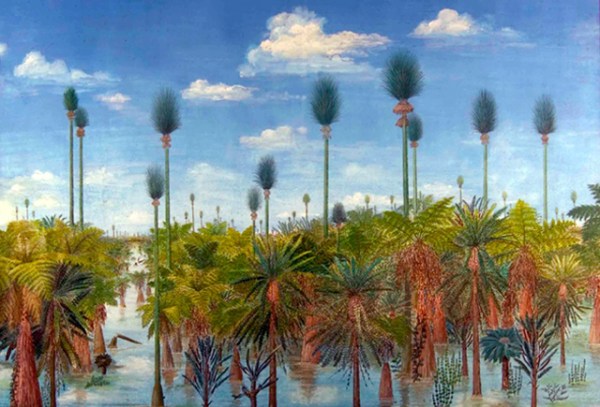
Recent studies of multiple intact fossilized forests provide a very detailed account of the presence of an seemingly alien forest that was found multiple locations across the entire globe at some point in the past. A forest completely devoid of the presence of any flowering plants such as oaks, maples and beech trees or even... Continue Reading →