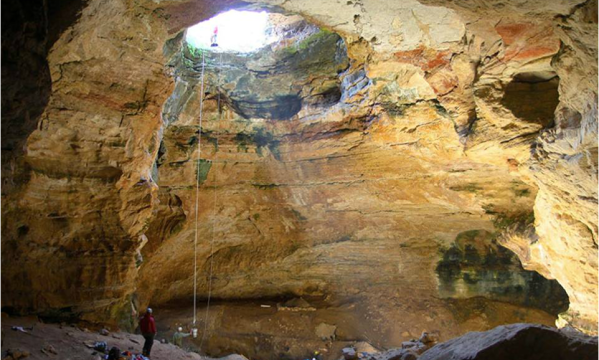
You can learn a lot from a series of unfortunate events. Collapsed caves can leave entry holes on the surface that become hazards to local fauna. The image below is from inside a famous natural pitfall trap in Wyoming. The surface above is rather flat and prey running from a predator sometimes fall into this hole... Continue Reading →
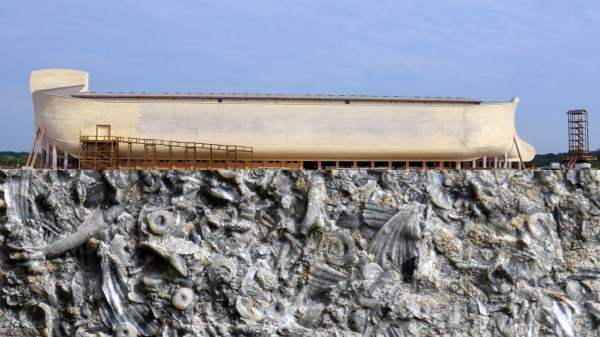
The Ark Encounter Sits on a Foundation Made of Trillions of Fossils
The Ark Encounter theme park in Kentucky is literally built on trillions of dead things. This fact would seem to support Ken Ham's popular response to what we would expect had the world been subject to a global flood: "Billions of dead things in rock layers..." But the fossils that form the foundation of his Ark park... Continue Reading →
Wyoming Fossils: Coming to Grips with the Absurdity of the Flood Geology Model of Fossil Origins
The sedimentary rocks of the Earth hold vast quantities of fossils. Hundreds of years of careful observations have shown that fossils are far from random in their distribution but rather they appear in the geological column in a distinct pattern or order referred to as fossil succession. How can we explain the observed distribution of fossils in the... Continue Reading →
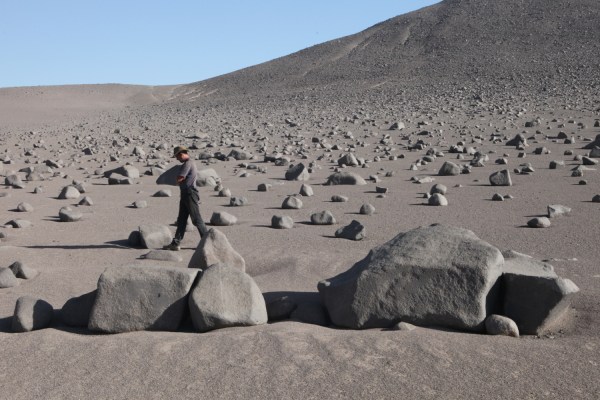
The World’s Largest Rock Tumbler is an Unusual Testimony to an Ancient Earth
Evidence that some features of earth's landscape are the product of processes acting over longer periods of time can be found everywhere we look. Some of this evidence, such as that from the Grand Canyon, may be familiar to us but other evidence is far less familiar but tells the same story. For example, high... Continue Reading →
Snowmastodon Fossil Discovery: Mastodons, Mammoths, Camels and Giant Sloths in Alpine Colorado
Near the top of a 9000-foot-high mountain ridge lies a small reservoir dug out of an alpine meadow. Today, the Ziegler Reservoir acts as a water source for the ski village of Snowmass, Colorado, but long before this site was an alpine meadow, it was an ancient lake around whose shores lived mastodons, mammoths, camels—yes... Continue Reading →
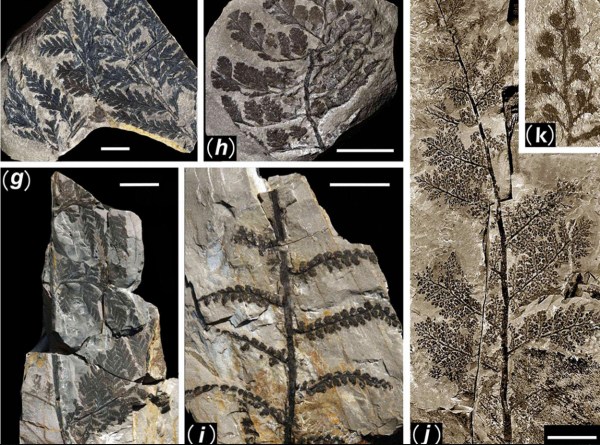
Permian Pompeii Challenge Taken Up? ICR’s Brian Thomas Floats a Forest Hypothesis
Recently I shared evidence of an ancient forest preserved in amazing detail by volcanic ash (An Ancient and Alien Forest Reconstructed: A challenge for young earth creationism). I posed a number of challenging questions that this spectacular fossil discovery raises for those that hold to a young-earth creationist' (YEC) understanding of earth's history. Since then,... Continue Reading →
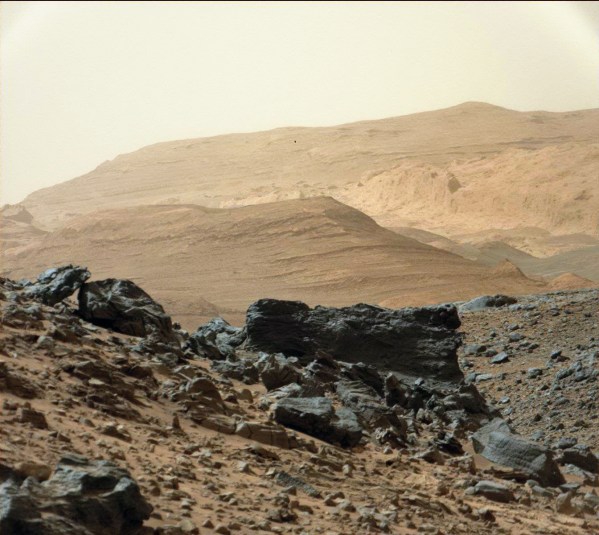
Ancient Mars: Cosmogenic Dating Methods Allow Estimates of Erosion Rates on Mars
The NASA rover Curiosity has been making its way across the floor of Gale crater on Mars since 2012. It has closely examined a wide range of rock types which reveal that this location on Mars has experienced a long history of variable climates. From water-infused bedrock, water-deposited conglomerates, wind-formed fossilized dunes to active sand... Continue Reading →
A Mediterranean Island Petrified Forest: Another Monument to an Ancient Earth
On the Greek Island of Lesvos there is a World Heritage Site which includes hundreds of petrified trees and countless other fossils. Many of these petrified trees are found standing upright with root systems intact. A variety of tree species have been identified including a species similar to the giant sequoia trees found today in California.... Continue Reading →
Reflections on “Is Genesis History?” Part II: Where do the Lines of Evidence Lead?
The question posed in the title of the documentary-style film “Is Genesis History?” sounds provocative, but the answer was never in doubt in the mind of the filmmakers—or the primary audience. The producers surely hoped that non-Christians and Christians alike with questions about origins/natural history/science would be drawn in by the title query and subtitle... Continue Reading →
An Ammonite Fossil Leaves A Trail of Evidence of a Tranquil Jurassic Seafloor
A remarkable trace fossil has given us a glimpse into the environmental conditions of a Jurassic seafloor. Ammonite fossils are common in Jurassic rocks but one particular ammonite is more unusual than most. In the horizontal layer of rock where it was found a 28 foot-long line of shallow grooves was found leading right up to the... Continue Reading →
Millions of Fossilized Footprints – A Global Flood Dinosaur Dilemma
Animal tracks preserved in stone are found in great abundance in many parts of the geological column. You might be asking yourself, aren't the chances incredibly small that any individual track made in mud would be preserved over long periods of time? You would be right. The vast majority of footprints won’t survive the ravages of... Continue Reading →
A Fossil Paradox? Footprints are Rarely Preserved in Stone and yet are very Common
Billions of footprints are preserved in the rock record. While bones get all the attention, fossil footprints likely outnumber bones. How can we make sense of this observation? Surely, preserving a bone must be far more likely than preserving a footprint? I have written about how paleontologists use information from footprints and bones to reconstruct... Continue Reading →
Dinosaur Footprints, Eggs and Bones – Are Paleontologists Creating Fake History?
Dinosaur tracks and eggshells are abundant findings within the geological column, capturing the attention of numerous dedicated paleontologists. Their relentless pursuit involves uncovering, studying, and interpreting these remnants of long-extinct creatures. However, is all this painstaking effort merely an illusion when considering the young-earth perspective? Could the majority of paleontological work be seen as fabricating... Continue Reading →
A Strange Testament to an Ancient Earth: Bat Breath Causes Caves to Grow Larger
Can the act of breathing in a cave cause it to grow larger? Limestone caves are usually formed by dissolution of limestone as the result of the interaction of carbon dioxide dissolved in water seeping through cracks in bedrock. Typically this begins deep underground and as voids expand and reach the surface animals may enter... Continue Reading →
The Naica Cave of Crystals is a Giant Problem for a Young Earth
Nine hundred feet below a Mexican desert hundreds of giant white crystals, some more than 90 feet long and 13 feet wide, fill a hot (137 F) and humid cavern. Pictures of people exploring this crystal palace look as if Rick Moranis had shrunk them down to the size of an ant and then put them into... Continue Reading →