A few weeks ago I was in Dayton TN and attended some activities related to the 1925 Scopes trial. On my return drive back to Ohio I made a visit the area around Ken Ham’s Ark Encounter in Kentucky. While I didn’t tour the theme park itself this time, I spent some time just outside of the park boundary exploring the extensive fossil beds that lie under this entire area of Kentucky. I found a few fossils that I had not found before and that got me thinking about the incredible geological resources right beneath the Ark’s feet – and the educational opportunities being missed.
Below is a short summary of a video I made about this fossil and my thoughts on the Ark Encounter’s missed educational opportunity.
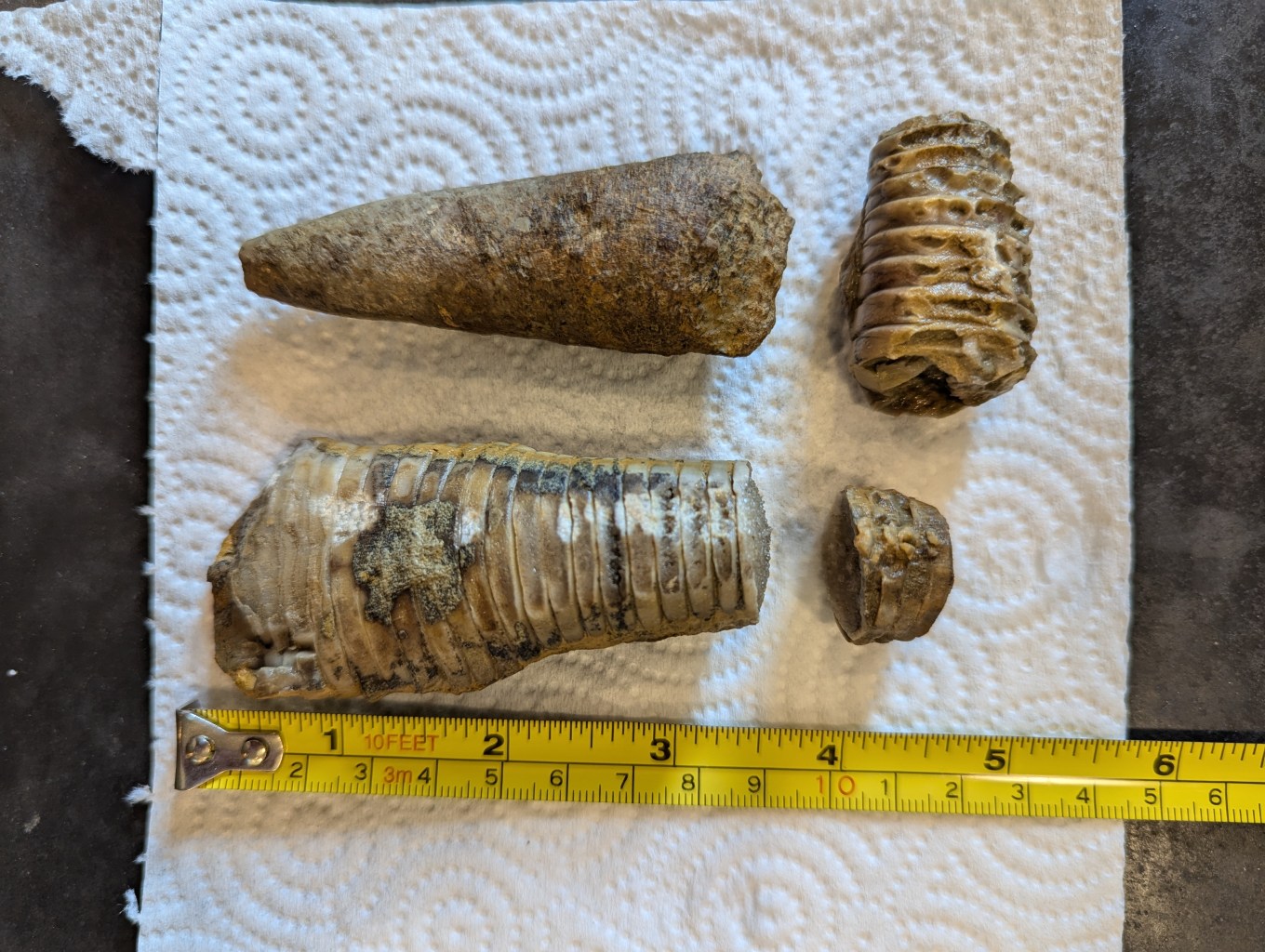
Let me start with my fossil find. Just outside the Ark Encounter property, I stumbled upon something I’ve been hoping to find for years – a nautiloid fossil! For those unfamiliar, nautiloids are ancient relatives of modern cephalopods like octopuses and squid. They had beautiful spiral or straight shells and were some of the largest predators in ancient seas.
Finding this nautiloid was a reminder of how this single fossil is a tiny window into an ancient world that existed hundreds of millions of years ago. The rocks in this area of Kentucky are part of the Cincinnati Arch, a vast geological formation packed with Ordovician-age fossils conventionally dates to 450 million years ago.
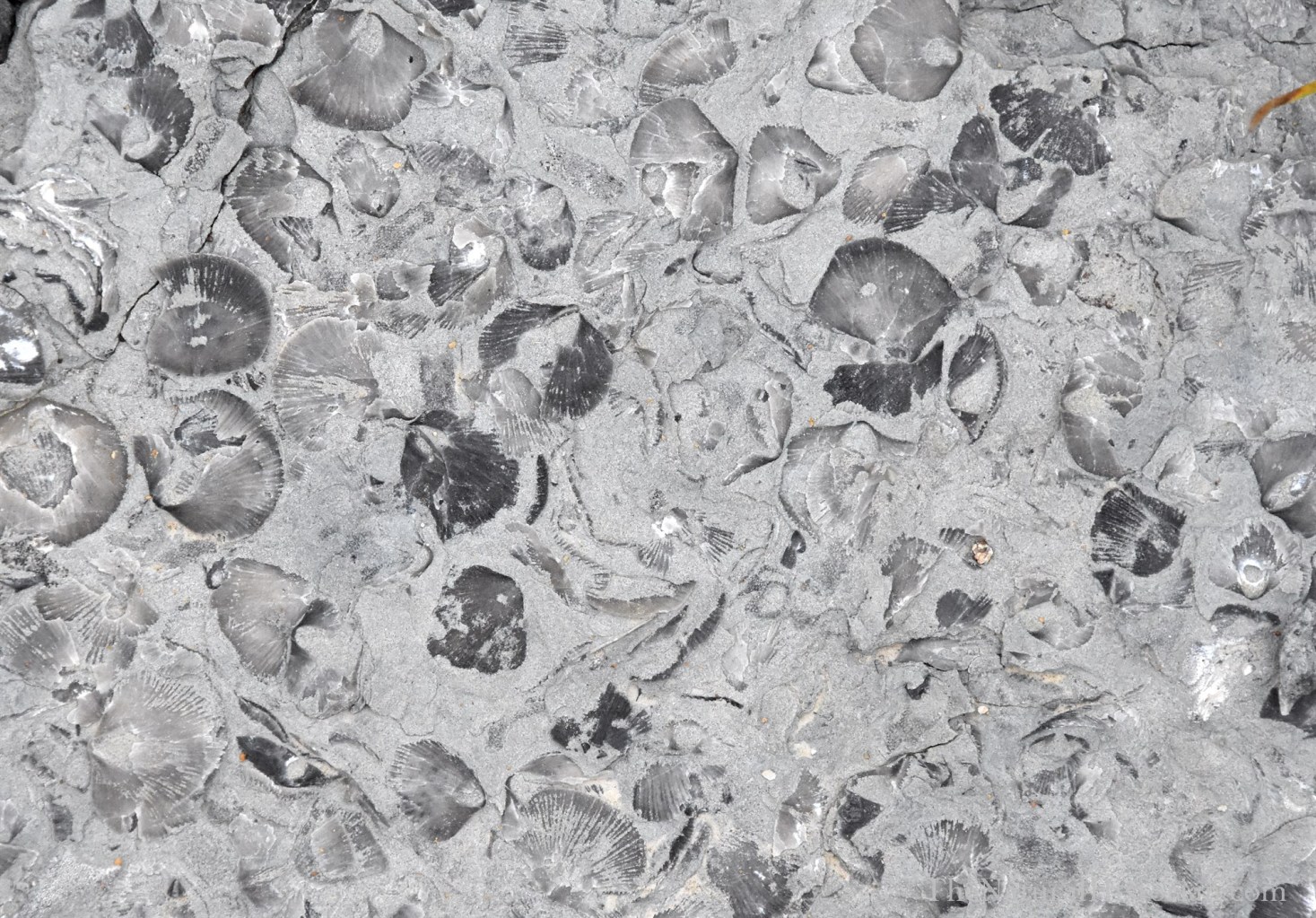
As I examined the nautiloid and the rocks around it, I was struck by the incredible abundance of fossils. Nearly every rock was packed with ancient sea life – countless brachiopods, bryozoans, crinoid stems, pieces of trilobites and more. Trillions upon trillions of fossils, all preserved in layers of limestone and shale.
These layers tell a fascinating story. You can see alternating bands of hard limestone packed with fossils, and softer shale with fewer visible remains. The limestone layers could represent long periods of calm seas where shells and skeletons accumulated on the seafloor but I’ve learned since I recorded my video are thought to represent storm assemblages in which the shallow sea floor was agitated and the many shells and pieces of shells that has been accumulating over long periods of time were swept up and dropped out in thick layers. The shale layers between these dense fossil filled limestones probably indicates times of slower deposition and possibly deeper seas due to sea level rises.
Standing there, looking at these rocks, I couldn’t help but think about the Ark Encounter just up the hill. Here is an attraction dedicated to promoting young Earth creationism, literally built on top of some of the most incredible fossil resources imaginable. Yet from what I’ve seen, they do very little to engage with the actual geology and paleontology right beneath their feet.
Now, the Ark Encounter does have a fossil-related activity – their “Fossil Find” where visitors can purchase bags of dirt with fossils mixed in to pan for. But in my view, this is a huge missed opportunity. They’re importing fossils and creating an artificial experience when they’re sitting on a veritable gold mine of real fossils!
Here’s what I think they could do instead: Imagine if they dug a trench on their property, exposing those beautiful layers of rock. Visitors could walk through and see the incredible abundance of fossils with their own eyes. They could learn to identify different types of ancient sea life and see how they’re distributed through the layers.
Then, take all that excavated material and create a real fossil hunting area. Let visitors search through actual rocks from the site and keep what they find. You could provide educational materials about the different fossils and their features. This would be a much more authentic and educational experience than panning for imported fossils in bags of dirt.
Of course, I understand why they might be hesitant to do this. The sheer abundance of fossils and the clear layering of the rocks raise some challenging questions for the young Earth creationist worldview. How did so many fossils form and get sorted into distinct layers in such a short time? Why do we only see certain types of ancient sea life here, with no signs of more modern marine organisms?
It also doesn’t escape my notice that their current fossil find is a great way to make money. $8 to $55 per bag of items that cost them pennies to a few dollars at most to procure. Giving away trillions of fossils from their own property doesn’t make economic sense.
These are the kinds of questions that got me excited about geology and paleontology in the first place. I believe engaging with the real evidence and grappling with these questions is far more valuable than avoiding them.
In my view, the Ark Encounter is missing a golden opportunity to engage visitors with the actual historical and geological context of their site. Whether you agree with their interpretations or not, the fossils and rocks tell an incredible story that deserves to be shared.
I came away from this experience with a renewed appreciation for the amazing fossil resources we have here in Kentucky. There’s something magical about holding a creature that lived hundreds of millions of years ago and imagining the ancient world it inhabited. I hope more people get the chance to experience that wonder for themselves.
If you’re interested in learning more about the fossils of the Cincinnati Arch and seeing my nautiloid find up close, check out my latest YouTube video: Trillions of Fossils: The Ancient Foundation of Ken Ham’s Ark Encounter. I go into more detail about the geological context and show some great close-up footage of the fossils.
 Naturalis Historia