The Navajo Sandstone: A Desert in the Middle of the Global Flood?

Dr. Christopher Rupeโ€™s claims about the Navajo Sandstone being formed during a global flood face severe scrutiny. Mainstream geology clearly identifies it as an ancient desert. With every compelling featureโ€”from annual rainfall cycles to undeniable evidence of a terrestrial ecosystemโ€”debunking Rupe's theory exposes the absurdity of conflating deserts with flood layers.

Flat Contacts, Missing Pollen and Desert Dunes: The Grand Canyonโ€™s Case Against Flood Geology

The Grand Canyon's layered rocks tell a story of ancient history, not a flood. The ICR videoโ€™s claims about rapid sedimentation during Noahโ€™s flood crumble under scrutiny, revealing flaws in logic and evidence. Eleven scientists present a compelling counter-narrative: the absence of flowering plant pollen in the canyon signals a timeline spanning millions of years, not one catastrophic flood year.

What to Do with the Plants? A Survey and Critique of Young-Earth Creationist Models for the Plant Fossil Record

The young-earth creationist (YEC) theories struggle under the weight of their own inconsistencies when confronted with the ordered, global plant fossil record. With multiple contradicting models failing to account for the absence of angiosperm pollen before the Cretaceous, an outdated narrative is becoming increasingly untenable. The evidence overwhelmingly favors established geological timelines.

What a New Grand Canyon Study Really Saysโ€”and Why Creationists Will Misrepresent It

The Grand Canyon's origins have stirred debate among scientists and creationists. A recent study by He et al. utilizes zircon analysis to demonstrate that the Colorado River's sediments appeared in the Bidahochi basin approximately 6.6 million years ago, leading to a lake spillover event. This finding challenges young-earth creationist interpretations of rapid canyon formation, highlighting significant geological timelines and processes.

Deep Time Did Not Come โ€œPrimarily Out of Atheism as Ken Ham Claims

Ken Ham's claim that the idea of deep time emerges largely from atheism is not just inaccurate; it's a dangerous simplification. The pioneers of geology were predominantly Christians whose empirical findings on the earth's age contradicted Ham's narrative. Their faith inspired, rather than compromised, their geological discoveries, revealing a profound connection between science and scripture.

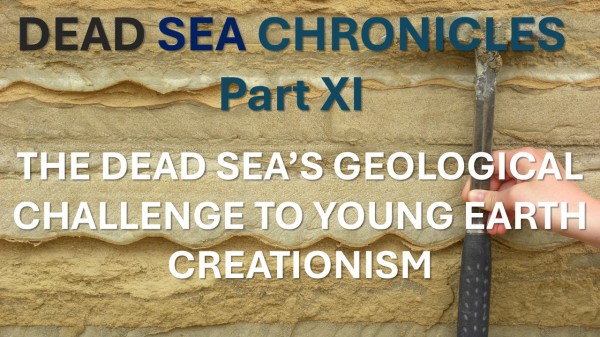
Dead Sea Chronicles Part X – Calculating Time: The Dead Sea’s Salt Deposits and the Limits of a Young Earth

In our exploration of the Dead Sea basinโ€™s geological history, we've uncovered evidence of multiple desiccation events and significant fluctuations in lake levels over hundreds of thousands of years. These findings, derived from sediment cores and various dating methods, paint a complex picture of the region's climatic and hydrological past. As we saw previously, this... Continue Reading →

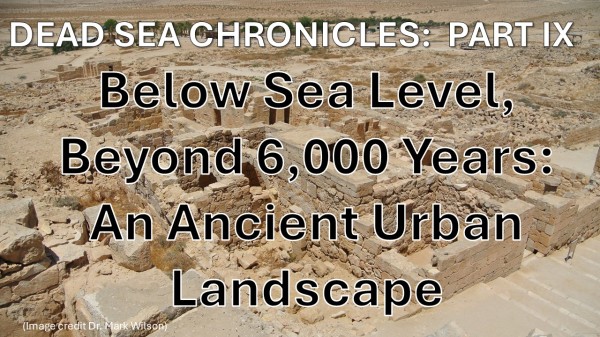
Dead Sea Chronicles Part IX: Below Sea Level, Beyond 6,000 Years -The Jordan Valley’s Ancient Urban Landscape

The exploration of the Dead Sea region reveals significant archaeological evidence challenging young-earth creationist views. Ancient cities, like Jericho and Ein Gedi, show continuous habitation and advanced cultural development far exceeding the 4,350-year timeline. Geological findings, including travertine deposits and climate records, further support a much older Earth.

Dead Sea Chronicles Part VI: All Dried Up – When the Dead Sea Died

The Dead Sea's dramatic history reveals a shocking narrative of desiccation far deeper than previously imagined. This ancient lake, now evaporating, has endured cycles of extreme drought, challenging young Earth creationist theories. Evidence from sediment cores exposes not just one, but multiple significant drying events that defy a simplistic timeline of Earth's history.

Up ↑