In our previous exploration, we provided evidence of the existence of a lake, Lake Lisan, a prehistoric giant that filled the Dead Sea rift to levels far above what we see today. We witnessed a landscape transformed by abundant water, reflecting a climate dramatically different from the arid region we know. But now, let’s turn to the opposite extreme and ask, how low can the Dead Sea go?
Today, we see the Dead Sea shrinking before our eyes, its shorelines receding year by year. But is this the lowest it’s ever been? What if I told you that this remarkable body of water, Earth’s lowest elevation and deepest hypersaline lake, has been far lower than it is today and that it has actually dried up almost completely multiple times in its past?
The Dead Sea, despite present evaporation rates, seems so resistant to complete evaporation today, does contain evidence buried in the sediments below its surface today of times when it was reduced to little more than a salt flat. In this installment of our series, we’ll look at that evidence for past desiccation events in the Dead Sea. We’ll explore how scientists have uncovered these dramatic episodes in the lake’s history. And as previously, we will ask how a dried up Dead Sea could be accommodated by young-earth creationism.
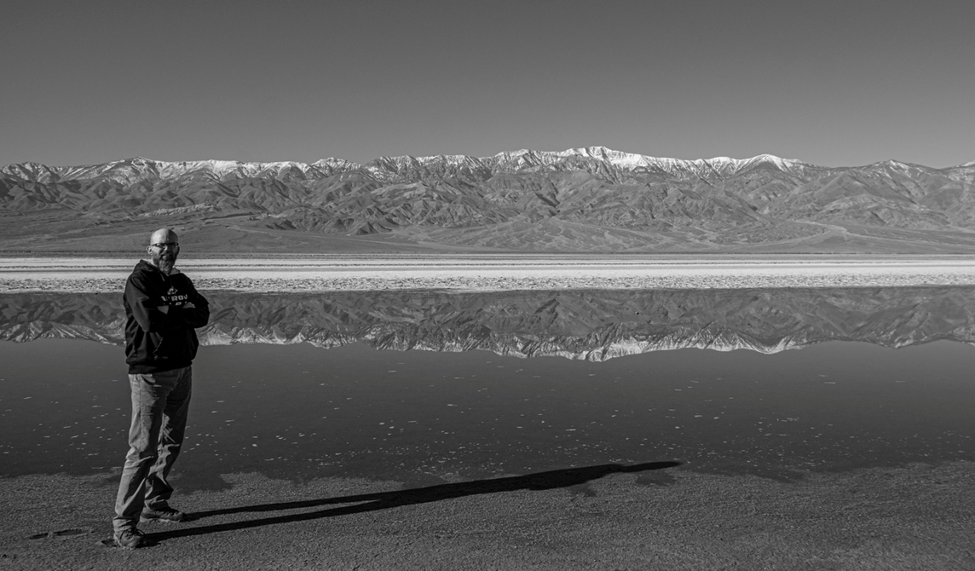
The Dead Sea Deep Drilling Project (DSDDP)
To truly understand the Dead Sea’s past, we need to look beneath its surface. Enter the Dead Sea Deep Drilling Project (DSDDP), a scientific endeavor that has revolutionized our understanding of this unique lake’s history. Completed in 2011, the DSDDP recovered a continuous 450,000-year record of Dead Sea sediments, providing an unprecedented window into the region’s past climate and hydrology (Stein et al., 2011).
This remarkable core, reaching depths of over 450 meters (~1500 feet), has been a goldmine of information. Numerous studies have analyzed these cores, yielding fascinating insights into the Dead Sea’s past. For instance, Torfstein et al. (2015) used this record to reconstruct detailed lake level changes during the last interglacial period, while Neugebauer et al. (2016) provided a high-resolution analysis of hydroclimatic variability during the early last glacial period.
The DSDDP cores reveal a complex history of lake level fluctuations, including multiple periods of lower salinity in the high stands of Lake Lisan and periods of extreme low stands with far higher salinity and more precipitation of salts that suggest complete or near-complete desiccation of the Dead Sea. These findings have big implications for our understanding of regional climate history and pose significant challenges to young Earth creationist interpretations of Earth’s past. Afterall, how could a flood cover this region filling the rift with water but then completely dry up prior to Abaham traveling across the region just a few hundreds years after the flood? But more about this after the case is made for the reality of these desiccation events.
Evidence for Multiple Desiccation Events
So, what exactly does a dried-up Dead Sea look like in the geological record? The answer lies in the distinctive layers found in the DSDDP cores.
One of the most striking pieces of evidence comes in the form of thick halite (rock salt) deposits. In a hypersaline lake like the Dead Sea, halite typically precipitates out of the water column when the lake becomes super-concentrated due to evaporation. For example, a massive salt layer dating to about 120,000 years ago during the last interglacial period indicates a prolonged period of extreme aridity, with lake levels dropping more than 200 meters (more than 600 feet!) below today’s already low level (Kiro et al., 2017). This event, lasting several thousand years, represents one of the most severe desiccation episodes in the Dead Sea’s history. At this point the lake surface would have been 2000 feet below sea level!
Another telltale sign of extremely low lake levels is the presence of gypsum layers. Gypsum, a calcium sulfate mineral, precipitates out of the Dead Sea brine at a different chemical threshold than halite. Its presence in the core, especially when found alongside halite, suggests periods of intense evaporation and low lake levels (Torfstein et al., 2015).
But perhaps the most dramatic evidence comes from a layer found 235 meters (770 feet) below the current lake floor. This layer, containing pebbles and gravels, represents an ancient beach or stream bed, indicating that at one point, the Dead Sea had almost completely dried up (Stein et al., 2011). This extreme low stand, dated to approximately 120,000 years ago, aligns with the thick salt layer mentioned earlier, providing multiple lines of evidence for a major desiccation event.
It is important to remember that the sediment core was taken well away from the current shoreline in the deepest portion of the lake. In a large lake there is no mechanism to deposit pebbles in this location but if the lake were nearly dried out the position of the sediment would have been at or near the shoreline of the lake at that time. Therefore, the streams feeding that lake would actively bring sediments all the way down to the deepest portion of the rift valley.
By carefully analyzing these and other sedimentological indicators, researchers have identified multiple desiccation events throughout the Dead Sea’s history. Not all of them resulted in the Dead Sea drying up completely but major low stands have been identified during the last interglacial period (about 120,000 years ago) and at several points during the Holocene (the last 11,700 years).
It can’t be stressed enough that the evidence strongly supports not just a single extreme drying event in the region, but multiple events separated by deposition characteristic of much higher water levels than present today. These are immense fluctuations in volume of this lake and its water level. The single switch from high to low stand requires a considerable amount of time and there is evidence that this happened many times.
Dating Methods and Chronology Building
Of course, identifying these desiccation events is only half the battle. To truly understand their significance, we need to know when they occurred. This is where the complex world of geochronology comes into play.
Radiocarbon dating, the workhorse of Quaternary geochronology, plays a crucial role in dating the more recent portions of the Dead Sea record. This method, which measures the decay of radioactive carbon-14, is effective for samples up to about 50,000 years old. In the Dead Sea sediments, researchers can date organic matter trapped in the sediments, such as plant remains or algal debris (Neugebauer et al., 2014).
For older sediments, beyond the reach of radiocarbon dating, geologists turn to uranium-thorium dating. This method, based on the decay of uranium to thorium, can date materials up to about 500,000 years old. In the Dead Sea, it’s particularly useful for dating aragonite layers, a form of calcium carbonate that precipitates out of the lake water under certain conditions (Torfstein et al., 2015).
But perhaps the most fascinating dating method used in the Dead Sea is varve counting. Varves are annual layers of sediment, similar to tree rings. In the Dead Sea, these often appear as couplets of light (summer) and dark (winter) laminae. By carefully counting these varves, researchers can construct a year-by-year chronology of deposition (Prasad et al., 2009).
The real power comes when these methods are combined. By cross-checking radiocarbon dates against varve counts, or using uranium-thorium dating to anchor floating varve chronologies, researchers can build robust, high-resolution timelines of Dead Sea history. This multi-proxy approach allows for greater confidence in the timing of events and helps to resolve discrepancies between different dating methods.
By combining careful observation, rigorous analysis, and multiple independent dating techniques, geologists have pieced together a detailed history of this remarkable lake – a history that extends far beyond the limits of human memory or written records.
These dating techniques have allowed researchers to place the desiccation events into a detailed chronological framework, revealing a complex history of lake level changes tied to regional and global climate fluctuations. This chronology poses significant challenges to young Earth creationist model, which is unable to account for the vast timespans and multiple cycles of change evident in the Dead Sea record.
Critique of Young Earth Creationist Interpretations
If it were not already evident, the evidence from the Dead Sea cores presents a significant challenge to young Earth creationist (YEC) interpretations of Earth’s history. Let’s examine how this evidence contradicts key YEC claims and how YEC proponents have attempted to address these challenges.
In a 2015 article on the Institute for Creation Research website, Dr. Brian Thomas attempted to reconcile the Dead Sea evidence with a young Earth timeline. Thomas argued that the thick salt layers could have formed rapidly in the aftermath of Noah’s Flood, suggesting that “post-Flood hydrologic processes” could explain the observed sediments (Thomas, 2015).
However, this interpretation fails to account for several key aspects of the Dead Sea record:
- Multiple cycles: The cores show numerous cycles of wet and dry periods, not just one post-Flood drying event. These cycles align with known global climate fluctuations over hundreds of thousands of years.
- Varves: The presence of annual layers (varves) in much of the core, totaling far more than the ~4,500 years since the proposed Flood date, directly contradicts a young Earth timeline.
- Consistency of dating methods: The agreement between multiple independent dating methods (radiocarbon, uranium-thorium, varve counting) provides strong support for the antiquity of the deposits.
- Gradual processes: Many of the observed features in the cores, such as the formation of gypsum crystals or the deposition of fine laminations, require slow, gradual processes incompatible with rapid post-Flood deposition.
We will address more the claims of Dr. Thomas latter in this series.
Young-earth creationists have struggled to address these issues. For instance, on the young-earth apologetics ministry, Answers in Genesis, website, while acknowledging the existence of the DSDDP cores, does not directly addressed the implications of their 450,000-year record for YEC chronology (Answers in Genesis, 2021).
The DSDDP record, with its clear evidence of multiple desiccation events and climate cycles extending back hundreds of thousands of years, stands in stark contrast to the compressed timeline proposed by YEC models. It provides yet another line of evidence that the Earth’s history extends far beyond the 6,000-10,000 year range they proposed.
Addressing Potential Counterarguments
While the evidence from the Dead Sea cores is compelling, it’s important to address potential counterarguments and alternative interpretations. This not only strengthens our understanding but also demonstrates the rigorous nature of scientific inquiry.
One potential challenge to the desiccation evidence comes from the possibility of post-depositional alteration of the sediments. Some might argue that the observed salt layers could have formed through later intrusion of saline fluids, rather than representing true desiccation events.
However, this alternative explanation is refuted by several lines of evidence:
- Sedimentary structures: The salt layers show primary depositional features, such as seasonal banding and crystal growth patterns, that are inconsistent with later alteration (Kiro et al., 2017).
- Associated minerals: The presence of other evaporite minerals, such as gypsum, in association with the halite layers supports their formation through progressive evaporation of lake water (Torfstein et al., 2015).
- Correlation with other proxies: The timing of salt layer deposition correlates well with other indicators of aridity in the region, such as pollen records and isotope data from nearby speleothems (Neugebauer et al., 2016).
Another potential challenge concerns the accuracy of the dating methods used. Some might question whether the radiocarbon or uranium-thorium dates could be affected by unknown factors, leading to overestimation of the sediments’ age.
However, the use of multiple, independent dating methods provides a robust check against concerns about accuracy. The agreement between different techniques, like radiocarbon dating and varve counting for recent sediments, lends strong support to their reliability (Prasad et al., 2009). What’s more, the Dead Sea chronology lines up nicely with other regional and global climate records, such as marine sediment cores and ice cores (Torfstein et al., 2015). And let’s not forget the solid foundation these methods stand on – their underlying physical principles have been thoroughly tested and verified across various contexts. It’s like having multiple witnesses all pointing to the same story.
Next up, we’ll explore how the Dead Sea sediments record not only climate changes but also seismic events, providing insights into the region’s tectonic history and potentially shedding light on tectonic events—earthquakes—recording in scriptures.
References:
Answers in Genesis. (2021). “Noah’s Flood and the Dead Sea Sediments.” Accessed online [insert date].
Kiro, Y., Goldstein, S. L., Garcia-Veigas, J., Levy, E., Kushnir, Y., Stein, M., & Lazar, B. (2017). Relationships between lake-level changes and water and salt budgets in the Dead Sea during extreme aridities in the Eastern Mediterranean. Earth and Planetary Science Letters, 464, 211-226.
Neugebauer, I., Brauer, A., Schwab, M. J., Waldmann, N. D., Enzel, Y., Kitagawa, H., … & Frank, U. (2014). Lithology of the long sediment record recovered by the ICDP Dead Sea Deep Drilling Project (DSDDP). Quaternary Science Reviews, 102, 149-165.
Neugebauer, I., Schwab, M. J., Waldmann, N. D., Tjallingii, R., Frank, U., Hadzhiivanova, E., … & Brauer, A. (2016). Hydroclimatic variability in the Levant during the early last glacial (∼ 117–75 ka) derived from micro-facies analyses of deep Dead Sea sediments. Climate of the Past, 12(1), 75-90.
Prasad, S., Vos, H., Negendank, J. F. W., Waldmann, N., Goldstein, S. L., & Stein, M. (2009). Evidence from Lake Lisan of solar influence on decadal-to centennial-scale climate variability during marine oxygen isotope stage 2. Geology, 37(1), 71-74.
Stein, M., Ben-Avraham, Z., Goldstein, S., Agnon, A., Ariztegui, D., Brauer, A., … & Yasur-Landau, A. (2011). Deep drilling at the Dead Sea. Scientific Drilling, 11, 46-47.
Thomas, B. (2015). “Thick Ice Sheets: How Old Are They Really?” Acts & Facts. 44 (6).
Torfstein, A., Goldstein, S. L., Kushnir, Y., Enzel, Y., Haug, G., & Stein, M. (2015). Dead Sea drawdown and monsoonal impacts in the Levant during the last interglacial. Earth and Planetary Science Letters, 412, 235-244.
 Naturalis Historia