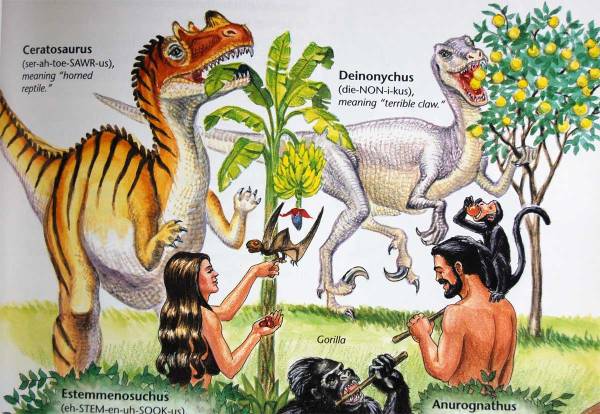
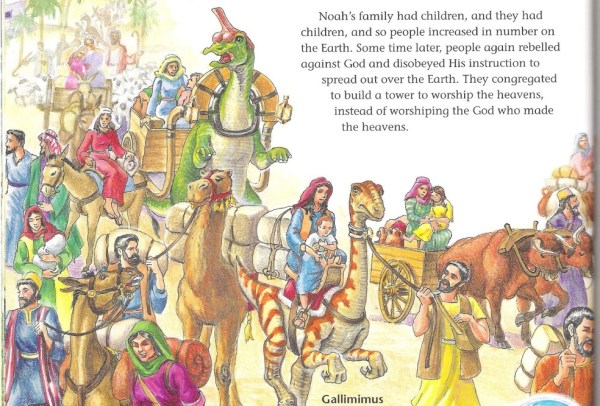
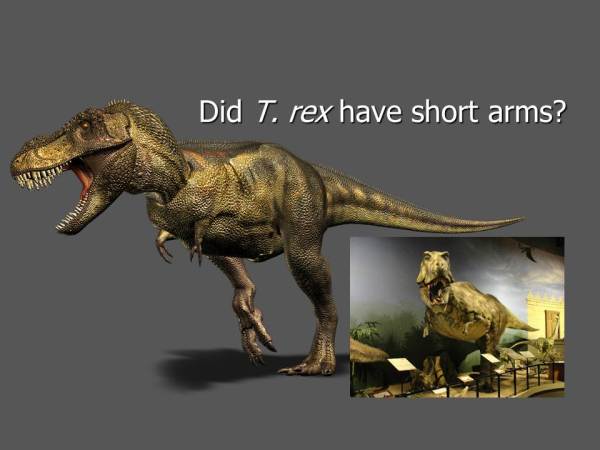
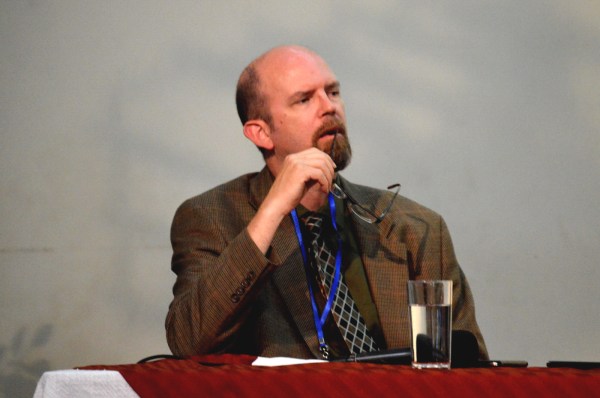
Dinosaurs play an important role in forming the public—and children's in particular—perception of the age of the Earth. I was reminded of this when I had the opportunity to attend two talks about dinosaurs both targeted at kids. The first was a presentation by Jack Horner of Jurassic Park fame but more importantly a researcher... Continue Reading →
Bones of Contention II: Ape, Human or Fraud? Young Earth Creationists Respond to the Dinaledi Chamber Fossil Discovery
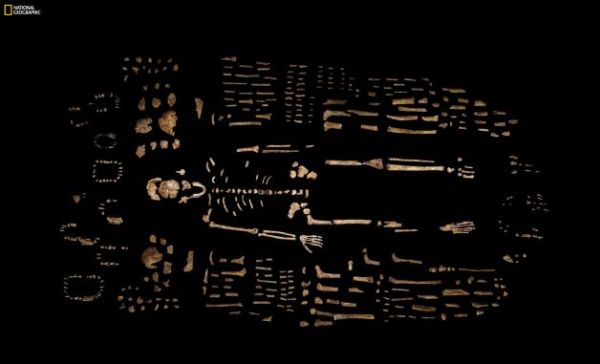
The largest collection of hominin bones ever found in Africa is causing massive waves in the anthropological world and beyond. When it was first announced, I wrote about how I thought some creationist organizations might respond to questions posed by hominin fossils and their geological setting (see: Bones of Contention: How Will Creationists Respond to... Continue Reading →
Bones of Contention: How Will Creationists Respond To A Huge New Hominid Fossil Find?
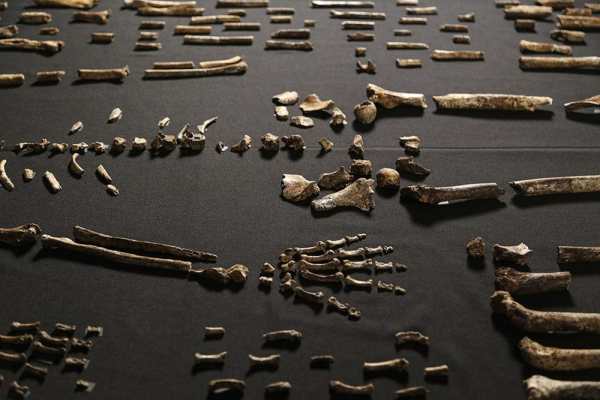
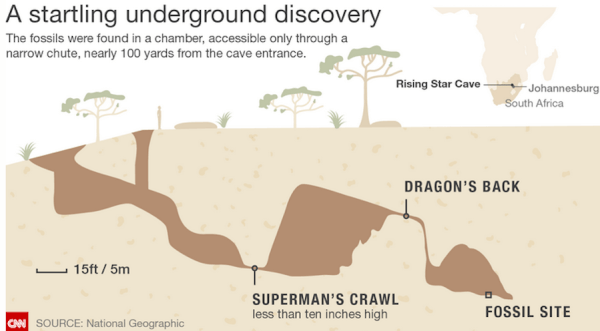
Where no animal except a lost owl and rodent has ever found themselves, through skinny passages that I could not fit through, laying on or just under fine sediments, the partially fossilized bones of at least 15 individuals have been found deep in a cave in South Africa. UPDATE: I have written a follow-up to... Continue Reading →
When Peer Review Lets You Down: A YEC Quote Problem
Where are the fact checkers in Young Earth Creationist' (YEC) organizations? And why do simple errors and profound misconceptions of science persist among their ranks? I have commented multiple times that the YEC organization Institute for Creation Research (ICR) has a self-editing problem. As I have documented (Eg. The Case of the Shrinking Comet and the Age... Continue Reading →
Is Historical Science Reliable? An Exploration of the AiG “Origins” Science Label
Young earth creationists frequently speak of two kinds of science which they refer to as "origins" and "operational" science. These terms are possibly akin to what scientists may call "historical" and "experimental" science. What is this "origins" science and how does origins science play a role in the discussion of the Age of the Earth?... Continue Reading →
Reflections on a Young Earth Creationist’ Approach to Scientific Apologetics
A few weeks ago I was a scheduled to present several lectures as part of a course offered by Veritas Theological Seminary in Santa Ana, California. The course title was Scientific Apologetics: The Age of the Earth. The course was split 50/50 between speakers from Solid Rock Lectures including myself, and two prominent employees of the... Continue Reading →
Christian Responses to the Spiritual and Physical Status of Neanderthals
The physical and spiritual status of Neanderthals has been hotly debated since the first fossilize of bones were described from Neander Valley in Germany in 1856. Since that time bones from more than 400 Neanderthal individuals have been recovered over a large geographical range (fig 1). Hundreds of published studies on these bones, artifacts... Continue Reading →
The State of Creationism in the Church Today: Reflections on ETS 2014, Part II
Evangelical Christianity, broadly defined, has seen a number of science and faith battles over the past 50 years. For most of those years the debate has focused on the age of the earth and the closely – though not universally - associated debate about the extent of Noah’s Flood. Today, the age of the Earth... Continue Reading →
Reflections on ETS 2014, Part I: An Overview of Origins Related Talks
The landscape of science and faith discussions within conservative evangelical Christianity has shifted noticeably over the past 20 years. Vigorous debates over the meaning of the day of creation in Genesis 1 were common in the 1990s, resulting in study committee reports from conservative denominations like the Presbyterian Church in America, “Report of the Creation Study Committee”... Continue Reading →
The Never Ending Debate: Ken Ham’s Obsession with Bill Nye
Do you remember the debate between Bill Nye and Ken Ham back in February? Probably, but if it is becoming a hazy memory then that's a sure sign you aren't visiting the Answers in Genesis website often enough. For if you were, you could not forget. For a month after the debate AIG had a... Continue Reading →
NH Notes: Natural Trap Cave – An Ice Age Fauna Snapshot
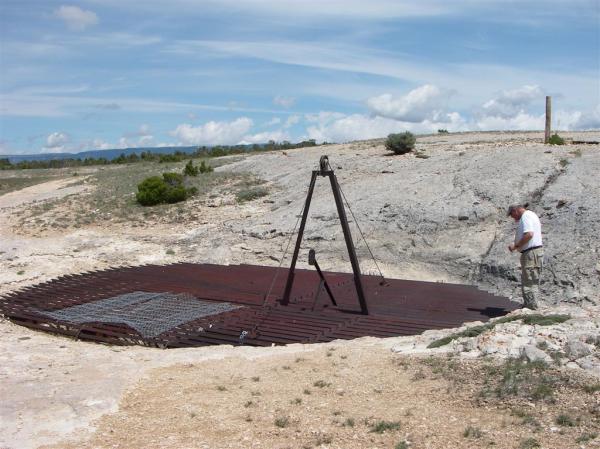
A 15-foot-wide metal grate covers a hole in a bare rock outcrop in the high desert of the Bighorn Mountains of Wyoming. Beneath the grate lies a 80 foot vertical drop to into a cavern with no other exit. At the base of cavern situated below the hole in the ceiling are up to 30... Continue Reading →
Plants and the Biblical Definition of Life: What is Life – Part II
Are plants alive? Ken Ham seems to think so since he refers to “animal or plant life in outer space.” But what does he mean by alive? I think he has only a secular scientific definition of life in mind when he makes these statements. I wonder if he even knows that his own website... Continue Reading →
NH Notes: Creationist Influence on Biblical Study Tools
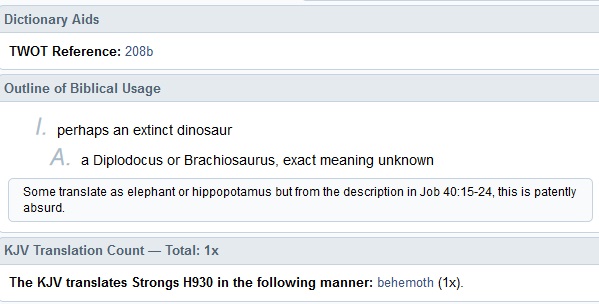
Is a "kind" defined by a common gene pool? Is a "behemoth" a reference to a dinosaur? You might think so based on a very popular Bible study aide. I was looking up the etymology and usage of some Hebrew words at the Blue Letter Bible a few days ago and noticed some interesting notes... Continue Reading →
Ken Ham’s Aversion to ‘Life’ on Other Planets, Part I – What is Life?
Ken Ham recently proclaimed that he thought it was highly unlikely that “plant life” would be found on other planets. I wonder what he thinks the word “life” means in this context? For example, does living mean that plants also experience death? If so, how can he say that animals and man were allowed to... Continue Reading →
A Diluvialist Response to the Buckland’s Kirkdale Cave Hyena Den
In my recent comments about Ken Ham’s view of modern creationism I stated that flood geology was nothing more than a recapitulation of many previous attempts to construct a naturalistic theory of the earth while maintaining a young earth presupposition. These prior attempts to conform geological data to such youthful constraints have not stood the... Continue Reading →